
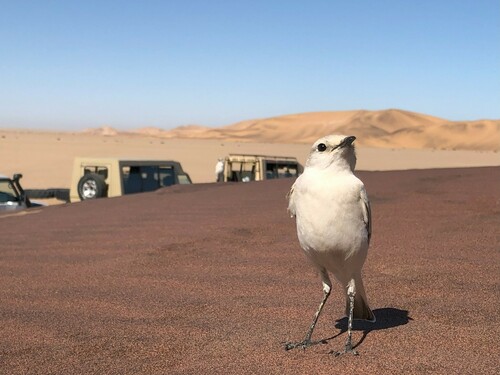
Kalahari Scrub Robin

Kalahari Scrub Robin

Erythropygia paena

Silhouette: Martin Bulla, based on François Desbordes' illustration · PhyloPic

Daily sighting probability ~50% · Likely
at Kgalagadi Transfrontier Park

In 3 days ~90% in a week >90%

319 Verified sightings at Kgalagadi Transfrontier Park From 2019 to 2026
1,047 In all 7 parks
November Best month
☀️ Diurnal When it's spotted

About the Kalahari Scrub Robin

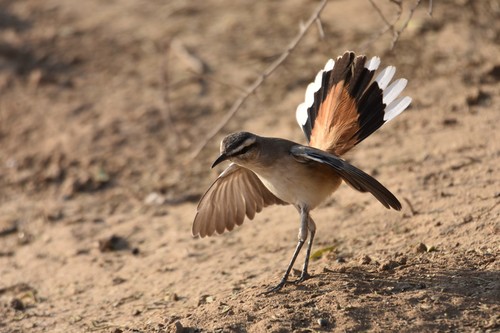
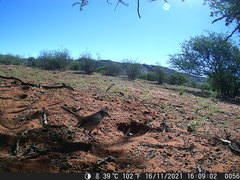
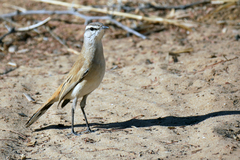
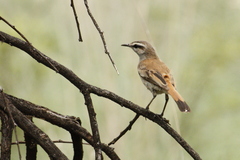
The Kalahari scrub robin (Cercotrichas paena) is a species of bird in the family Muscicapidae. It is sometimes known as the sandy scrub robin. It is found in southern Angola, Botswana, Namibia, northern South Africa, and Zimbabwe, where it occurs in sandveld with low trees and scrub, on the edges of woodland, and in savanna. It will also inhabit human-altered environments including old fields and gardens. The species is common and not considered threatened by human activities.

The Kalahari scrub robin is a seasonal breeder, with the season stretching from August to February, and peaking in November, also the peak of the wet season. The species is monogamous and territorial, with territory sizes varying from 0.7 - 4.3 ha. Females are responsible for constructing the nest, which are weaved of shrubs and grasses and placed in low thorny bushes. The nest building stage takes around 5 days. The average clutch size is about two, although clutch size is bigger later in the season. Only the female incubates the eggs, the male defends the nest, aggressively attacking intruders and warning when predators approach. The incubation lasts around 12 days. Having hatched... Wikipedia →

Sounds

Recording0:16

South Africa · 2022

© Dewald du Plessis · iNaturalist · CC BY-NC 4.0

Recording0:27

South Africa · 2021

© Rachel Schärf · iNaturalist · CC BY-NC 4.0

Recording0:01

South Africa · 2025

© matthewj_za · iNaturalist · CC BY-NC 4.0

Global Distribution

Parks Where Found

# Park Country Daily sighting probability
1 Kgalagadi Transfrontier Park 🇿🇦 South Africa
~50%
2 Pilanesberg National Park 🇿🇦 South Africa
~30%
3 Etosha National Park 🇳🇦 Namibia
~20%
4 Waterberg Plateau Park 🇳🇦 Namibia
~20%
5 Hwange National Park 🇿🇼 Zimbabwe
<5%
6 Moremi Game Reserve 🇧🇼 Botswana
<5%
7 Chobe National Park 🇧🇼 Botswana
<5%

Before you go

What are the chances of seeing a Kalahari Scrub Robin in Kgalagadi Transfrontier Park?

Likely

About 50% of wildlife watchers report a Kalahari Scrub Robin sighting in Kgalagadi Transfrontier Park on a given day, based on 319 verified sightings from GBIF citizen-science data from 2019 to 2026. It is the 16th most-seen of the 122 birds we can rate there. Over three days the chance rises to about 90%, and over a week to over 90%, if each day is a fresh chance.

When is the best time to see a Kalahari Scrub Robin in Kgalagadi Transfrontier Park?

November

In that month about 70% of wildlife watchers report a Kalahari Scrub Robin in Kgalagadi Transfrontier Park on a given day, against about 30% in January and April, the lowest months. That is one of Kgalagadi Transfrontier Park's driest months, with about 5 mm of rain against 40 mm in January. May has too few records to rate.

What time of day is best to see a Kalahari Scrub Robin?

Between 9 am and noon

Across all the parks we cover, that three-hour window holds the most Kalahari Scrub Robin sightings with a recorded time, and about 9 in 10 of them come between 6 am and 6 pm: it is a daytime animal.

Is Kgalagadi Transfrontier Park the best place to see a Kalahari Scrub Robin?

Yes

Of the 7 parks where we can rate Kalahari Scrub Robin sightings, Kgalagadi Transfrontier Park has the highest daily chance: about 50%. Next come Pilanesberg National Park (South Africa, about 30%) and Etosha National Park (Namibia, about 20%). All parks ranked.

Which relatives of the Kalahari Scrub Robin live in Kgalagadi Transfrontier Park?

Same family: Muscicapidae

The closest relatives of the Kalahari Scrub Robin that you can see in Kgalagadi Transfrontier Park (family Muscicapidae, Old World Flycatchers, Robins, and Chats) are Mariqua Flycatcher (about 60%), Familiar Chat (about 30%) and Chat Flycatcher (about 20%), with each one's daily chance of a sighting.

Where does the Kalahari Scrub Robin sighting chance come from?

GBIF citizen-science records

It is estimated from how often the Kalahari Scrub Robin is recorded against all the birds logged in Kgalagadi Transfrontier Park (319 verified sightings from 2019 to 2026), calibrated against known sighting rates. Figures are rounded to the nearest 10% because citizen-science data supports honest approximations, not decimals, and months with records from fewer than five people show "—". How it works.

← Back to Kgalagadi Transfrontier Park