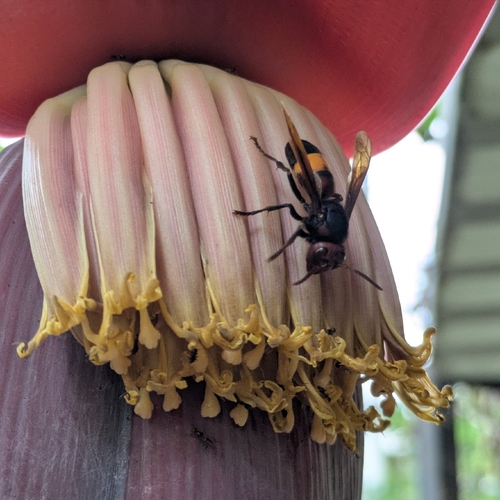
Greater Banded Hornet
Daily sighting probability ~10% · With luck
at Khao Sok National Park

In 3 days ~40% in a week ~60%

7 Verified sightings at Khao Sok National Park From 2019 to 2026
12 In all 2 parks
September Best month
🌅 Crepuscular When it's spotted

About the Greater Banded Hornet

Vespa tropica, the greater banded hornet, is a tropical species of hornet found in Southern Asia, New Guinea and west Africa, and which has recently been discovered to be an invasive species on the Pacific island of Guam. It is a predator of paper wasps and possesses a potent sting, which can cause extreme pain and swelling.

The workers of Vespa tropica are about 24–26 millimetres (15⁄16–1 in) in length, while queens grow to 30 millimetres (1+1⁄4 in). The head is dark brown/red; the abdomen is black with a distinct yellow stripe which covers most of the second abdominal segment. However, there is some variation across its range and in Singapore and southeastern Asia, specimens are often completely black and larger in size, while in other regions such as Hong Kong, the head and flanks of the thorax are normally reddish. A third colour form is found in the Andamans and Nicobars, which has a reddish brown head and thorax and all the dorsal plates on each segment of the gastrum are orange except the first.

Vespa tropica is distributed throughout southern Asia from Afghanistan to the Philippines, south to New Guinea, New Britain and the Torres Strait... Wikipedia →
Global Distribution

Parks Where Found

# Park Country Daily sighting probability
1 Khao Sok National Park 🇹🇭 Thailand
~10%
2 Sepilok 🇲🇾 Malaysia
~10%

Cities Where Found

# City Country Daily sighting probability
1 Tiruchirappalli 🇮🇳 India
~20%
2 Bengaluru 🇮🇳 India
~20%
3 Coimbatore 🇮🇳 India
~20%
4 Denpasar 🇮🇩 Indonesia
~20%
5 Mysuru 🇮🇳 India
~10%
6 Thrissur 🇮🇳 India
~10%
7 Dehradun 🇮🇳 India
~10%
8 Colombo [Sri Jayawardenepura Kotte] 🇱🇰 Sri Lanka
~10%
9 Yogyakarta 🇮🇩 Indonesia
~10%
10 Pune 🇮🇳 India
~10%

Before you go

What are the chances of seeing a Greater Banded Hornet in Khao Sok National Park?

With luck

About 10% of wildlife watchers report a Greater Banded Hornet sighting in Khao Sok National Park on a given day, based on 7 verified sightings from GBIF citizen-science data from 2019 to 2026. It is the 59th most-seen of the 104 insects we can rate there. Over three days the chance rises to about 40%, and over a week to about 60%, if each day is a fresh chance.

When is the best time to see a Greater Banded Hornet in Khao Sok National Park?

September

In that month about 30% of wildlife watchers report a Greater Banded Hornet in Khao Sok National Park on a given day, against under 5% in January, May–August and October, the lowest months. That is one of Khao Sok National Park's wettest months, with about 280 mm of rain against 35 mm in February.

What time of day is best to see a Greater Banded Hornet?

Between 4 and 7 am

Across all the parks we cover, that three-hour window holds the most Greater Banded Hornet sightings with a recorded time, and about 7 in 10 of them come between 6 am and 6 pm: it is most active around dawn and dusk.

Is Khao Sok National Park the best place to see a Greater Banded Hornet?

Yes

Of the 2 parks where we can rate Greater Banded Hornet sightings, Khao Sok National Park has the highest daily chance: about 10%. Next come Sepilok (Malaysia, about 10%).

Which relatives of the Greater Banded Hornet live in Khao Sok National Park?

Same order: Hymenoptera

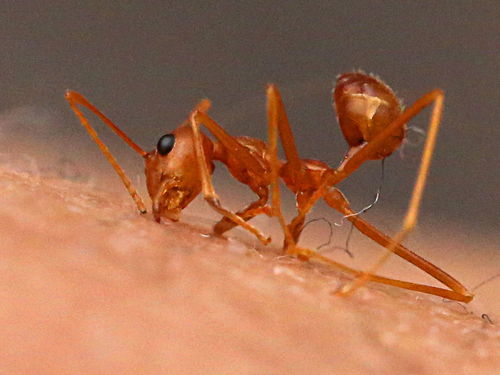
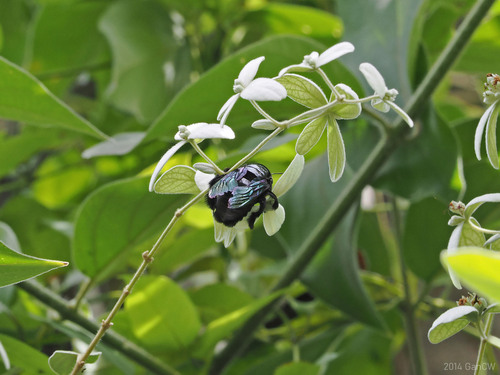
The closest relatives of the Greater Banded Hornet that you can see in Khao Sok National Park (order Hymenoptera, Ants, Bees, Wasps, and Sawflies) are Giant Honey Bee (about 30%), Asian Weaver Ant (about 30%) and Broad-Handed Carpenter Bee (about 20%), with each one's daily chance of a sighting.

Where does the Greater Banded Hornet sighting chance come from?

GBIF citizen-science records

It is estimated from how often the Greater Banded Hornet is recorded against all the insects logged in Khao Sok National Park (7 verified sightings from 2019 to 2026), calibrated against known sighting rates. Figures are rounded to the nearest 10% because citizen-science data supports honest approximations, not decimals, and months with records from fewer than five people show "—". How it works.

← Back to Khao Sok National Park