Nyala

Nyala

Tragelaphus angasii

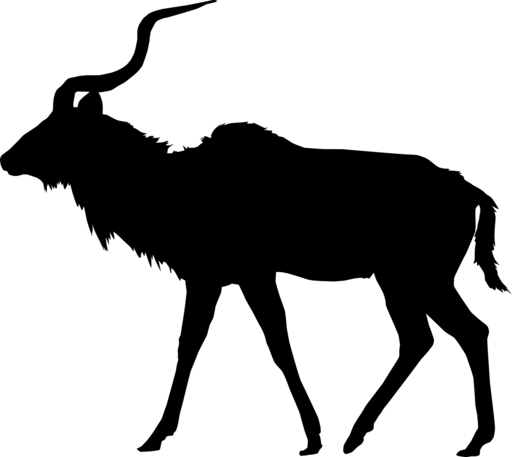
Silhouette: Margot Michaud · PhyloPic

LCLeast ConcernNTVUENCR
Daily sighting probability ~40% · Likely
at Kruger National Park

In 3 days ~70% in a week >90%

532 Verified sightings at Kruger National Park From 2019 to 2026
1,197 In all 7 parks
August Best month
☀️ Diurnal When it's spotted

About the Nyala

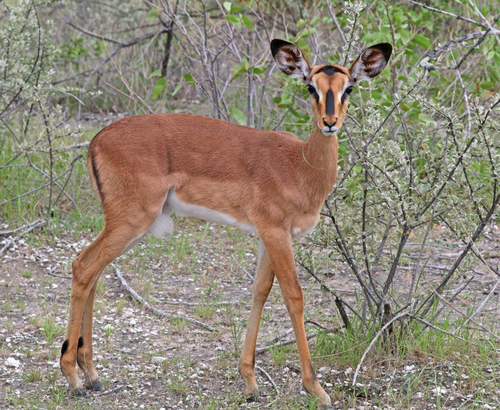
The lowland nyala or simply nyala (Tragelaphus angasii) is a spiral-horned artiodactyl antelope native to Southern Africa. The species is part of the family Bovidae and the genus Tragelaphus (formerly placed in the genus Nyala). It was first described in 1849 by George French Angas and exhibits the highest sexual dimorphism among the spiral-horned antelopes. It is not to be confused with the endangered mountain nyala living in the Bale region of Ethiopia.

The nyala's range encompasses much of Southern Africa. As its population is relatively stable, it has been listed as of least concern by the International Union for Conservation of Nature. It generally browses during the day in warm weather and during the night in the rainy season. As a herbivore, the nyala feeds upon foliage, fruits and grasses, and requires sufficient fresh water. A shy animal, it prefers water holes rather than open spaces. The nyala does not show signs of territoriality, and individuals' areas can overlap. They are very cautious creatures.

They live in single-sex or mixed family groups of up to ten individuals, but old males live alone. They inhabit thickets within dense and dry savanna woodlands. The principal threats to the species are illegal poaching and habitat loss resulting from human settlement and livestock grazing. However, the large-horned, impressive males are highly prized as game animals by sport hunters. Wikipedia →

Global Distribution

Parks Where Found

# Park Country Daily sighting probability
1 uMkhuze Game Reserve 🇿🇦 South Africa
~80%
2 Hluhluwe-Imfolozi Park 🇿🇦 South Africa
~60%
3 Gonarezhou National Park 🇿🇼 Zimbabwe
~60%
4 Gorongosa National Park 🇲🇿 Mozambique
~40%
5 Kruger National Park 🇿🇦 South Africa
~40%
6 iSimangaliso Wetland Park 🇿🇦 South Africa
~30%
7 Addo Elephant National Park 🇿🇦 South Africa
~20%

Zoos & Centres Where Found

# Zoo / Centre Country
1 Busch Gardens Tampa 🇺🇸 United States In captivity
2 Yangon Zoological Gardens 🇲🇲 Myanmar (Burma) In captivity
3 Dresden Zoo 🇩🇪 Germany In captivity
4 Le Pal 🇫🇷 France In captivity
5 North Carolina Zoo 🇺🇸 United States In captivity
6 Zoo Pilsen 🇨🇿 Czechia In captivity
7 Liberec Zoo 🇨🇿 Czechia In captivity
8 Bali Zoo 🇮🇩 Indonesia In captivity
9 Monarto Zoo 🇦🇺 Australia In captivity
10 Zoo Miami 🇺🇸 United States In captivity
11 San Diego Zoo Safari Park 🇺🇸 United States In captivity
12 Werribee Open Range Zoo 🇦🇺 Australia In captivity
13 Safaripark Beekse Bergen 🇳🇱 Netherlands In captivity
14 Serengeti Park 🇩🇪 Germany In captivity
15 Bronx Zoo 🇺🇸 United States In captivity
16 Khao Kheow Open Zoo 🇹🇭 Thailand In captivity
17 Longleat Safari and Adventure Park 🇬🇧 United Kingdom In captivity
18 Ramat Gan Safari 🇮🇱 Israel In captivity
19 Brookfield Zoo 🇺🇸 United States In captivity
20 Parc zoologique de Montpellier 🇫🇷 France In captivity
21 Safari World 🇹🇭 Thailand In captivity
22 Orana Wildlife Park 🇳🇿 New Zealand In captivity
23 Johannesburg Zoo 🇿🇦 South Africa In captivity
24 National Zoological Garden of South Africa 🇿🇦 South Africa In captivity
25 Phoenix Zoo 🇺🇸 United States In captivity
26 Toledo Zoo 🇺🇸 United States In captivity
27 Silesian Zoological Garden 🇵🇱 Poland In captivity
28 Wildlife World Zoo 🇺🇸 United States In captivity
29 Parco Natura Viva 🇮🇹 Italy In captivity
30 Audubon Zoo 🇺🇸 United States In captivity
31 Hellabrunn Zoo 🇩🇪 Germany In captivity
32 Yerevan Zoo 🇦🇲 Armenia In captivity
33 Saint Louis Zoo 🇺🇸 United States In captivity
34 Berlin Zoological Garden 🇩🇪 Germany In captivity
35 Edinburgh Zoo 🇬🇧 United Kingdom In captivity
36 Franklin Park Zoo 🇺🇸 United States In captivity
37 Night Safari 🇸🇬 Singapore In captivity
38 National Zoo of Malaysia 🇲🇾 Malaysia In captivity
39 ZooTampa 🇺🇸 United States In captivity
40 Lisbon Zoo 🇵🇹 Portugal In captivity
41 Singapore Zoo 🇸🇬 Singapore In captivity
42 Blank Park Zoo 🇺🇸 United States In captivity
43 Melbourne Zoo 🇦🇺 Australia In captivity
44 Opel-Zoo 🇩🇪 Germany In captivity
45 Chapultepec Zoo 🇲🇽 Mexico In captivity
46 Schönbrunn Zoo 🇦🇹 Austria In captivity
47 Budapest Zoo & Botanical Garden 🇭🇺 Hungary In captivity
48 Auckland Zoo 🇳🇿 New Zealand In captivity
49 Zoo Santo Inácio 🇵🇹 Portugal In captivity
50 Pittsburgh Zoo & Aquarium 🇺🇸 United States In captivity

Before you go

What are the chances of seeing a Nyala in Kruger National Park?

Likely

About 40% of wildlife watchers report a Nyala sighting in Kruger National Park on a given day, based on 532 verified sightings from GBIF citizen-science data from 2019 to 2026. It is the 21st most-seen of the 60 mammals we can rate there. Over three days the chance rises to about 70%, and over a week to over 90%, if each day is a fresh chance.

When is the best time to see a Nyala in Kruger National Park?

May to November

In those months about 40% of wildlife watchers report a Nyala in Kruger National Park on a given day, against about 30% in December to April, the lowest months.

What time of day is best to see a Nyala?

Between 10 am and 1 pm

Across all the parks we cover, that three-hour window holds the most Nyala sightings with a recorded time, and about 9 in 10 of them come between 6 am and 6 pm: it is a daytime animal.

Which relatives of the Nyala live in Kruger National Park?

Same genus: Tragelaphus

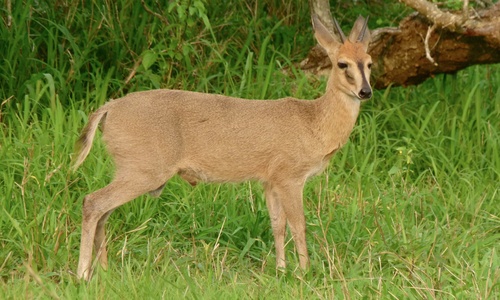
The closest relatives of the Nyala that you can see in Kruger National Park (genus Tragelaphus, Spiral-horned Antelopes) are Greater Kudu (about 50%) and Northern Bushbuck (about 40%), with each one's daily chance of a sighting.

Where does the Nyala sighting chance come from?

GBIF citizen-science records

It is estimated from how often the Nyala is recorded against all the mammals logged in Kruger National Park (532 verified sightings from 2019 to 2026), calibrated against known sighting rates. Figures are rounded to the nearest 10% because citizen-science data supports honest approximations, not decimals, and months with records from fewer than five people show "—". How it works.

← Back to Kruger National Park