Olive Woodpecker

Olive Woodpecker

Dendropicos griseocephalus

Silhouette: Pepe Reigada · PhyloPic

LCLeast ConcernNTVUENCR
Daily sighting probability <5% · Rare
at Kruger National Park

In 3 days <5%

7 Verified sightings at Kruger National Park From 2019 to 2026
1,307 In all 11 parks
March Best month
☀️ Diurnal When it's spotted

About the Olive Woodpecker

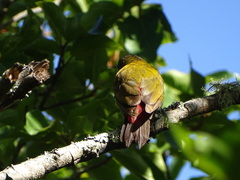
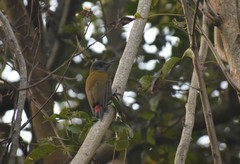
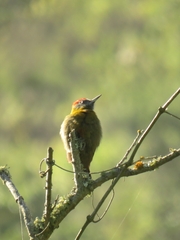
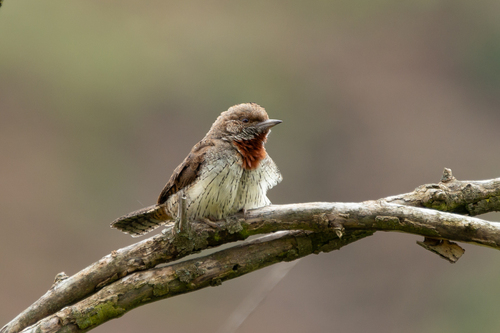
The olive woodpecker (Dendropicos griseocephalus) is a species of bird in the woodpecker family Picidae. It is in the Dendropicos genus, which comprises small woodpeckers native to Sub-Saharan Africa. The olive woodpecker can be characterized by its bright red rump, and bronze coloured upper body. The red-bellied subspecies is known to be slightly brighter in colour, with a more prominent belly patch. The montane subspecies is the smallest of the three recognized subspecies.

These birds occupy a range of densely wooded and forested habitats from 450–3,700 m (1,480–12,140 ft). This species is insectivorous, often seen foraging for ants and beetles in mossy trees. The olive woodpecker produces a wide range of vocalizations from alarm calls, to specific take-off and flight sounds. This species also makes use of breeding calls to attract mates. Breeding season is variable, and depends on the area each population inhabits. It can last anywhere from 1 to 8 months. Clutch size is small —2 to 3 eggs per clutch—and chick rearing responsibilities are shared between both parents. Wikipedia →

Sounds

Call1:21

South Africa · 2021

© Lynette Rudman · XC677518 · CC BY-NC-SA 4.0

Song0:25

Zambia · 2016

© Peter Boesman · XC339146 · CC BY-NC-ND 4.0

Call0:05

Tanzania · 2014

© Thibaut Chansac · XC201321 · CC BY-NC-SA 4.0

Global Distribution

Parks Where Found

# Park Country Daily sighting probability
1 Garden Route National Park 🇿🇦 South Africa
~20%
2 Kafue National Park 🇿🇲 Zambia
~10%
3 Virunga National Park 🇨🇩 Democratic Republic of the Congo
~10%
4 Table Mountain National Park 🇿🇦 South Africa
~10%
5 Nyungwe National Park 🇷🇼 Rwanda
~10%
6 Addo Elephant National Park 🇿🇦 South Africa
~10%
7 Golden Gate Highlands National Park 🇿🇦 South Africa
~10%
8 Volcanoes National Park 🇷🇼 Rwanda
<5%
9 Arusha National Park 🇹🇿 Tanzania
<5%
10 Bwindi Impenetrable National Park 🇺🇬 Uganda
<5%
11 Kruger National Park 🇿🇦 South Africa
<5%

Cities Where Found

# City Country Daily sighting probability
1 Lusaka 🇿🇲 Zambia
<5%
2 Durban 🇿🇦 South Africa
<5%
3 Cape Town 🇿🇦 South Africa
<5%

Before you go

What are the chances of seeing an Olive Woodpecker in Kruger National Park?

Rare

Under 5% of wildlife watchers report an Olive Woodpecker sighting in Kruger National Park on a given day, based on 7 verified sightings from GBIF citizen-science data from 2019 to 2026. It is the 439th most-seen of the 464 birds we can rate there. Over three days the chance rises to under 5%, if each day is a fresh chance.

When is the best time to see an Olive Woodpecker in Kruger National Park?

Any time of year

In every month with enough records, under 5% of wildlife watchers report an Olive Woodpecker in Kruger National Park on a given day, so our monthly data shows no clear season.

What time of day is best to see an Olive Woodpecker?

Between 8 and 11 am

Across all the parks we cover, that three-hour window holds the most Olive Woodpecker sightings with a recorded time, and about 9 in 10 of them come between 6 am and 6 pm: it is a daytime animal.

Is Kruger National Park the best place to see an Olive Woodpecker?

11th of 11

Of the 11 parks where we can rate Olive Woodpecker sightings, Kruger National Park ranks 11th at under 5%. The best odds are in Garden Route National Park (South Africa, about 20%), Kafue National Park (Zambia, about 10%) and Virunga National Park (Democratic Republic of the Congo, about 10%).

Where does the Olive Woodpecker sighting chance come from?

GBIF citizen-science records

It is estimated from how often the Olive Woodpecker is recorded against all the birds logged in Kruger National Park (7 verified sightings from 2019 to 2026), calibrated against known sighting rates. Figures are rounded to the nearest 10% because citizen-science data supports honest approximations, not decimals, and months with records from fewer than five people show "—". How it works.

← Back to Kruger National Park