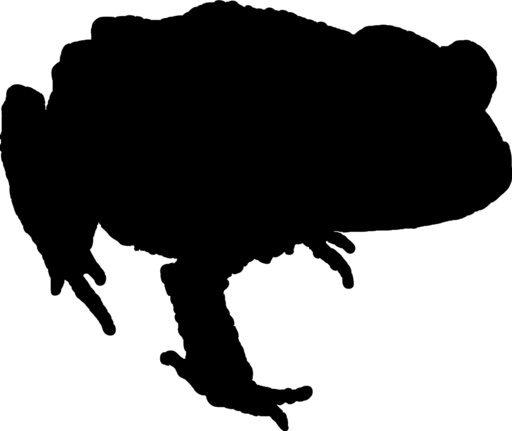
Green Climbing Toad

Green Climbing Toad

Incilius coniferus

Silhouette: Jose Carlos Arenas-Monroy · PhyloPic

LCLeast ConcernNTVUENCR
Daily sighting probability ~10% · With luck
at La Amistad International Park (Panama)

In 3 days ~40% in a week ~70%

50 Verified sightings at La Amistad International Park (Panama) From 2019 to 2026
184 In all 7 parks
June Best month
☀️🌙 Day & Night When it's spotted

About the Green Climbing Toad

The evergreen toad (Incilius coniferus) is a species of toad in the family Bufonidae. It is potentially threatened by habitat loss, but is still categorized as a least-concern species by the International Union for Conservation of Nature. A species cannot be assigned to the least-concern category unless it has had its population status evaluated.

The evergreen toad (also known as the "green climbing toad") can be colored with browns, greens, and even yellows. These colors on its back and other areas of the body are arranged in a camouflage pattern that can be unique between each member of the species. Its eyes are green with vertically slit pupils.

Adult males of the species can measure approximately 53–72 mm and adult females 76–94 mm. Females and males in adulthood or easy to tell apart due to males usually having just abit brighter coloring. However, when they haven't metamorphosed yet, males and females are practically indistinguishable as all the tadpoles look identical.

It is found in Colombia, Costa Rica, Ecuador, Nicaragua, and Panama. The toad is commonly found in lowland wet and moist forest zones... Wikipedia →

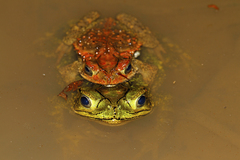
Global Distribution

Parks Where Found

# Park Country Daily sighting probability
1 Piedras Blancas National Park 🇨🇷 Costa Rica
~40%
2 Bastimentos Island National Marine Park 🇵🇦 Panama
~40%
3 Tortuguero National Park 🇨🇷 Costa Rica
~20%
4 Gandoca-Manzanillo Wildlife Refuge 🇨🇷 Costa Rica
~20%
5 La Amistad International Park (Panama) 🇵🇦 Panama
~10%
6 Cahuita National Park 🇨🇷 Costa Rica
~10%
7 Tapantí-Macizo de la Muerte National Park 🇨🇷 Costa Rica
~10%

Zoos & Centres Where Found

# Zoo / Centre Country
1 Bronx Zoo 🇺🇸 United States In captivity
2 Fort Worth Zoo 🇺🇸 United States In captivity
3 Zoo Atlanta 🇺🇸 United States In captivity

Before you go

What are the chances of seeing a Green Climbing Toad in La Amistad International Park (Panama)?

With luck

About 10% of wildlife watchers report a Green Climbing Toad sighting in La Amistad International Park (Panama) on a given day, based on 50 verified sightings from GBIF citizen-science data from 2019 to 2026. It is the 7th most-seen of the 32 amphibians we can rate there. Over three days the chance rises to about 40%, and over a week to about 70%, if each day is a fresh chance.

When is the best time to see a Green Climbing Toad in La Amistad International Park (Panama)?

February, May–June, October and December

In those months about 20% of wildlife watchers report a Green Climbing Toad in La Amistad International Park (Panama) on a given day, against about 10% in January, March–April, July–September and November, the lowest months.

What time of day is best to see a Green Climbing Toad?

Between 7 and 10 pm

Across all the parks we cover, that three-hour window holds the most Green Climbing Toad sightings with a recorded time, and about half of them come between 6 pm and 6 am: it is seen both by day and at night.

Which relatives of the Green Climbing Toad live in La Amistad International Park (Panama)?

Same family: Bufonidae

The closest relatives of the Green Climbing Toad that you can see in La Amistad International Park (Panama) (family Bufonidae, True Toads) are Giant Marine Toad (about 20%) and Leaf Litter Toad (about 10%), with each one's daily chance of a sighting.

Where does the Green Climbing Toad sighting chance come from?

GBIF citizen-science records

It is estimated from how often the Green Climbing Toad is recorded against all the amphibians logged in La Amistad International Park (Panama) (50 verified sightings from 2019 to 2026), calibrated against known sighting rates. Figures are rounded to the nearest 10% because citizen-science data supports honest approximations, not decimals, and months with records from fewer than five people show "—". How it works.

← Back to La Amistad International Park (Panama)