Spur Legged Phasmid

Spur Legged Phasmid

Didymuria violescens

Endemic
Daily sighting probability ~10% · With luck
at Lamington National Park

In 3 days ~30% in a week ~50%

11 Verified sightings at Lamington National Park From 2019 to 2026
130 In all 5 parks
February Best month
☀️ Diurnal When it's spotted

About the Spur Legged Phasmid

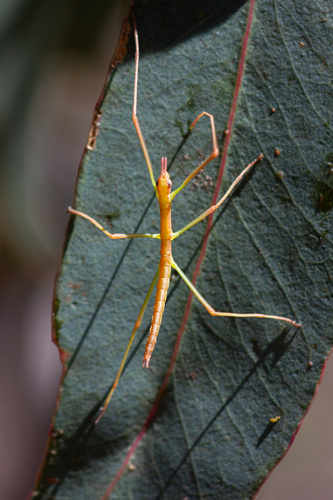
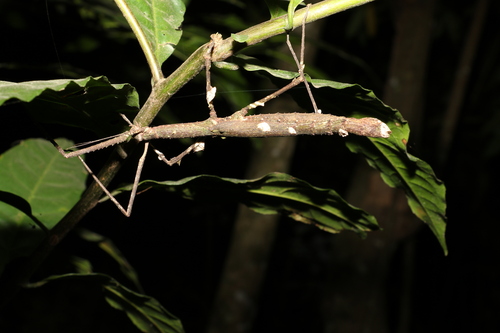
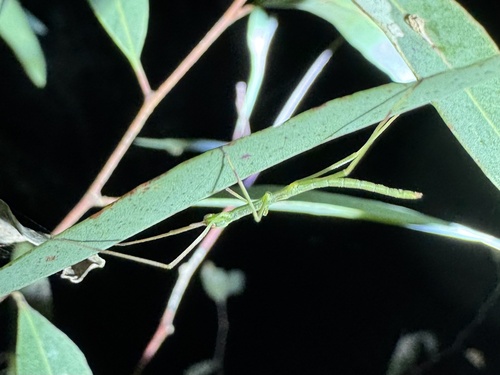
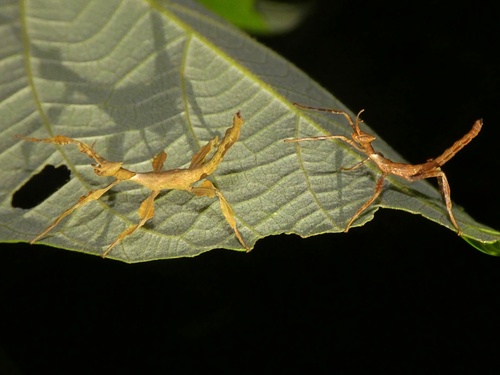
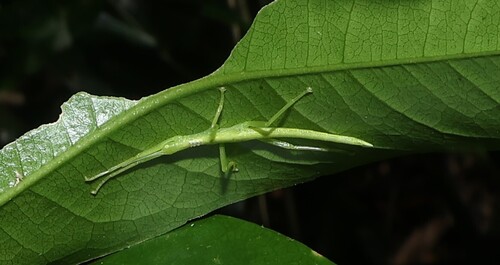
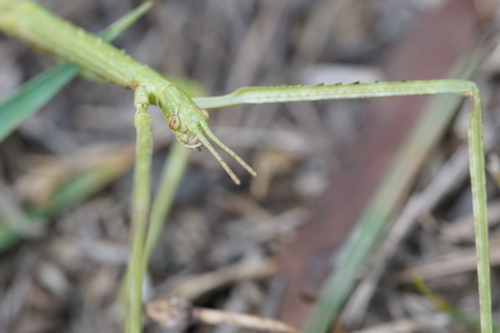
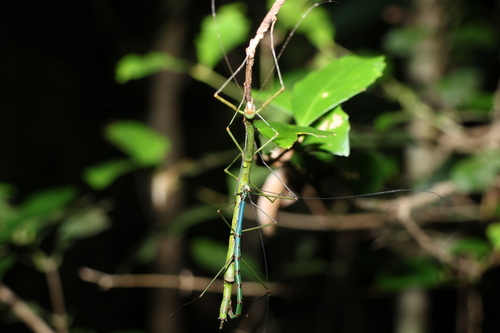
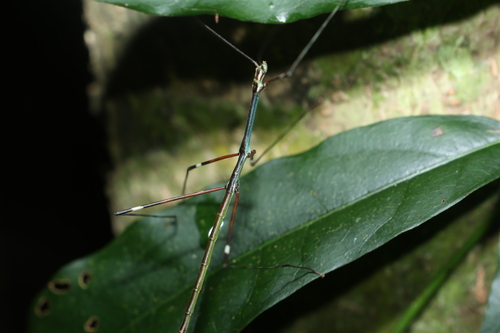
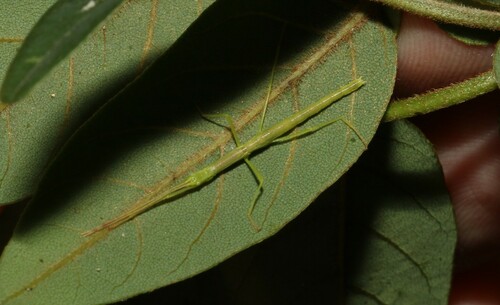
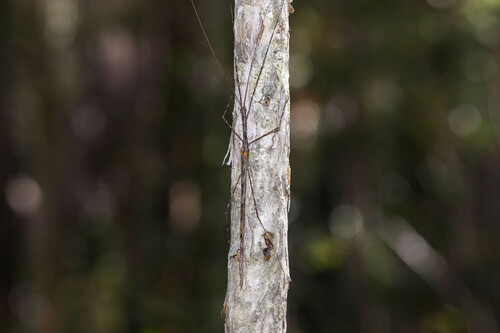
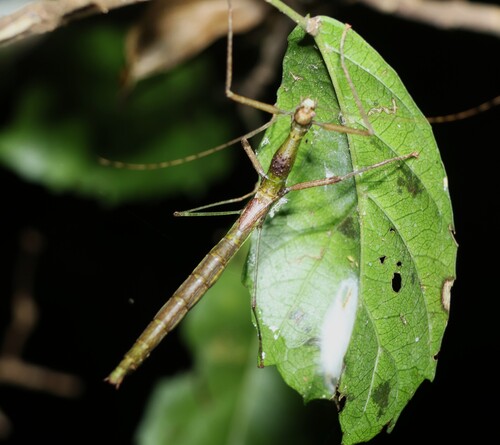
Didymuria violescens, the spur legged phasmid, also known as the violet-winged stick insect, or violet-winged phasma, is a common phasmid native to Australia. Males have distinct spurs and thicker hind legs (the hind have the spurs) which is where the animal gets its common name, though the spurs are only found on the male. This specific type of stick insect eats Gum (Eucalyptus) leaves, female lay very many eggs as there is a low chance of live hatching from the egg. The female produces eggs that can bear young even if the eggs are not fertilized, though those hatch-lings are only female. This is called parthenogenesis. Newly hatched stick/leaf insects are called nymphs until their final (5th-7th) molt. Wikipedia →

Global Distribution

Parks Where Found

# Park Country Daily sighting probability
1 Kosciuszko National Park 🇦🇺 Australia
~30%
2 Royal National Park 🇦🇺 Australia
~10%
3 Blue Mountains National Park 🇦🇺 Australia
~10%
4 Lamington National Park 🇦🇺 Australia
~10%
5 Springbrook National Park 🇦🇺 Australia
~10%

Cities Where Found

# City Country Daily sighting probability
1 Sydney 🇦🇺 Australia
~10%
2 Brisbane 🇦🇺 Australia
~10%
3 Melbourne 🇦🇺 Australia
<5%

Before you go

What are the chances of seeing a Spur Legged Phasmid in Lamington National Park?

With luck

About 10% of wildlife watchers report a Spur Legged Phasmid sighting in Lamington National Park on a given day, based on 11 verified sightings from GBIF citizen-science data from 2019 to 2026. It is the 156th most-seen of the 430 insects we can rate there. Over three days the chance rises to about 30%, and over a week to about 50%, if each day is a fresh chance.

When is the best time to see a Spur Legged Phasmid in Lamington National Park?

January and February

In those months about 20% of wildlife watchers report a Spur Legged Phasmid in Lamington National Park on a given day, against under 5% in May–September and November, the lowest months. Those are among Lamington National Park's wettest months, with about 150 mm of rain a month against 40 mm in August.

What time of day is best to see a Spur Legged Phasmid?

Between 1 and 4 pm

Across all the parks we cover, that three-hour window holds the most Spur Legged Phasmid sightings with a recorded time, and about 8 in 10 of them come between 6 am and 6 pm: it is a daytime animal.

Is Lamington National Park the best place to see a Spur Legged Phasmid?

4th of 5

Of the 5 parks where we can rate Spur Legged Phasmid sightings, Lamington National Park ranks 4th at about 10%. The best odds are in Kosciuszko National Park (Australia, about 30%), Royal National Park (Australia, about 10%) and Blue Mountains National Park (Australia, about 10%).

Which relatives of the Spur Legged Phasmid live in Lamington National Park?

Same family: Phasmatidae

The closest relatives of the Spur Legged Phasmid that you can see in Lamington National Park (family Phasmatidae) are Gorgon Stick Insect (about 10%), Tessellated Stick Insect (about 10%) and Spiny Leaf Insect (about 10%), with each one's daily chance of a sighting.

Where does the Spur Legged Phasmid sighting chance come from?

GBIF citizen-science records

It is estimated from how often the Spur Legged Phasmid is recorded against all the insects logged in Lamington National Park (11 verified sightings from 2019 to 2026), calibrated against known sighting rates. Figures are rounded to the nearest 10% because citizen-science data supports honest approximations, not decimals, and months with records from fewer than five people show "—". How it works.

← Back to Lamington National Park