Broad-billed Tody

Broad-billed Tody

Todus subulatus

Silhouette: Sheatherius · PhyloPic

LCLeast ConcernNTVUENCR
Daily sighting probability ~60% · Likely
at Los Haitises National Park

In 3 days ~90% in a week >90%

367 Verified sightings at Los Haitises National Park From 2019 to 2026
425 In all 2 parks
March Best month
☀️ Diurnal When it's spotted

About the Broad-billed Tody

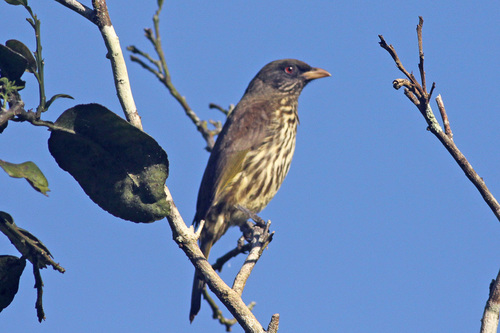
The broad-billed tody (Todus subulatus) is a species of bird in the family Todidae, and one of two Todus species found on Hispaniola, along with the narrow-billed tody. They are small insectivorous birds, characterized by their bright green feathers, pink flanks and red throats.

They occur at elevations lower than 1700 meters and prefer drier habitats to that of wet rainforests. The broad-billed tody does not migrate and occupies very small territories. These birds are often seen hopping along perches, foraging for insects with their long bills among the leaves. Broad-billed todies have two principle vocalizations, the first being their general call which sounds like a whistle and the second call sounding more trilly, when they encounter a predator. They can also create a rattling noise by running wind through their feathers.

Their breeding season runs from April to July, in which the female will lay one clutch of eggs, containing one to four eggs. The nestlings take three weeks to mature into juveniles and then fly off to establish their own territory. Broad-billed todies are not a threatened species, and are therefore of least concern to the International Union for the Conservation of Nature (IUNC). Wikipedia →

Sounds

Song0:11

Dominican Republic · 2018

© George Wagner · XC438072 · CC BY-NC-SA 4.0

Wing sonation0:04

Dominican Republic · 2012

© Ian Davies · XC97158 · CC BY-NC-ND 2.5

Call0:22

Dominican Republic · 2009

© Jesse Fagan · XC34891 · CC BY-NC-ND 2.5

Global Distribution

Parks Where Found

# Park Country Daily sighting probability
1 Los Haitises National Park 🇩🇴 Dominican Republic
~60%
2 Jaragua National Park 🇩🇴 Dominican Republic
~30%

Cities Where Found

# City Country Daily sighting probability
1 Santo Domingo 🇩🇴 Dominican Republic
~20%

Before you go

What are the chances of seeing a Broad-billed Tody in Los Haitises National Park?

Likely

About 60% of wildlife watchers report a Broad-billed Tody sighting in Los Haitises National Park on a given day, based on 367 verified sightings from GBIF citizen-science data from 2019 to 2026. It is the 12th most-seen of the 106 birds we can rate there. Over three days the chance rises to about 90%, and over a week to over 90%, if each day is a fresh chance.

When is the best time to see a Broad-billed Tody in Los Haitises National Park?

March

In that month about 80% of wildlife watchers report a Broad-billed Tody in Los Haitises National Park on a given day, against about 40% in October and November, the lowest months.

What time of day is best to see a Broad-billed Tody?

Between 8 and 11 am

Across all the parks we cover, that three-hour window holds the most Broad-billed Tody sightings with a recorded time, and about 9 in 10 of them come between 6 am and 6 pm: it is a daytime animal.

Is Los Haitises National Park the best place to see a Broad-billed Tody?

Yes

Of the 2 parks where we can rate Broad-billed Tody sightings, Los Haitises National Park has the highest daily chance: about 60%. Next come Jaragua National Park (Dominican Republic, about 30%).

Where does the Broad-billed Tody sighting chance come from?

GBIF citizen-science records

It is estimated from how often the Broad-billed Tody is recorded against all the birds logged in Los Haitises National Park (367 verified sightings from 2019 to 2026), calibrated against known sighting rates. Figures are rounded to the nearest 10% because citizen-science data supports honest approximations, not decimals, and months with records from fewer than five people show "—". How it works.

← Back to Los Haitises National Park