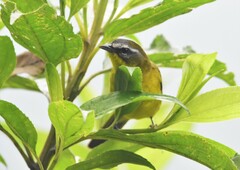
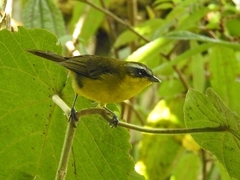
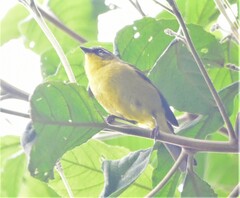

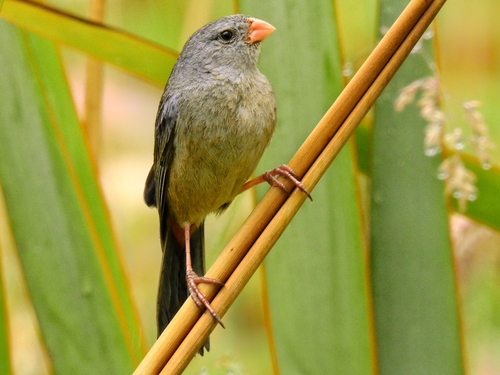
Superciliaried Hemispingus

Superciliaried Hemispingus

Thlypopsis superciliaris

Silhouette: Sheatherius · PhyloPic

LCLeast ConcernNTVUENCR
Daily sighting probability ~20% · Possible
at Los Nevados National Natural Park

In 3 days ~40% in a week ~70%

886 Verified sightings at Los Nevados National Natural Park From 2019 to 2026
1,129 In all 3 parks
December Best month
☀️ Diurnal When it's spotted

About the Superciliaried Hemispingus

The superciliaried hemispingus (Thlypopsis superciliaris) is a species of bird in the family Thraupidae. It is found in Bolivia, Colombia, Ecuador, Peru, and Venezuela. Its natural habitats are subtropical or tropical moist montane forests and degraded former forest.

The superciliaried hemispingus was formally described as Arremon superciliaris by the French ornithologist Frédéric de Lafresnaye in 1840. Lafresnaye described the species based on a specimen from "Santa Fe de Bogota", which is current-day Bogotá, Colombia. The specific epithet is derived from the Latin word meaning "eyebrowed". The superciliaried hemispingus has seven recognised subspecies in four subspecies groups. The irregular and non-clinal variation in morphological features such as the color of the underparts and supercilium suggests that several of these subspecies may be better treated as separate species. Wikipedia →

Sounds

Song1:18

Colombia · 2023

© David Monroy Rengifo · XC818046 · CC BY-NC-SA 4.0

Call0:33

Ecuador · 1997

© Jonas Nilsson · XC276079 · CC BY-NC-SA 4.0

Begging call0:25

Ecuador · 2006

© Olaf Jahn · XC262668 · CC BY-NC-SA 4.0

Global Distribution

Parks Where Found

# Park Country Daily sighting probability
1 Chingaza National Natural Park 🇨🇴 Colombia
~20%
2 Los Nevados National Natural Park 🇨🇴 Colombia
~20%
3 Podocarpus National Park 🇪🇨 Ecuador
<5%

Cities Where Found

# City Country Daily sighting probability
1 Quito 🇪🇨 Ecuador
<5%
2 Bogota 🇨🇴 Colombia
<5%

Before you go

What are the chances of seeing a Superciliaried Hemispingus in Los Nevados National Natural Park?

Possible

About 20% of wildlife watchers report a Superciliaried Hemispingus sighting in Los Nevados National Natural Park on a given day, based on 886 verified sightings from GBIF citizen-science data from 2019 to 2026. It is the 53rd most-seen of the 424 birds we can rate there. Over three days the chance rises to about 40%, and over a week to about 70%, if each day is a fresh chance.

When is the best time to see a Superciliaried Hemispingus in Los Nevados National Natural Park?

March–April and August–December

In those months about 20% of wildlife watchers report a Superciliaried Hemispingus in Los Nevados National Natural Park on a given day, against about 10% in January–February and May–July, the lowest months.

What time of day is best to see a Superciliaried Hemispingus?

Between 8 and 11 am

Across all the parks we cover, that three-hour window holds the most Superciliaried Hemispingus sightings with a recorded time, and about 9 in 10 of them come between 6 am and 6 pm: it is a daytime animal.

Is Los Nevados National Natural Park the best place to see a Superciliaried Hemispingus?

Among the best

Of the 3 parks where we can rate Superciliaried Hemispingus sightings, Los Nevados National Natural Park ranks 2nd at about 20%, level with the leaders once rounded. The best odds are in Chingaza National Natural Park (Colombia, about 20%).

Where does the Superciliaried Hemispingus sighting chance come from?

GBIF citizen-science records

It is estimated from how often the Superciliaried Hemispingus is recorded against all the birds logged in Los Nevados National Natural Park (886 verified sightings from 2019 to 2026), calibrated against known sighting rates. Figures are rounded to the nearest 10% because citizen-science data supports honest approximations, not decimals, and months with records from fewer than five people show "—". How it works.

← Back to Los Nevados National Natural Park