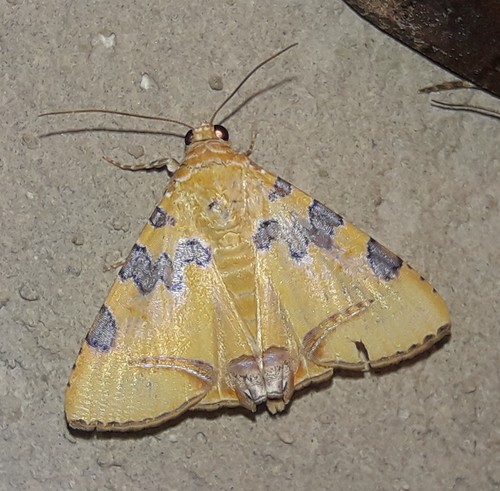
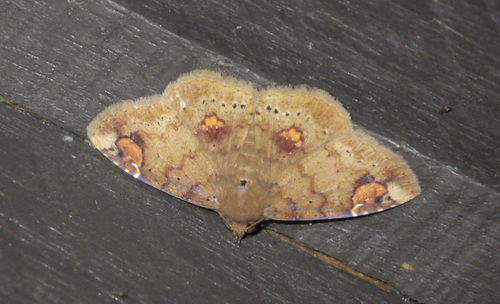
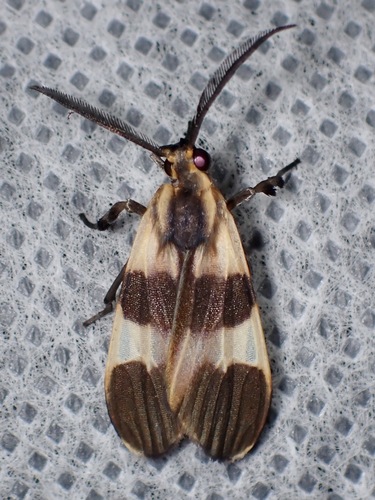
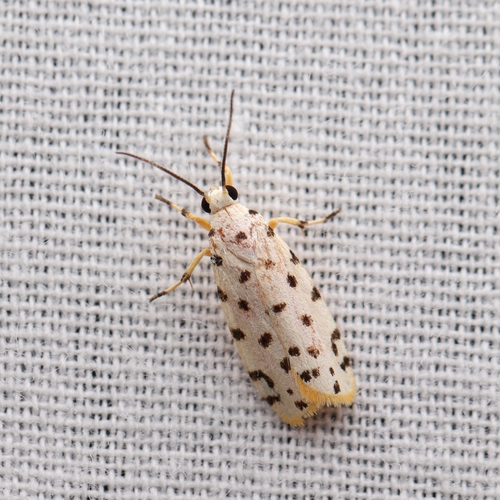
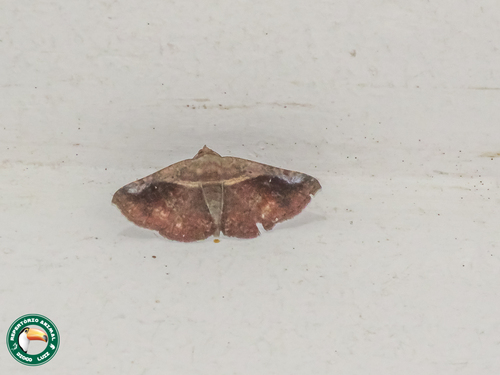
Velvetbean Caterpillar Moth

Velvetbean Caterpillar Moth

Anticarsia gemmatalis

Daily sighting probability ~30% · Possible
at Main Ridge Forest Reserve

In 3 days ~60% in a week ~90%

22 Verified sightings at Main Ridge Forest Reserve From 2019 to 2026
40 In all 3 parks
October Best month
☀️🌙 Day & Night When it's spotted

About the Velvetbean Caterpillar Moth

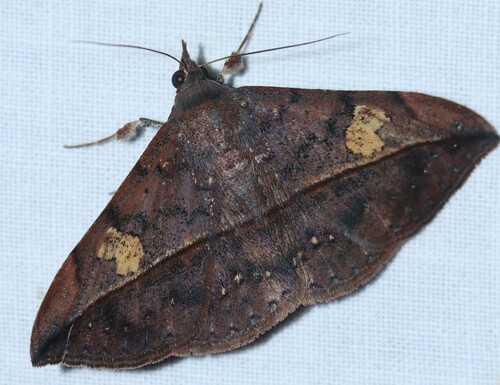
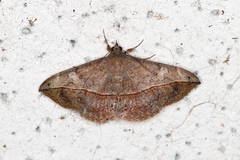
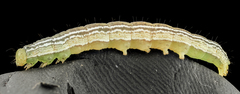
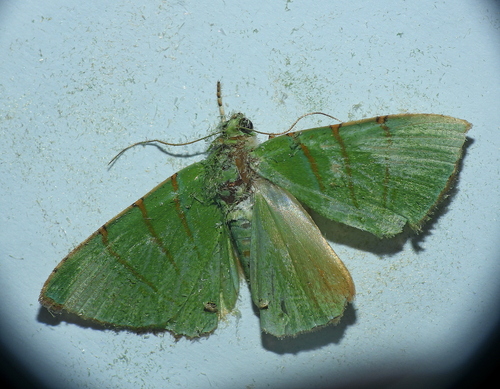
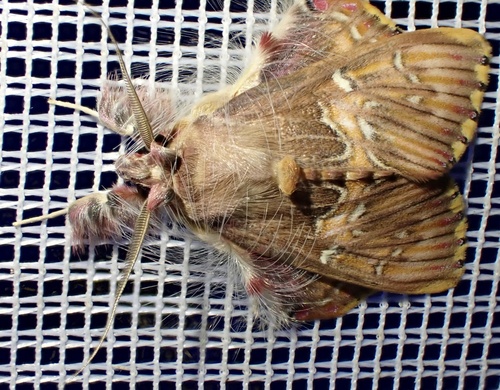
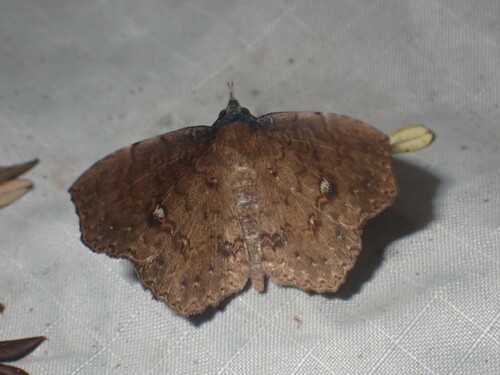
Anticarsia gemmatalis is a tropical species of caterpillar and moth that migrates north each season. The species can commonly be found in the Gulf states, north as far as Wisconsin. The adults have wings that are grayish brown, crossed with brown or black zigzag lines. The caterpillars are black or green, with narrow lighter stripes on the back and sides. They spit out a brownish substance, spring into the air and wriggle a lot when they are disturbed. The species eats velvet beans, peanut, soybeans, cotton, kudzu, alfalfa, cowpeas, horse beans, snap beans, lima beans, and coffeeweeds. Its common name is velvetbean caterpillar and velvetbean moth.

Egg viability was highest at 25 °C (77 °F) and adaptation to higher temperatures did not occur over a three generation observation. This suggests global warming will reduce A. gemmatalis losses on soybeans in tropical areas that are already at 25 °C (77 °F) but increase predation on soybeans in areas currently below that temperature, thus in fact only shifting the affected area. Wikipedia →

Global Distribution

Parks Where Found

# Park Country Daily sighting probability
1 Main Ridge Forest Reserve 🇹🇹 Trinidad and Tobago
~30%
2 Merritt Island National Wildlife Refuge 🇺🇸 United States
~10%
3 Everglades National Park 🇺🇸 United States
<5%

Cities Where Found

# City Country Daily sighting probability
1 Cordoba 🇦🇷 Argentina
~10%
2 Buenos Aires 🇦🇷 Argentina
~10%
3 Austin 🇺🇸 United States
~10%
4 Dallas 🇺🇸 United States
<5%
5 Houston 🇺🇸 United States
<5%
6 San Antonio 🇺🇸 United States
<5%
7 Orlando 🇺🇸 United States
<5%
8 Baltimore 🇺🇸 United States
<5%
9 Monterrey 🇲🇽 México
<5%
10 Miami 🇺🇸 United States
<5%

Before you go

What are the chances of seeing a Velvetbean Caterpillar Moth in Main Ridge Forest Reserve?

Possible

About 30% of wildlife watchers report a Velvetbean Caterpillar Moth sighting in Main Ridge Forest Reserve on a given day, based on 22 verified sightings from GBIF citizen-science data from 2019 to 2026. It is the 34th most-seen of the 346 insects we can rate there. Over three days the chance rises to about 60%, and over a week to about 90%, if each day is a fresh chance.

When is the best time to see a Velvetbean Caterpillar Moth in Main Ridge Forest Reserve?

January, March–April, August and October

In those months about 40% of wildlife watchers report a Velvetbean Caterpillar Moth in Main Ridge Forest Reserve on a given day, against under 5% in May–June, September and November, the lowest months.

What time of day is best to see a Velvetbean Caterpillar Moth?

Between 9 pm and midnight

Across all the parks we cover, that three-hour window holds the most Velvetbean Caterpillar Moth sightings with a recorded time, and about 6 in 10 of them come between 6 pm and 6 am: it is seen both by day and at night.

Is Main Ridge Forest Reserve the best place to see a Velvetbean Caterpillar Moth?

Yes

Of the 3 parks where we can rate Velvetbean Caterpillar Moth sightings, Main Ridge Forest Reserve has the highest daily chance: about 30%. Next come Merritt Island National Wildlife Refuge (United States, about 10%) and Everglades National Park (United States, under 5%).

Which relatives of the Velvetbean Caterpillar Moth live in Main Ridge Forest Reserve?

Same family: Erebidae

The closest relatives of the Velvetbean Caterpillar Moth that you can see in Main Ridge Forest Reserve (family Erebidae, Underwing, Tiger, Tussock, and Allied Moths) are Virbia medarda (about 40%), Eulepidotis viridissima (about 40%) and Walker's Moth (about 30%), with each one's daily chance of a sighting.

Where does the Velvetbean Caterpillar Moth sighting chance come from?

GBIF citizen-science records

It is estimated from how often the Velvetbean Caterpillar Moth is recorded against all the insects logged in Main Ridge Forest Reserve (22 verified sightings from 2019 to 2026), calibrated against known sighting rates. Figures are rounded to the nearest 10% because citizen-science data supports honest approximations, not decimals, and months with records from fewer than five people show "—". How it works.

← Back to Main Ridge Forest Reserve