

Daceton armigerum

Daceton armigerum

Daceton armigerum

Daily sighting probability ~10% · With luck
at Manu National Park

In 3 days ~30% in a week ~50%

13 Verified sightings at Manu National Park From 2019 to 2026
24 In all 3 parks
May Best month
☀️ Diurnal When it's spotted

About the Daceton armigerum

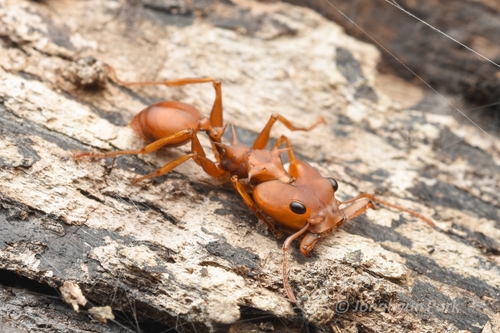
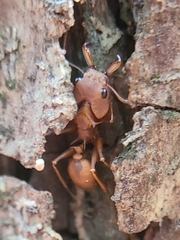
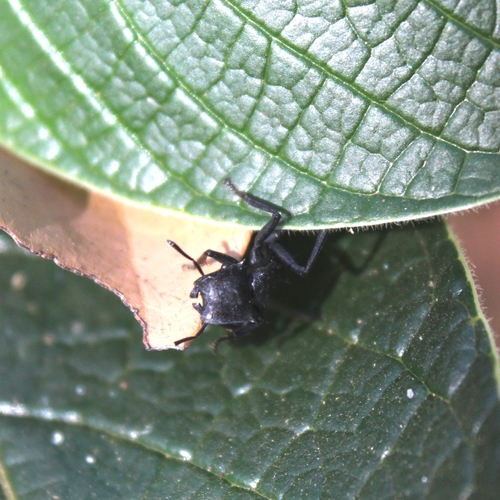
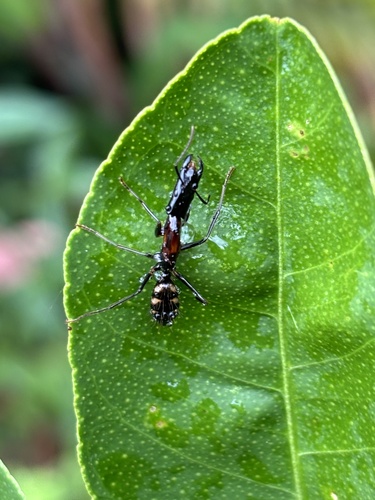
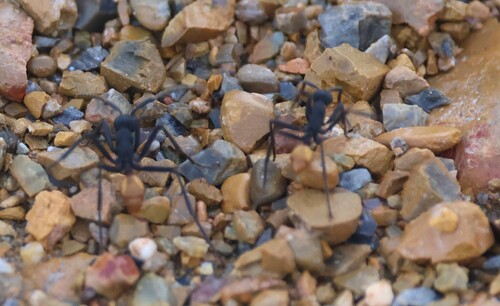
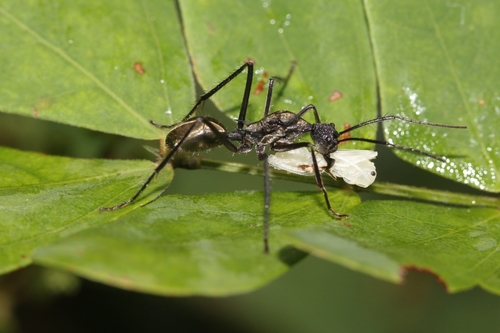
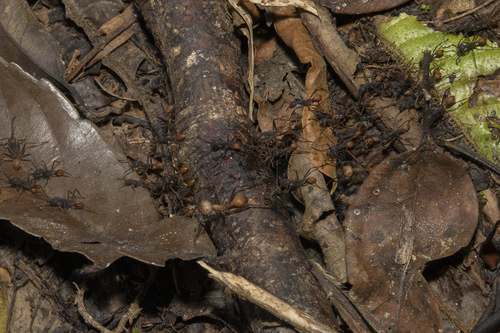
Daceton armigerum is a Neotropical species of arboreal ants, distributed throughout northern South America. D. armigerum combines several traits generally noted in some other arboreal ants i.e., populous colonies, large and/or polydomous nests, intra- and interspecific aggressiveness, trophobiosis, and capturing prey by spread-eagling them.

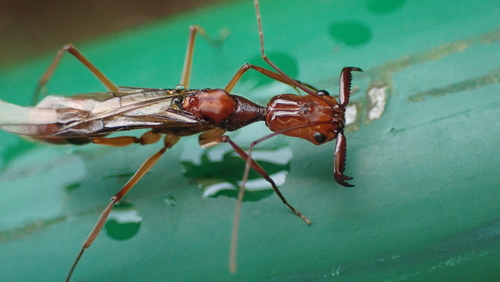
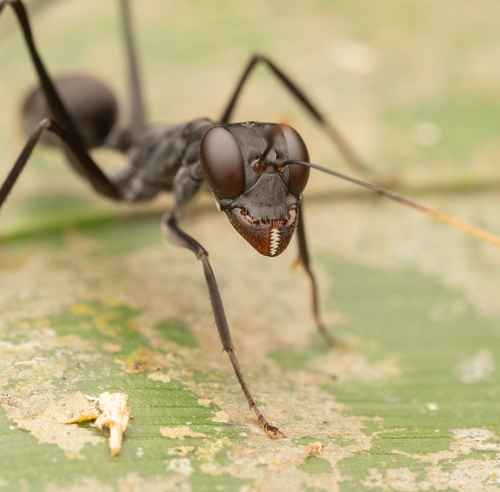
D. armigerum has a complex continuously polymorphic caste system, in which smaller workers nurse the brood and larger workers hunt, dismember prey items, and defend the nest. The workers have trap-jaw, hypertrophied mandibles that snap together, triggered by sensory hairs situated on the labrum and powering a killer bite. The polymorphism of the worker caste is dramatic, and the size-frequency unimodal (monophasic allometry); foraging workers, themselves highly polymorphic, are larger than those from inside the colony. Workers are so well adapted to arboreal life that when they fall from the forest canopy they are able to glide down onto the trunk of their host tree.

The species is distributed throughout northern South America and is known to occur in the terra firma and flooded forests of Bolivia... Wikipedia →

Global Distribution

Parks Where Found

# Park Country Daily sighting probability
1 Manu National Park 🇵🇪 Peru
~10%
2 Tambopata National Reserve 🇵🇪 Peru
~10%
3 Yasuní National Park 🇪🇨 Ecuador
~10%

Before you go

What are the chances of seeing a Daceton armigerum in Manu National Park?

With luck

About 10% of wildlife watchers report a Daceton armigerum sighting in Manu National Park on a given day, based on 13 verified sightings from GBIF citizen-science data from 2019 to 2026. It is the 103rd most-seen of the 366 insects we can rate there. Over three days the chance rises to about 30%, and over a week to about 50%, if each day is a fresh chance.

When is the best time to see a Daceton armigerum in Manu National Park?

May

In that month about 20% of wildlife watchers report a Daceton armigerum in Manu National Park on a given day, against under 5% in February, June–July and December, the lowest months.

What time of day is best to see a Daceton armigerum?

Between 8 and 11 am

Across all the parks we cover, that three-hour window holds the most Daceton armigerum sightings with a recorded time, and about 7 in 10 of them come between 6 am and 6 pm: it is a daytime animal.

Is Manu National Park the best place to see a Daceton armigerum?

Yes

Of the 3 parks where we can rate Daceton armigerum sightings, Manu National Park has the highest daily chance: about 10%. Next come Tambopata National Reserve (Peru, about 10%) and Yasuní National Park (Ecuador, about 10%).

Which relatives of the Daceton armigerum live in Manu National Park?

Same family: Formicidae

The closest relatives of the Daceton armigerum that you can see in Manu National Park (family Formicidae, Ants) are Bullet Ant (about 50%), Ectatomma tuberculatum (about 30%) and Common Giant Turtle Ant (about 20%), with each one's daily chance of a sighting.

Where does the Daceton armigerum sighting chance come from?

GBIF citizen-science records

It is estimated from how often the Daceton armigerum is recorded against all the insects logged in Manu National Park (13 verified sightings from 2019 to 2026), calibrated against known sighting rates. Figures are rounded to the nearest 10% because citizen-science data supports honest approximations, not decimals, and months with records from fewer than five people show "—". How it works.

← Back to Manu National Park