Eastern Saltmarsh Mosquito

Eastern Saltmarsh Mosquito

Aedes sollicitans

Daily sighting probability <5% · Rare
at Merritt Island National Wildlife Refuge

In 3 days ~10% in a week ~30%

5 Verified sightings at Merritt Island National Wildlife Refuge From 2019 to 2026
5 In 1 park
October Best month
☀️ Diurnal When it's spotted

About the Eastern Saltmarsh Mosquito

Aedes sollicitans, the eastern saltmarsh mosquito (also known as Ochlerotatus sollicitans), is a species of mosquito native to the eastern seaboard of the United States and Canada as well as the entire Gulf coast and is also present in the Bahamas and Greater Antilles. While primarily found in coastal areas within a few miles of the coast, it is occasionally found inland in areas with saline pools, the species was reported as far west as Arizona. The species is a prime vector for Eastern equine encephalitis, Venezuelan equine encephalitis and dog heartworm.

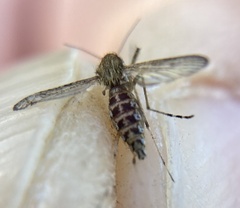
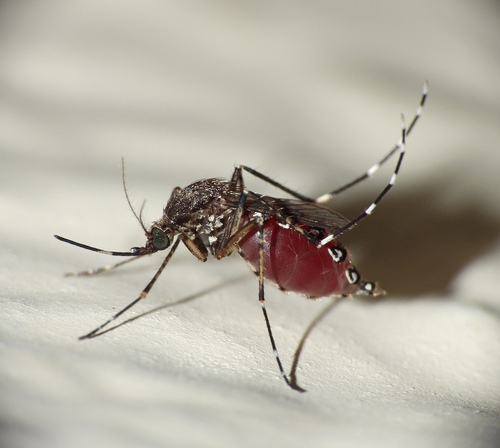
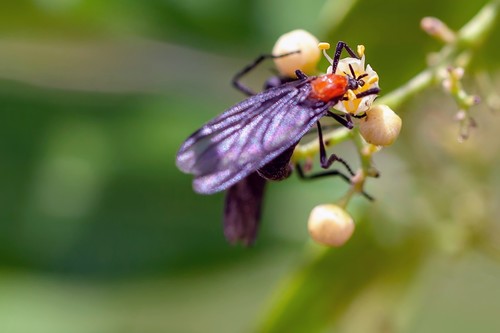
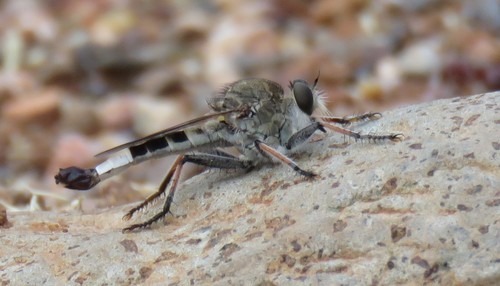
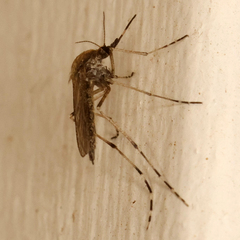
Aedes sollicitans has a conspicuous band of white scales around the central area of the proboscis and the anterior portion of the hind tarsomeres upon which there is also band a band of yellow scales in the middle. The abdomen has white basal bands and is divided by a medial longitudinal stripe. The thorax is white on the sides and the top is brown, yellow, golden and white.

Aedes sollicitans resembles Aedes taeniorhynchus but the two species can be distinguished at the larval and adult stages. Larval A. sollicitans have longer breathing tubes, have scale patches with pointed tips, and larger... Wikipedia →

Global Distribution

Parks Where Found

# Park Country Daily sighting probability
1 Merritt Island National Wildlife Refuge 🇺🇸 United States
<5%

More parks will be added in future updates.

Cities Where Found

# City Country Daily sighting probability
1 New York City 🇺🇸 United States
<5%
2 Boston 🇺🇸 United States
<5%
3 Houston 🇺🇸 United States
<5%

Before you go

What are the chances of seeing an Eastern Saltmarsh Mosquito in Merritt Island National Wildlife Refuge?

Rare

Under 5% of wildlife watchers report an Eastern Saltmarsh Mosquito sighting in Merritt Island National Wildlife Refuge on a given day, based on 5 verified sightings from GBIF citizen-science data from 2019 to 2026. It is the 165th most-seen of the 189 insects we can rate there. Over three days the chance rises to about 10%, and over a week to about 30%, if each day is a fresh chance.

When is the best time to see an Eastern Saltmarsh Mosquito in Merritt Island National Wildlife Refuge?

March, June–July and October

In those months about 10% of wildlife watchers report an Eastern Saltmarsh Mosquito in Merritt Island National Wildlife Refuge on a given day, against under 5% in April–May, August–September and November–February, the lowest months.

What time of day is best to see an Eastern Saltmarsh Mosquito?

Between 10 am and 1 pm

Across all the parks we cover, that three-hour window holds the most Eastern Saltmarsh Mosquito sightings with a recorded time, and nearly all of them come between 6 am and 6 pm: it is a daytime animal.

Where else can you see an Eastern Saltmarsh Mosquito?

Only Merritt Island National Wildlife Refuge, in our data

Merritt Island National Wildlife Refuge is the only park on Wallace's Line with enough records to rate Eastern Saltmarsh Mosquito sightings: under 5% of wildlife watchers there report one on a given day.

Where does the Eastern Saltmarsh Mosquito sighting chance come from?

GBIF citizen-science records

It is estimated from how often the Eastern Saltmarsh Mosquito is recorded against all the insects logged in Merritt Island National Wildlife Refuge (5 verified sightings from 2019 to 2026), calibrated against known sighting rates. Figures are rounded to the nearest 10% because citizen-science data supports honest approximations, not decimals, and months with records from fewer than five people show "—". How it works.

← Back to Merritt Island National Wildlife Refuge