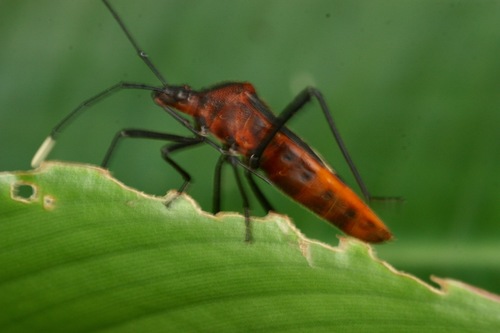
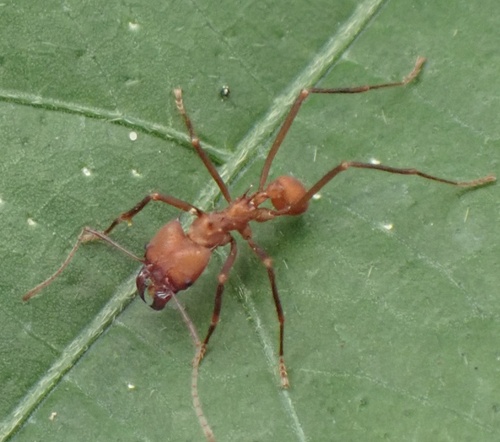
Panstrongylus geniculatus

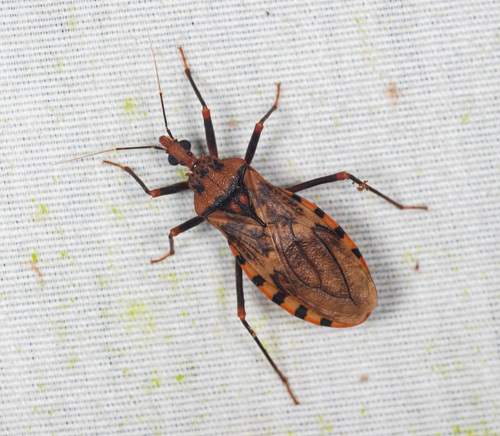
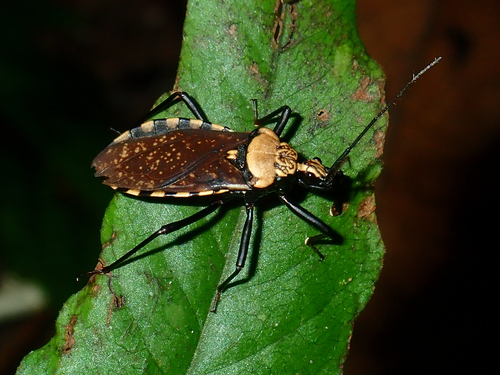
Panstrongylus geniculatus

Panstrongylus geniculatus

Daily sighting probability <5% · Rare
at Parque Natural Metropolitano

In 3 days ~10% in a week ~30%

5 Verified sightings at Parque Natural Metropolitano From 2019 to 2026
58 In all 6 parks
August Best month
🌙 Nocturnal When it's spotted

About the Panstrongylus geniculatus

Panstrogylus geniculatus is a blood-sucking sylvatic insect noted as a putative vector of minor importance in the transmission of Trypanosoma cruzi to humans; this is a parasite, which causes Chagas disease. The insect is described as sylvatic; subsisting primarily in humid forests, and is also known to inhabit vertebrate nesting places such as those of the armadillo (dasypus novemcinctus or dasypus), and is also involved in enzootic transmission of T. cruzi to those species. It has wide distribution throughout 16 Latin American countries.

There have been few scientific studies of this particular species because of the low number of collected specimens and difficulties in rearing and maintaining populations in the laboratory. However, currently P. geniculatus is receiving attention as a potential vector of Chagas disease (American trypanosomiasis) due to reports of this species invading the domestic and peridomestic habitats over a vast area: Venezuela, Colombia, Brazil, Peru, Ecuador, and Argentina.

P. geniculatus is apparently in the process of domiciliation, using the same strategies as highly domesticated species like Triatoma infestans and Rhodnius prolixus. This is also the case for other sylvatic triatomine species (Triatominae) that are experiencing similar ecological pressures originating from human disruption of the natural habitat. Wikipedia →
Global Distribution

Parks Where Found

# Park Country Daily sighting probability
1 Main Ridge Forest Reserve 🇹🇹 Trinidad and Tobago
~20%
2 Braulio Carrillo National Park 🇨🇷 Costa Rica
~10%
3 Manu National Park 🇵🇪 Peru
~10%
4 Manuel Antonio National Park 🇨🇷 Costa Rica
~10%
5 Soberanía National Park 🇵🇦 Panama
~10%
6 Parque Natural Metropolitano 🇵🇦 Panama
<5%

Before you go

What are the chances of seeing a Panstrongylus geniculatus in Parque Natural Metropolitano?

Rare

Under 5% of wildlife watchers report a Panstrongylus geniculatus sighting in Parque Natural Metropolitano on a given day, based on 5 verified sightings from GBIF citizen-science data from 2019 to 2026. It is the 100th most-seen of the 114 insects we can rate there. Over three days the chance rises to about 10%, and over a week to about 30%, if each day is a fresh chance.

When is the best time to see a Panstrongylus geniculatus in Parque Natural Metropolitano?

February–May and August

In those months about 10% of wildlife watchers report a Panstrongylus geniculatus in Parque Natural Metropolitano on a given day, against under 5% in June–July and September–January, the lowest months.

What time of day is best to see a Panstrongylus geniculatus?

Between 7 and 10 pm

Across all the parks we cover, that three-hour window holds the most Panstrongylus geniculatus sightings with a recorded time, and about 8 in 10 of them come between 6 pm and 6 am: it is mostly seen at night.

Is Parque Natural Metropolitano the best place to see a Panstrongylus geniculatus?

6th of 6

Of the 6 parks where we can rate Panstrongylus geniculatus sightings, Parque Natural Metropolitano ranks 6th at under 5%. The best odds are in Main Ridge Forest Reserve (Trinidad and Tobago, about 20%), Braulio Carrillo National Park (Costa Rica, about 10%) and Manu National Park (Peru, about 10%).

Where does the Panstrongylus geniculatus sighting chance come from?

GBIF citizen-science records

It is estimated from how often the Panstrongylus geniculatus is recorded against all the insects logged in Parque Natural Metropolitano (5 verified sightings from 2019 to 2026), calibrated against known sighting rates. Figures are rounded to the nearest 10% because citizen-science data supports honest approximations, not decimals, and months with records from fewer than five people show "—". How it works.

← Back to Parque Natural Metropolitano