Chiloé Wigeon

Chiloé Wigeon

Mareca sibilatrix

Silhouette: Andy Wilson · PhyloPic

LCLeast ConcernNTVUENCR
Daily sighting probability ~20% · Possible
at Nahuel Huapi National Park

In 3 days ~40% in a week ~70%

142 Verified sightings at Nahuel Huapi National Park From 2019 to 2026
727 In all 5 parks
May Best month
☀️ Diurnal When it's spotted

About the Chiloé Wigeon

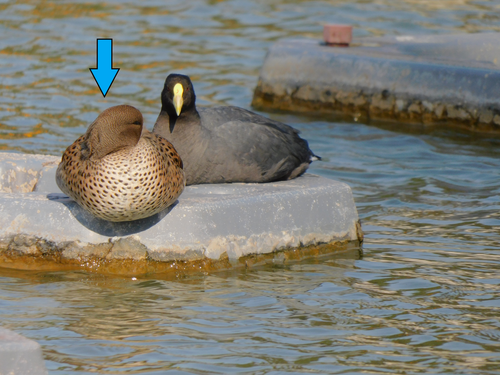
The Chiloé wigeon (Mareca sibilatrix), also known as the southern wigeon, is one of three extant species of wigeon in the genus Mareca of the dabbling duck subfamily. This bird is indigenous to the southern part of South America, including the Chiloé Archipelago, from which it gets its name.

In its native range, it is called the pato overo ("piebald duck") or pato real ("royal duck"), although the latter name also refers to the Muscovy in the wild. Its specific epithet, sibilatrix, means 'whistler', referring to the bird's call.

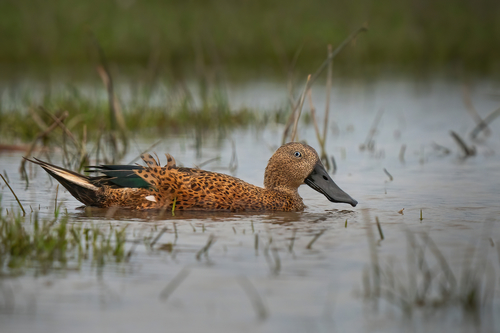
The Chiloé wigeon has a body length of 46 to 56 cm (18 to 22 in) and a wingspan of 75 to 86 cm (30 to 34 in). The wing length is about 25 cm (9.8 in) and the weight is approximately 800 g (28 oz). This bird has an iridescent green-blue cap on its head, and a bluish gray bill with a black tip. The cheeks and forehead are white, the eyes are dark brown, and there is a white auricular patch. The neck and occipital part of the head are black. The breast is barred black and white and the plumage of the wings is gray and white. The flanks of males are rust colored, and light brown on females. The legs and feet are gray.

Sexual dimorphism is relatively... Wikipedia →

Sounds

Flight call0:26

Brazil · 2021

© JAYRSON ARAUJO DE OLIVEIRA · XC686713 · CC BY-NC-SA 4.0

Call1:08

Chile · 2018

© Peter Boesman · XC449992 · CC BY-NC-ND 4.0

Recording0:35

Argentina · 2023

© Fernando del Valle · XC798876 · CC BY-NC-SA 4.0

Global Distribution

Parks Where Found

# Park Country Daily sighting probability
1 Torres del Paine National Park 🇨🇱 Chile
~30%
2 Nahuel Huapi National Park 🇦🇷 Argentina
~20%
3 Tierra del Fuego National Park 🇦🇷 Argentina
~10%
4 Vicente Pérez Rosales National Park 🇨🇱 Chile
~10%
5 Península Valdés 🇦🇷 Argentina
<5%

Cities Where Found

# City Country Daily sighting probability
1 Santiago 🇨🇱 Chile
<5%
2 Buenos Aires 🇦🇷 Argentina
<5%

Zoos & Centres Where Found

# Zoo / Centre Country
1 San Diego Zoo 🇺🇸 United States In captivity
2 Copenhagen Zoo 🇩🇰 Denmark In captivity
3 Cincinnati Zoo and Botanical Garden 🇺🇸 United States In captivity
4 Barcelona Zoo 🇪🇸 Spain In captivity
5 Zoo Pilsen 🇨🇿 Czechia In captivity
6 Parc des oiseaux 🇫🇷 France In captivity
7 Zoo Miami 🇺🇸 United States In captivity
8 San Diego Zoo Safari Park 🇺🇸 United States In captivity
9 Slimbridge Wetland Centre 🇬🇧 United Kingdom In captivity
10 Caldwell Zoo 🇺🇸 United States In captivity
11 Fort Worth Zoo 🇺🇸 United States In captivity
12 Centro Cicogne e Anatidi 🇮🇹 Italy In captivity
13 San Antonio Zoo 🇺🇸 United States In captivity
14 Alipore Zoological Gardens 🇮🇳 India In captivity
15 Cologne Zoological Garden 🇩🇪 Germany In captivity
16 Attica Zoological Park 🇬🇷 Greece In captivity
17 Budapest Zoo & Botanical Garden 🇭🇺 Hungary In captivity
18 Aquarama Barcelona 🇪🇸 Spain In captivity
19 Cleres Zoological Park 🇫🇷 France In captivity
20 Bioparque Educativo Quillón 🇨🇱 Chile In captivity
21 Gladys Porter Zoo 🇺🇸 United States In captivity
22 Van Blanckendaell Park 🇳🇱 Netherlands In captivity
23 Buin Zoo 🇨🇱 Chile In captivity
24 L'Oceanogràfic 🇪🇸 Spain In captivity
25 Parc zoologique de Jurques 🇫🇷 France In captivity
26 Santillana Zoo 🇪🇸 Spain In captivity
27 Poznań Old Zoo 🇵🇱 Poland In captivity
28 Small Breeds Farm Park 🇬🇧 United Kingdom In captivity
29 Zoo Lagos 🇵🇹 Portugal In captivity
30 Divoká zahrada Hostivař 🇨🇿 Czechia In captivity
31 Golders Hill Park Zoo 🇬🇧 United Kingdom In captivity
32 De Zindering 🇳🇱 Netherlands In captivity
33 Aikman Wildlife Adventure 🇺🇸 United States In captivity
34 Aviary 🇭🇰 Hong Kong SAR China In captivity
35 Bristol Zoo 🇬🇧 United Kingdom In captivity
36 Cologne Zoo Aquarium 🇩🇪 Germany In captivity
37 Margitszigeti Kisállatkert 🇭🇺 Hungary In captivity
38 Tropical Birdland, Leicestershire 🇬🇧 United Kingdom In captivity

Before you go

What are the chances of seeing a Chiloé Wigeon in Nahuel Huapi National Park?

Possible

About 20% of wildlife watchers report a Chiloé Wigeon sighting in Nahuel Huapi National Park on a given day, based on 142 verified sightings from GBIF citizen-science data from 2019 to 2026. It is the 44th most-seen of the 111 birds we can rate there. Over three days the chance rises to about 40%, and over a week to about 70%, if each day is a fresh chance.

When is the best time to see a Chiloé Wigeon in Nahuel Huapi National Park?

May

In that month about 40% of wildlife watchers report a Chiloé Wigeon in Nahuel Huapi National Park on a given day, against under 5% in March and July–September, the lowest months.

What time of day is best to see a Chiloé Wigeon?

Between 3 and 6 pm

Across all the parks we cover, that three-hour window holds the most Chiloé Wigeon sightings with a recorded time, and about 8 in 10 of them come between 6 am and 6 pm: it is a daytime animal.

Is Nahuel Huapi National Park the best place to see a Chiloé Wigeon?

2nd of 5

Of the 5 parks where we can rate Chiloé Wigeon sightings, Nahuel Huapi National Park ranks 2nd at about 20%. The best odds are in Torres del Paine National Park (Chile, about 30%).

Which relatives of the Chiloé Wigeon live in Nahuel Huapi National Park?

Same family: Anatidae

The closest relatives of the Chiloé Wigeon that you can see in Nahuel Huapi National Park (family Anatidae, Ducks, Geese, and Swans) are Ashy-headed Goose (about 40%), Yellow-billed Pintail (about 30%) and Flying Steamer-Duck (about 30%), with each one's daily chance of a sighting.

Where does the Chiloé Wigeon sighting chance come from?

GBIF citizen-science records

It is estimated from how often the Chiloé Wigeon is recorded against all the birds logged in Nahuel Huapi National Park (142 verified sightings from 2019 to 2026), calibrated against known sighting rates. Figures are rounded to the nearest 10% because citizen-science data supports honest approximations, not decimals, and months with records from fewer than five people show "—". How it works.

← Back to Nahuel Huapi National Park