Des Murs's Wiretail

Des Murs's Wiretail

Sylviorthorhynchus desmursii

Silhouette: Edwin Price · PhyloPic

Daily sighting probability ~10% · With luck
at Nahuel Huapi National Park

In 3 days ~30% in a week ~50%

82 Verified sightings at Nahuel Huapi National Park From 2019 to 2026
176 In all 2 parks
May Best month
☀️ Diurnal When it's spotted

About the Des Murs's Wiretail

Des Murs's wiretail (Sylviorthorhynchus desmurii) is a small passerine bird of southern South America which belongs to the ovenbird family Furnariidae. Molecular phylogenetics places it within the Synallaxinae and indicates that the genus diverged from the Leptasthenura about 14–15 million years ago.

Des Murs's wiretail was illustrated and given the binomial name Sylviorthorhynchus desmurii by the French naturalist Claude Gay in 1845. The specific epithet was chosen to honour the French ornithologist Marc Athanase Parfait Œillet des Murs. The species is monotypic: no subspecies are recognised.

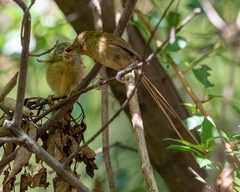
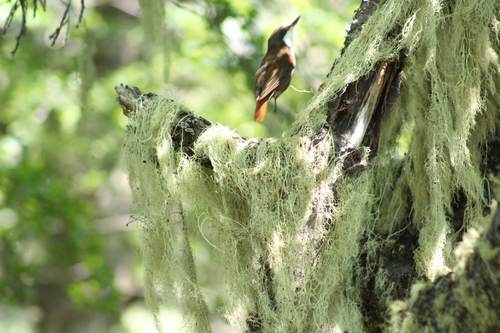
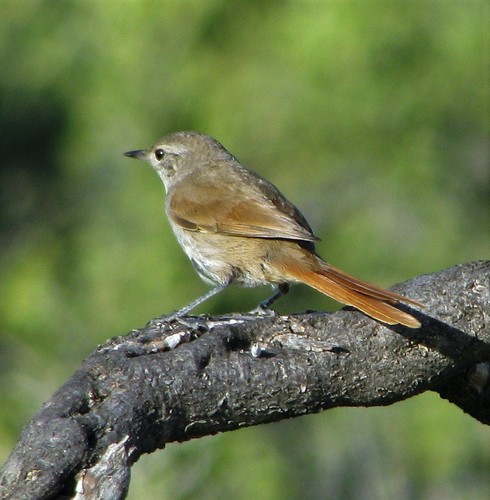
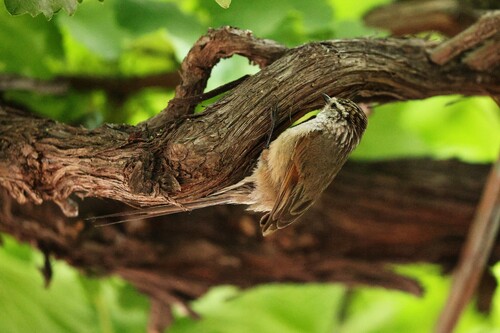
It is 24 centimetres (9.4 in) long, with the very long tail accounting for about two-thirds of this, but weighs as little as 10 grams (0.35 oz). The tail consists of just six feathers which are very narrow and filament-like: so few rectrices are elsewhere seen only in the emu-wrens of Australia. The two central feathers are greatly elongated while the two outer feathers are very short. The plain plumage is reddish-brown above, paler on the underparts. There is a pale stripe above the eye. The bird is small and rounded with a very fine bill. The song is fast and... Wikipedia →

Sounds

Recording0:04

Chile · 2021

© Rodolfo Walker · iNaturalist · CC BY-NC 4.0

Recording0:15

Chile · 2021

© Leonardo Mondaca Lara · iNaturalist · CC BY 4.0

Recording0:04

Chile · 2023

© nitsuga74 · iNaturalist · CC BY-NC 4.0

Global Distribution

Parks Where Found

# Park Country Daily sighting probability
1 Vicente Pérez Rosales National Park 🇨🇱 Chile
~20%
2 Nahuel Huapi National Park 🇦🇷 Argentina
~10%

Before you go

What are the chances of seeing a Des Murs's Wiretail in Nahuel Huapi National Park?

With luck

About 10% of wildlife watchers report a Des Murs's Wiretail sighting in Nahuel Huapi National Park on a given day, based on 82 verified sightings from GBIF citizen-science data from 2019 to 2026. It is the 59th most-seen of the 111 birds we can rate there. Over three days the chance rises to about 30%, and over a week to about 50%, if each day is a fresh chance.

When is the best time to see a Des Murs's Wiretail in Nahuel Huapi National Park?

May

In that month about 30% of wildlife watchers report a Des Murs's Wiretail in Nahuel Huapi National Park on a given day, against under 5% in January, April and September, the lowest months.

What time of day is best to see a Des Murs's Wiretail?

Between 3 and 6 pm

Across all the parks we cover, that three-hour window holds the most Des Murs's Wiretail sightings with a recorded time, and about 7 in 10 of them come between 6 am and 6 pm: it is a daytime animal.

Is Nahuel Huapi National Park the best place to see a Des Murs's Wiretail?

2nd of 2

Of the 2 parks where we can rate Des Murs's Wiretail sightings, Nahuel Huapi National Park ranks 2nd at about 10%. The best odds are in Vicente Pérez Rosales National Park (Chile, about 20%).

Which relatives of the Des Murs's Wiretail live in Nahuel Huapi National Park?

Same family: Furnariidae

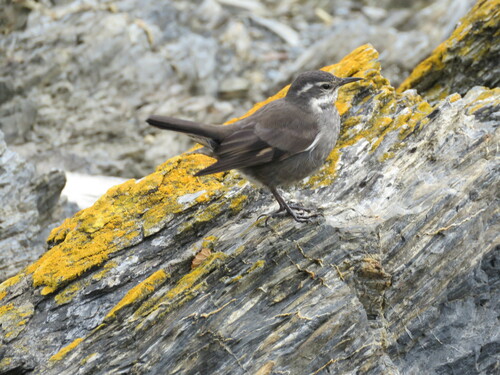
The closest relatives of the Des Murs's Wiretail that you can see in Nahuel Huapi National Park (family Furnariidae, Ovenbirds and Woodcreepers) are Dark-bellied Cinclodes (about 50%), Thorn-tailed Rayadito (about 40%) and White-throated Treerunner (about 30%), with each one's daily chance of a sighting.

Where does the Des Murs's Wiretail sighting chance come from?

GBIF citizen-science records

It is estimated from how often the Des Murs's Wiretail is recorded against all the birds logged in Nahuel Huapi National Park (82 verified sightings from 2019 to 2026), calibrated against known sighting rates. Figures are rounded to the nearest 10% because citizen-science data supports honest approximations, not decimals, and months with records from fewer than five people show "—". How it works.

← Back to Nahuel Huapi National Park