White-throated Treerunner

White-throated Treerunner

Pygarrhichas albogularis

Silhouette: Edwin Price · PhyloPic

LCLeast ConcernNTVUENCR
Daily sighting probability ~30% · Possible
at Nahuel Huapi National Park

In 3 days ~60% in a week ~90%

361 Verified sightings at Nahuel Huapi National Park From 2019 to 2026
1,116 In all 4 parks
May Best month
☀️ Diurnal When it's spotted

About the White-throated Treerunner

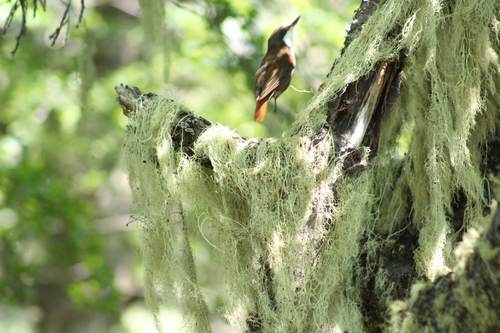
The white-throated treerunner (Pygarrhichas albogularis) is a species of bird in the family Furnariidae. It is the only species in the genus Pygarrhichas. The white-throated treerunner is about 15 cm (5.9 in) long, with a stiff and rounded tail. The upperparts are dark brown, turning red on the lower back and tail and contrasting sharply with the throat and chest of a bright white. The rest of the underparts are coarsely mottled with white. The bill is long, slightly curved upwards. The general appearance is reminiscent of a nuthatch (Sitta spp.), although they are not directly related. Like the Sittidae, Furnariidae tirelessly scours the trunks and branches of old trees for the small arthropods that make up its food, spiraling up the trunks, or sometimes moving head down. The white-throated treerunner consumes small invertebrates found on bark and nests in tree cavities. Outside of the breeding season, it may form mixed-species foraging flocks with other bird species.

The White-throated treerunner inhabits the southern tip of the American continent, in Chile and Argentina, from Santiago and Mendoza to Tierra del Fuego. It seeks out forests with large trees – the old trunks offer suitable nesting sites – whether they are lowland or highland, dense or open. It was described in 1831 by Phillip Parker King, a British explorer of Patagonia and Tierra del Fuego. Its systematic placement has remained unclear within its family, superficial similarities with other Furnariidae gleaning their food from the bark of trees seem to be the result of an evolutionary convergence. Molecular phylogenies seem to link it to the genera Microxenops and Ochetorhynchus. No subspecies is described. Its range is relatively large and there is no evidence of decline in numbers, so the International Union for Conservation of Nature considers this bird to be of "least concern". Wikipedia →

Sounds

Call0:18

Chile · 2025

© Marc Anderson · XC1075444 · CC BY-NC-ND 4.0

Song0:20

Chile · 2004

© Alvaro Jaramillo · XC60204 · CC BY-NC-ND 2.5

Call0:22

Chile · 2023

© Scott Olmstead · XC872054 · CC BY-NC-SA 4.0

Global Distribution

Parks Where Found

# Park Country Daily sighting probability
1 Vicente Pérez Rosales National Park 🇨🇱 Chile
~40%
2 Tierra del Fuego National Park 🇦🇷 Argentina
~40%
3 Nahuel Huapi National Park 🇦🇷 Argentina
~30%
4 Torres del Paine National Park 🇨🇱 Chile
~10%

Before you go

What are the chances of seeing a White-throated Treerunner in Nahuel Huapi National Park?

Possible

About 30% of wildlife watchers report a White-throated Treerunner sighting in Nahuel Huapi National Park on a given day, based on 361 verified sightings from GBIF citizen-science data from 2019 to 2026. It is the 26th most-seen of the 111 birds we can rate there. Over three days the chance rises to about 60%, and over a week to about 90%, if each day is a fresh chance.

When is the best time to see a White-throated Treerunner in Nahuel Huapi National Park?

March and May

In those months about 50% of wildlife watchers report a White-throated Treerunner in Nahuel Huapi National Park on a given day, against about 10% in July, the lowest month.

What time of day is best to see a White-throated Treerunner?

Between noon and 3 pm

Across all the parks we cover, that three-hour window holds the most White-throated Treerunner sightings with a recorded time, and about 9 in 10 of them come between 6 am and 6 pm: it is a daytime animal.

Is Nahuel Huapi National Park the best place to see a White-throated Treerunner?

3rd of 4

Of the 4 parks where we can rate White-throated Treerunner sightings, Nahuel Huapi National Park ranks 3rd at about 30%. The best odds are in Vicente Pérez Rosales National Park (Chile, about 40%) and Tierra del Fuego National Park (Argentina, about 40%).

Which relatives of the White-throated Treerunner live in Nahuel Huapi National Park?

Same family: Furnariidae

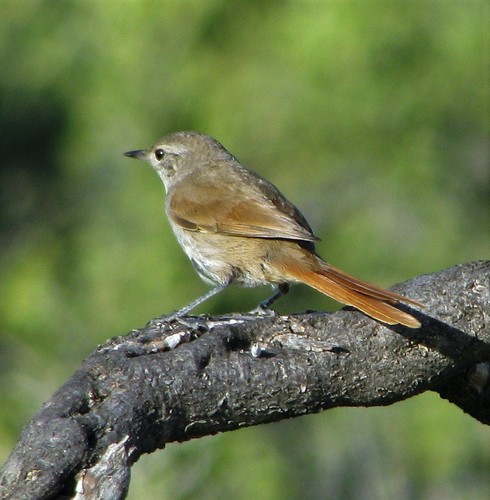
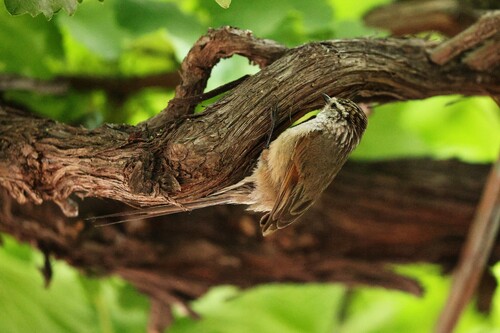
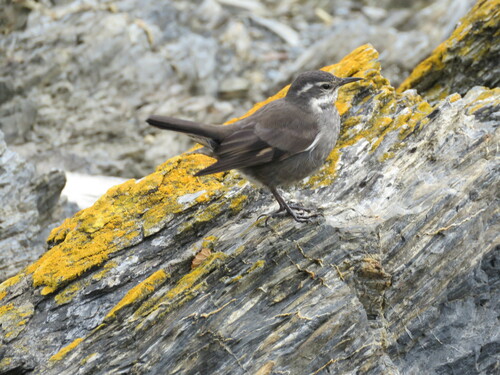
The closest relatives of the White-throated Treerunner that you can see in Nahuel Huapi National Park (family Furnariidae, Ovenbirds and Woodcreepers) are Dark-bellied Cinclodes (about 50%), Thorn-tailed Rayadito (about 40%) and Sharp-billed Canastero (about 20%), with each one's daily chance of a sighting.

Where does the White-throated Treerunner sighting chance come from?

GBIF citizen-science records

It is estimated from how often the White-throated Treerunner is recorded against all the birds logged in Nahuel Huapi National Park (361 verified sightings from 2019 to 2026), calibrated against known sighting rates. Figures are rounded to the nearest 10% because citizen-science data supports honest approximations, not decimals, and months with records from fewer than five people show "—". How it works.

← Back to Nahuel Huapi National Park