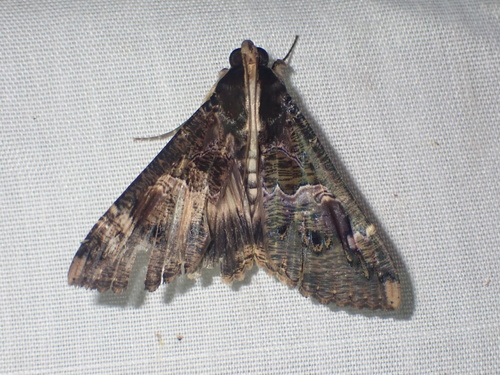
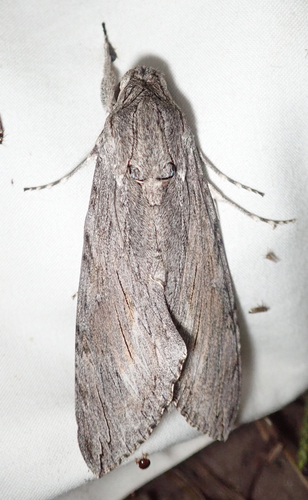
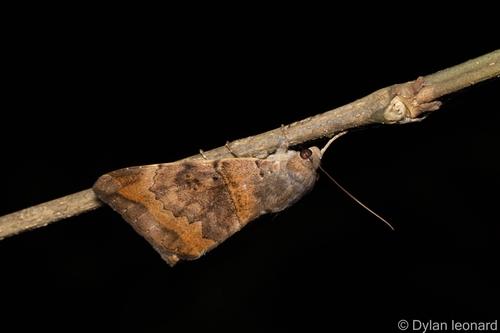
Brown Grass Jewel

Brown Grass Jewel

Freyeria trochylus

Daily sighting probability ~10% · With luck
at Namib-Naukluft National Park

In 3 days ~20% in a week ~40%

6 Verified sightings at Namib-Naukluft National Park From 2019 to 2026
84 In all 5 parks
May Best month
☀️ Diurnal When it's spotted

About the Brown Grass Jewel

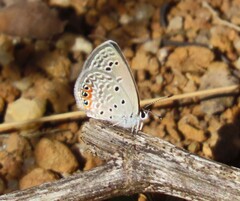
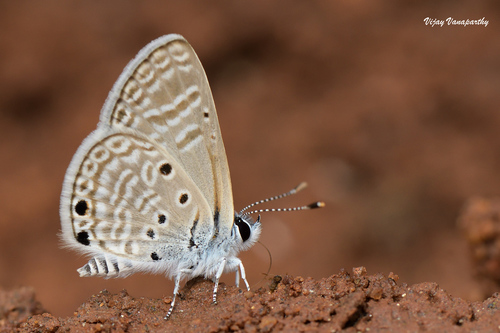
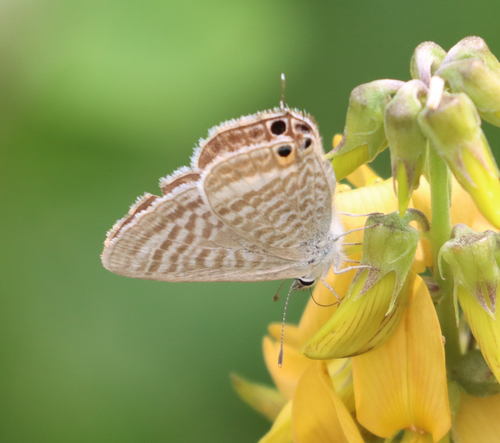
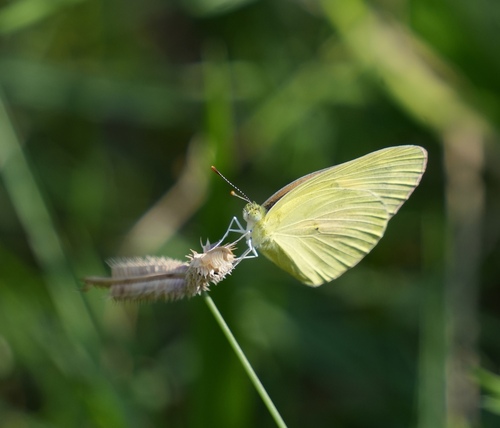
Freyeria trochylus, the grass jewel, is a small butterfly found in Africa, Arabia (United Arab Emirates, Oman, Saudi Arabia), southern Europe (Bulgaria and Greece), India and southern Asia that belongs to the lycaenids or blues family.

Male upperside: brown, somewhat variable in tint. Specimens from dry localities are much paler than those taken in areas with a comparatively heavy rainfall. Forewing: uniform, with a very ill-defined anteciliary dark line in some specimens. Hindwing: a subterminal series of round black spots crowned with pale ochraceous, the posterior four spots generally well defined and outwardly edged with white, the anterior spots obsolescent and without the interior edging of yellow or the outer edging of white; a well-marked, slender anteciliary black line. Cilia white, basal halves brown.

Underside: pale silky brown. Forewing: with the following white markings: a short line on the inner and outer sides of the discocellulars; a transverse, slightly curved, discal series of small, more or less incomplete rings; a transverse postdiscal series of disconnected slender lunules; a subterminal series of similar but more regular lunules and a terminal... Wikipedia →

Global Distribution

Parks Where Found

# Park Country Daily sighting probability
1 Kgalagadi Transfrontier Park 🇿🇦 South Africa
~20%
2 iSimangaliso Wetland Park 🇿🇦 South Africa
~10%
3 Namib-Naukluft National Park 🇳🇦 Namibia
~10%
4 Addo Elephant National Park 🇿🇦 South Africa
~10%
5 Kruger National Park 🇿🇦 South Africa
~10%

Cities Where Found

# City Country Daily sighting probability
1 Lusaka 🇿🇲 Zambia
~20%

Before you go

What are the chances of seeing a Brown Grass Jewel in Namib-Naukluft National Park?

With luck

About 10% of wildlife watchers report a Brown Grass Jewel sighting in Namib-Naukluft National Park on a given day, based on 6 verified sightings from GBIF citizen-science data from 2019 to 2026. It is the 47th most-seen of the 60 insects we can rate there. Over three days the chance rises to about 20%, and over a week to about 40%, if each day is a fresh chance.

When is the best time to see a Brown Grass Jewel in Namib-Naukluft National Park?

February–March and May–July

In those months about 10% of wildlife watchers report a Brown Grass Jewel in Namib-Naukluft National Park on a given day, against under 5% in April and August–January, the lowest months.

What time of day is best to see a Brown Grass Jewel?

Between noon and 3 pm

Across all the parks we cover, that three-hour window holds the most Brown Grass Jewel sightings with a recorded time, and about 9 in 10 of them come between 6 am and 6 pm: it is a daytime animal.

Is Namib-Naukluft National Park the best place to see a Brown Grass Jewel?

3rd of 5

Of the 5 parks where we can rate Brown Grass Jewel sightings, Namib-Naukluft National Park ranks 3rd at about 10%. The best odds are in Kgalagadi Transfrontier Park (South Africa, about 20%) and iSimangaliso Wetland Park (South Africa, about 10%).

Which relatives of the Brown Grass Jewel live in Namib-Naukluft National Park?

Same family: Lycaenidae

The closest relatives of the Brown Grass Jewel that you can see in Namib-Naukluft National Park (family Lycaenidae, Gossamer-winged Butterflies) are Bright Babul Blue (about 10%) and Pea Blue (about 10%), with each one's daily chance of a sighting.

Where does the Brown Grass Jewel sighting chance come from?

GBIF citizen-science records

It is estimated from how often the Brown Grass Jewel is recorded against all the insects logged in Namib-Naukluft National Park (6 verified sightings from 2019 to 2026), calibrated against known sighting rates. Figures are rounded to the nearest 10% because citizen-science data supports honest approximations, not decimals, and months with records from fewer than five people show "—". How it works.

← Back to Namib-Naukluft National Park