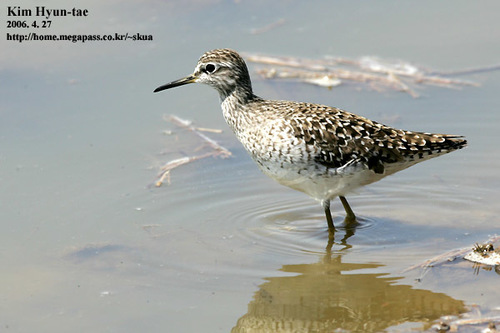
Bronze-winged Courser

Bronze-winged Courser

Rhinoptilus chalcopterus

Silhouette: Sheatherius · PhyloPic

LCLeast ConcernNTVUENCR
Daily sighting probability <5% · Rare
at Ngorongoro Conservation Area

In 3 days <5%

7 Verified sightings at Ngorongoro Conservation Area From 2019 to 2026
436 In all 15 parks
April Best month
🌅 Crepuscular When it's spotted

About the Bronze-winged Courser

The bronze-winged courser or violet-tipped courser (Rhinoptilus chalcopterus) is a species of bird in the family Glareolidae. This species is named for its characteristic bronze-tipped feathers that are visible during flight. It is found living throughout Sub-Saharan Africa, inhabiting semi-arid savannas and woodlands. This is a nocturnal species which mainly feeds on ground-dwelling insects. Bronze-winged coursers are typically solitary, only forming monogamous pairs for breeding. A female may produce 2-3 eggs per clutch, and the chicks receive parental care from both sexes when young. The bronze-winged courser is considered of Least Concern for conservation status, and is thought to be a very stable species.

The bronze-winged courser is a species of small wading birds with long legs and short wings. The bronze-winged courser is the largest of the coursers, with a body length of 25-29 centimeters, a wingspan up to 58 centimeters, and body weight between 91 and 220 grams.

The bronze-winged courser can be recognized by its characteristic head markings and overall coloration. The adult plumage differs from the juvenile plumage in this species... Wikipedia →

Sounds

Call0:17

South Africa · 2021

© Derek Solomon · XC696623 · CC BY-NC-SA 4.0

Song1:23

Zambia · 2023

© Marc Anderson · XC830765 · CC BY-NC-ND 4.0

Recording0:42

South Africa · 2025

© Sascha Schumann · iNaturalist · CC BY-NC 4.0

Global Distribution

Parks Where Found

# Park Country Daily sighting probability
1 Hwange National Park 🇿🇼 Zimbabwe
~10%
2 Ruaha National Park 🇹🇿 Tanzania
~10%
3 Gonarezhou National Park 🇿🇼 Zimbabwe
<5%
4 Tarangire National Park 🇹🇿 Tanzania
<5%
5 Liwonde National Park 🇲🇼 Malawi
<5%
6 Gorongosa National Park 🇲🇿 Mozambique
<5%
7 Mana Pools National Park 🇿🇼 Zimbabwe
<5%
8 South Luangwa National Park 🇿🇲 Zambia
<5%
9 Kruger National Park 🇿🇦 South Africa
<5%
10 uMkhuze Game Reserve 🇿🇦 South Africa
<5%
11 Kafue National Park 🇿🇲 Zambia
<5%
12 Chobe National Park 🇧🇼 Botswana
<5%
13 iSimangaliso Wetland Park 🇿🇦 South Africa
<5%
14 Serengeti National Park 🇹🇿 Tanzania
<5%
15 Ngorongoro Conservation Area 🇹🇿 Tanzania
<5%

Before you go

What are the chances of seeing a Bronze-winged Courser in Ngorongoro Conservation Area?

Rare

Under 5% of wildlife watchers report a Bronze-winged Courser sighting in Ngorongoro Conservation Area on a given day, based on 7 verified sightings from GBIF citizen-science data from 2019 to 2026. It is the 490th most-seen of the 519 birds we can rate there. Over three days the chance rises to under 5%, if each day is a fresh chance.

When is the best time to see a Bronze-winged Courser in Ngorongoro Conservation Area?

Any time of year

In every month with enough records, under 5% of wildlife watchers report a Bronze-winged Courser in Ngorongoro Conservation Area on a given day, so our monthly data shows no clear season.

What time of day is best to see a Bronze-winged Courser?

Between 4 and 7 pm

Across all the parks we cover, that three-hour window holds the most Bronze-winged Courser sightings with a recorded time, and about 7 in 10 of them come between 6 am and 6 pm: it is most active around dawn and dusk.

Is Ngorongoro Conservation Area the best place to see a Bronze-winged Courser?

15th of 15

Of the 15 parks where we can rate Bronze-winged Courser sightings, Ngorongoro Conservation Area ranks 15th at under 5%. The best odds are in Hwange National Park (Zimbabwe, about 10%), Ruaha National Park (Tanzania, about 10%) and Gonarezhou National Park (Zimbabwe, under 5%).

Where does the Bronze-winged Courser sighting chance come from?

GBIF citizen-science records

It is estimated from how often the Bronze-winged Courser is recorded against all the birds logged in Ngorongoro Conservation Area (7 verified sightings from 2019 to 2026), calibrated against known sighting rates. Figures are rounded to the nearest 10% because citizen-science data supports honest approximations, not decimals, and months with records from fewer than five people show "—". How it works.

← Back to Ngorongoro Conservation Area