Nyanza Swift

Nyanza Swift

Apus niansae

Silhouette: Ferran Sayol · PhyloPic

LCLeast ConcernNTVUENCR
Daily sighting probability <5% · Rare
at Ngorongoro Conservation Area

In 3 days ~10% in a week ~20%

75 Verified sightings at Ngorongoro Conservation Area From 2019 to 2026
323 In all 10 parks
April Best month
☀️ Diurnal When it's spotted

About the Nyanza Swift

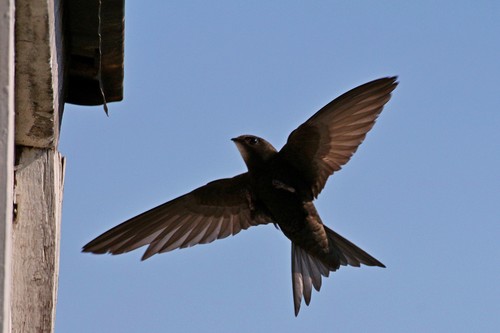
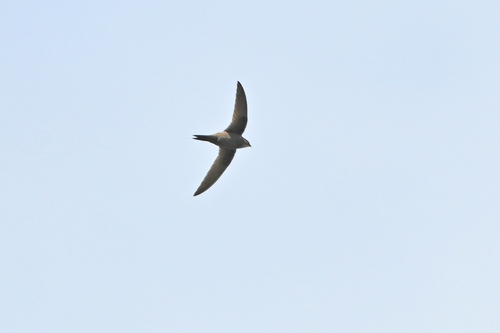
The Nyanza swift (Apus niansae) is a species of swift in the family Apodidae. It is found in Eritrea, Ethiopia, Kenya, Somalia, South Sudan, Tanzania, and Uganda. The Nyanza swift, also known as the brown swift, is a medium sized bird with sleek wings, along with a small and compact head. It has a short, forked tail, blunt rectrices, and small coverts. In contrast with its head and torso, the Nyanza swift's outer wings are pale brown along with a pale throat. In the field, the Nyanza swift is commonly unseen and hard to identify without a good view or clear picture. It is commonly spotted in the rainy season and scarce during dry parts of the year. The anatomy of the Nyanza swift is not well known.

There are 2 subspecies Apus niansae niansas Apus niansa somalicus The Nyanza swift can be found in areas of high elevation, gorges, cliff faces, and human settlements like cities and towns. It has been spotted in places such as Eritrea, Western Ethiopia, Eastern Uganda, Western Kenya, and Northern Tanzania. The Nyanza swift uses wet areas to search for sources of food and can rarely be found in lowland areas.

The Nyanza... Wikipedia →

Sounds

Call0:19

Ethiopia · 2014

© Andrew Spencer · XC209974 · CC BY-NC-SA 4.0

Global Distribution

Parks Where Found

# Park Country Daily sighting probability
1 Aberdare National Park 🇰🇪 Kenya
~10%
2 Lake Nakuru National Park 🇰🇪 Kenya
~10%
3 Arusha National Park 🇹🇿 Tanzania
~10%
4 Bale Mountains National Park 🇪🇹 Ethiopia
<5%
5 Ngorongoro Conservation Area 🇹🇿 Tanzania
<5%
6 Kidepo Valley National Park 🇺🇬 Uganda
<5%
7 Samburu National Reserve 🇰🇪 Kenya
<5%
8 Nairobi National Park 🇰🇪 Kenya
<5%
9 Masai Mara National Reserve 🇰🇪 Kenya
<5%
10 Serengeti National Park 🇹🇿 Tanzania
<5%

Cities Where Found

# City Country Daily sighting probability
1 Addis Ababa 🇪🇹 Ethiopia
~30%

Before you go

What are the chances of seeing a Nyanza Swift in Ngorongoro Conservation Area?

Rare

Under 5% of wildlife watchers report a Nyanza Swift sighting in Ngorongoro Conservation Area on a given day, based on 75 verified sightings from GBIF citizen-science data from 2019 to 2026. It is the 301st most-seen of the 519 birds we can rate there. Over three days the chance rises to about 10%, and over a week to about 20%, if each day is a fresh chance.

When is the best time to see a Nyanza Swift in Ngorongoro Conservation Area?

April and November

In those months about 10% of wildlife watchers report a Nyanza Swift in Ngorongoro Conservation Area on a given day, against under 5% in May–October and December–March, the lowest months. Those are among Ngorongoro Conservation Area's wettest months, with about 180 mm of rain a month against almost none in July.

What time of day is best to see a Nyanza Swift?

Between 8 and 11 am

Across all the parks we cover, that three-hour window holds the most Nyanza Swift sightings with a recorded time, and about 9 in 10 of them come between 6 am and 6 pm: it is a daytime animal.

Is Ngorongoro Conservation Area the best place to see a Nyanza Swift?

5th of 10

Of the 10 parks where we can rate Nyanza Swift sightings, Ngorongoro Conservation Area ranks 5th at under 5%. The best odds are in Aberdare National Park (Kenya, about 10%), Lake Nakuru National Park (Kenya, about 10%) and Arusha National Park (Tanzania, about 10%).

Which relatives of the Nyanza Swift live in Ngorongoro Conservation Area?

Same genus: Apus

The closest relatives of the Nyanza Swift that you can see in Ngorongoro Conservation Area (genus Apus, Typical Swifts) are Little Swift (about 20%) and White-rumped Swift (about 10%), with each one's daily chance of a sighting.

Where does the Nyanza Swift sighting chance come from?

GBIF citizen-science records

It is estimated from how often the Nyanza Swift is recorded against all the birds logged in Ngorongoro Conservation Area (75 verified sightings from 2019 to 2026), calibrated against known sighting rates. Figures are rounded to the nearest 10% because citizen-science data supports honest approximations, not decimals, and months with records from fewer than five people show "—". How it works.

← Back to Ngorongoro Conservation Area