Grey-headed Honeyeater

Grey-headed Honeyeater

Ptilotula keartlandi

Silhouette: PhyloPic

LCLeast ConcernNTVUENCR Endemic
Daily sighting probability ~10% · With luck
at Ningaloo Marine Park

In 3 days ~20% in a week ~30%

20 Verified sightings at Ningaloo Marine Park From 2019 to 2026
316 In all 3 parks
July Best month
🌅 Crepuscular When it's spotted

About the Grey-headed Honeyeater

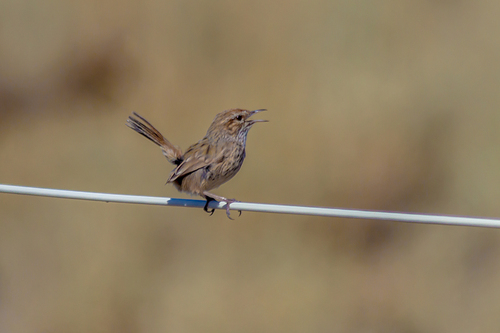
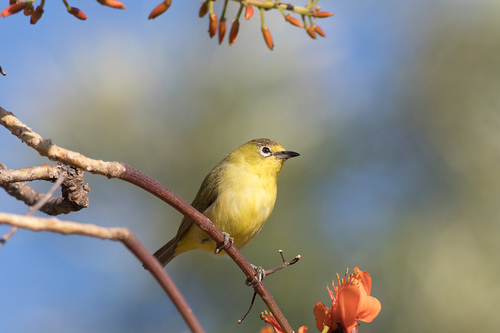
The grey-headed honeyeater (Ptilotula keartlandi) is a species of bird in the family Meliphagidae. It is endemic to Australia. First described as Ptilotis keartlandi in 1895 by Australian ornithologist Alfred John North, the grey-headed honeyeater is named in honour of the ornithological collector George Arthur Keartland, who collected the type specimen. The taxonomy of the species has been complex since its description. For example, the species was listed in the genus Meliphaga in 1926 by the Royal Australian Ornithological Union Official Checklist of Birds, and then in the genus Lichenostomus by Schodde in 1975. Most recently, the grey-headed honeyeater has been placed in the genus Ptilotula, which contains five other Australian species that all share characteristically plain faces, subtended by a black proximal and yellow or white distal plume across the side of the neck. The generic name Ptilotula derives from Ancient Greek ptilon 'feather' and the diminutive of otis 'ear'.

While the species in Ptilotula occupy a wide range of forest, woodland, arid and semi-arid habitats, they share a common ancestor, which inhabited the dry... Wikipedia →

Sounds

Call0:24

Australia · 2014

© John Graff · XC186221 · CC BY-NC-SA 4.0

Call0:22

Australia · 2025

© Peter Boesman · XC1066893 · CC BY-NC-ND 4.0

Call0:04

Australia · 2015

© Pieter de Groot Boersma · XC326732 · CC BY-NC-SA 4.0

Global Distribution

Parks Where Found

# Park Country Daily sighting probability
1 Uluru-Kata Tjuta National Park 🇦🇺 Australia
~50%
2 Cape Range 🇦🇺 Australia
~10%
3 Ningaloo Marine Park 🇦🇺 Australia
~10%

Before you go

What are the chances of seeing a Grey-headed Honeyeater in Ningaloo Marine Park?

With luck

About 10% of wildlife watchers report a Grey-headed Honeyeater sighting in Ningaloo Marine Park on a given day, based on 20 verified sightings from GBIF citizen-science data from 2019 to 2026. It is the 74th most-seen of the 102 birds we can rate there. Over three days the chance rises to about 20%, and over a week to about 30%, if each day is a fresh chance.

When is the best time to see a Grey-headed Honeyeater in Ningaloo Marine Park?

January and July

In those months about 10% of wildlife watchers report a Grey-headed Honeyeater in Ningaloo Marine Park on a given day, against under 5% in February–June and August–December, the lowest months. Those are among Ningaloo Marine Park's driest months, with about 10 mm of rain a month against 50 mm in June.

What time of day is best to see a Grey-headed Honeyeater?

Between 2 and 5 am

Across all the parks we cover, that three-hour window holds the most Grey-headed Honeyeater sightings with a recorded time, and about 6 in 10 of them come between 6 pm and 6 am: it is most active around dawn and dusk.

Is Ningaloo Marine Park the best place to see a Grey-headed Honeyeater?

3rd of 3

Of the 3 parks where we can rate Grey-headed Honeyeater sightings, Ningaloo Marine Park ranks 3rd at about 10%. The best odds are in Uluru-Kata Tjuta National Park (Australia, about 50%) and Cape Range (Australia, about 10%).

Where does the Grey-headed Honeyeater sighting chance come from?

GBIF citizen-science records

It is estimated from how often the Grey-headed Honeyeater is recorded against all the birds logged in Ningaloo Marine Park (20 verified sightings from 2019 to 2026), calibrated against known sighting rates. Figures are rounded to the nearest 10% because citizen-science data supports honest approximations, not decimals, and months with records from fewer than five people show "—". How it works.

← Back to Ningaloo Marine Park