Mertens's Water Monitor

Mertens's Water Monitor

Varanus mertensi

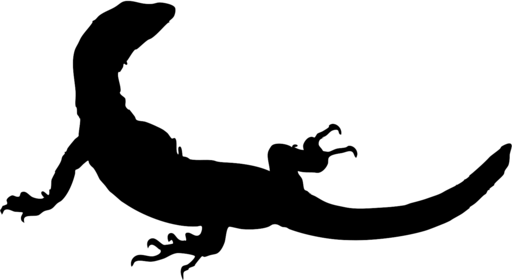
Silhouette: Steven Traver · PhyloPic

LCNTVUENEndangeredCR Endemic
Daily sighting probability ~40% · Likely
at Nitmiluk National Park

In 3 days ~80% in a week >90%

13 Verified sightings at Nitmiluk National Park From 2019 to 2026
199 In all 3 parks
March Best month
☀️ Diurnal When it's spotted

About the Mertens's Water Monitor

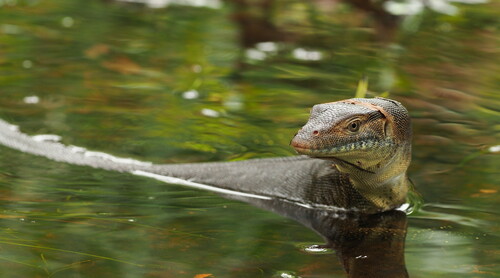
Mertens' water monitor (Varanus mertensi) is a species of monitor lizard in the family Varanidae. The species is native to northern Australia, and is a wide-ranging, actively foraging, opportunistic predator of aquatic and riparian habitats. It is named after German herpetologist Robert Mertens.

Mertens' water monitor grows to a total length (tail included) of about 2.0 m (6.6 ft). It is dark brown to black above, with many cream to yellow spots. The underparts are paler – white to yellowish – with grey mottling on the throat and blue-grey bars on the chest. The tail is strongly compressed laterally, with a high median dorsal keel, and is about 1.5 times the length of head and body.

Amongst all monitor species, including even the water monitors of the subgenus Soterosaurus, Mertens' water monitor is morphologically the most well adapted to an aquatic lifestyle, being able to seal its upwards facing nostrils when underwater. It is capable of swallowing prey underwater, which is an ability not reported in any other monitor species other than the Borneo earless monitor (Lanthanotus borneensis). It is also the only monitor species reported capable of using its sense... Wikipedia →
Global Distribution

Parks Where Found

# Park Country Daily sighting probability
1 Litchfield National Park 🇦🇺 Australia
~80%
2 Nitmiluk National Park 🇦🇺 Australia
~40%
3 Kakadu National Park 🇦🇺 Australia
~30%

Zoos & Centres Where Found

# Zoo / Centre Country
1 San Diego Zoo 🇺🇸 United States In captivity
2 National Zoological Park 🇺🇸 United States In captivity
3 Australia Zoo 🇦🇺 Australia In captivity
4 Zoo Pilsen 🇨🇿 Czechia In captivity
5 Columbus Zoo and Aquarium 🇺🇸 United States In captivity
6 Bronx Zoo 🇺🇸 United States In captivity
7 Brookfield Zoo 🇺🇸 United States In captivity
8 Los Angeles Zoo 🇺🇸 United States In captivity
9 Toledo Zoo 🇺🇸 United States In captivity
10 Silesian Zoological Garden 🇵🇱 Poland In captivity
11 Audubon Zoo 🇺🇸 United States In captivity
12 Healesville Sanctuary 🇦🇺 Australia In captivity
13 Berlin Zoological Garden 🇩🇪 Germany In captivity
14 Currumbin Wildlife Sanctuary 🇦🇺 Australia In captivity
15 Halls Gap Zoo 🇦🇺 Australia In captivity
16 Melbourne Zoo 🇦🇺 Australia In captivity
17 Lone Pine Koala Sanctuary 🇦🇺 Australia In captivity
18 Philadelphia Zoo 🇺🇸 United States In captivity
19 Budapest Zoo & Botanical Garden 🇭🇺 Hungary In captivity
20 Hartley’s Crocodile Adventures 🇦🇺 Australia In captivity
21 Rainforestation Nature Park 🇦🇺 Australia In captivity
22 Featherdale Sydney Wildlife Park 🇦🇺 Australia In captivity
23 Sea Life Sydney Aquarium 🇦🇺 Australia In captivity
24 Cairns Aquarium 🇦🇺 Australia In captivity
25 Sea Life Sunshine Coast 🇦🇺 Australia In captivity
26 Wild Life Sydney 🇦🇺 Australia In captivity
27 Aquarium Berlin 🇩🇪 Germany In captivity
28 National Aquarium 🇺🇸 United States In captivity
29 Birdworld Kuranda 🇦🇺 Australia In captivity
30 Kuranda Koala Gardens 🇦🇺 Australia In captivity
31 Caversham Wildlife Park 🇦🇺 Australia In captivity
32 Sea Life Bangkok Ocean World 🇹🇭 Thailand In captivity

Before you go

What are the chances of seeing a Mertens's Water Monitor in Nitmiluk National Park?

Likely

About 40% of wildlife watchers report a Mertens's Water Monitor sighting in Nitmiluk National Park on a given day, based on 13 verified sightings from GBIF citizen-science data from 2019 to 2026. It is the 3rd most-seen of the 13 reptiles we can rate there. Over three days the chance rises to about 80%, and over a week to over 90%, if each day is a fresh chance.

When is the best time to see a Mertens's Water Monitor in Nitmiluk National Park?

March

In that month about 60% of wildlife watchers report a Mertens's Water Monitor in Nitmiluk National Park on a given day, against about 10% in April, September and December, the lowest months.

What time of day is best to see a Mertens's Water Monitor?

Between noon and 3 pm

Across all the parks we cover, that three-hour window holds the most Mertens's Water Monitor sightings with a recorded time, and about 9 in 10 of them come between 6 am and 6 pm: it is a daytime animal.

Is Nitmiluk National Park the best place to see a Mertens's Water Monitor?

2nd of 3

Of the 3 parks where we can rate Mertens's Water Monitor sightings, Nitmiluk National Park ranks 2nd at about 40%. The best odds are in Litchfield National Park (Australia, about 80%).

Where does the Mertens's Water Monitor sighting chance come from?

GBIF citizen-science records

It is estimated from how often the Mertens's Water Monitor is recorded against all the reptiles logged in Nitmiluk National Park (13 verified sightings from 2019 to 2026), calibrated against known sighting rates. Figures are rounded to the nearest 10% because citizen-science data supports honest approximations, not decimals, and months with records from fewer than five people show "—". How it works.

← Back to Nitmiluk National Park