Common Porpoise

Common Porpoise

Phocoena phocoena

Silhouette: Chris huh · PhyloPic

LCLeast ConcernNTVUENCR
Daily sighting probability ~10% · With luck
at Olympic National Park

In 3 days ~20% in a week ~30%

11 Verified sightings at Olympic National Park From 2019 to 2026
173 In all 6 parks
December Best month
☀️ Diurnal When it's spotted

About the Common Porpoise

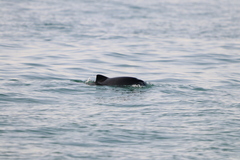
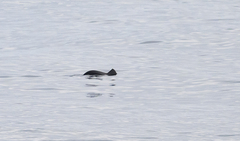
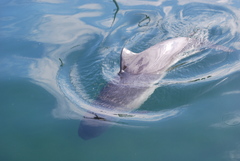
The harbour porpoise (Phocoena phocoena) is one of eight extant species of porpoise. It is one of the smallest species of cetacean. As its name implies, it stays close to coastal areas or river estuaries, and as such, is the most familiar porpoise to whale watchers. This porpoise often ventures up rivers, and has been seen hundreds of kilometres from the sea.

The English word porpoise comes from the French pourpois (Old French porpais, 12th century), which is from Medieval Latin porcopiscus, which is a compound of porcus (pig) and piscus (fish). The old word is probably a loan-translation of a Germanic word, compare Danish marsvin and Middle Dutch mereswijn (sea swine). Classical Latin had a similar name, porculus marinus. The species' taxonomic name, Phocoena phocoena, is the Latinized form of the Greek φώκαινα, phōkaina, "big seal", as described by Aristotle; this... Wikipedia →

Sounds

Recording0:19

Denmark · 2026

© age02 · iNaturalist · CC BY-NC 4.0

Global Distribution

Parks Where Found

# Park Country Daily sighting probability
1 Acadia National Park 🇺🇸 United States
~20%
2 Wadden Sea National Park 🇩🇪 Germany
~10%
3 Great Bear Rainforest 🇨🇦 Canada
~10%
4 Snowdonia National Park 🇬🇧 United Kingdom
~10%
5 Pacific Rim National Park Reserve 🇨🇦 Canada
~10%
6 Olympic National Park 🇺🇸 United States
~10%

Cities Where Found

# City Country Daily sighting probability
1 Liverpool 🇬🇧 United Kingdom
~10%
2 Rotterdam [The Hague] 🇳🇱 Netherlands
~10%
3 Istanbul 🇹🇷 Turkey
~10%
4 Seattle 🇺🇸 United States
~10%
5 San Francisco 🇺🇸 United States
<5%
6 Vancouver 🇨🇦 Canada
<5%

Zoos & Centres Where Found

# Zoo / Centre Country
1 Dierenpark Hoenderdaell 🇳🇱 Netherlands In captivity

Before you go

What are the chances of seeing a Common Porpoise in Olympic National Park?

With luck

About 10% of wildlife watchers report a Common Porpoise sighting in Olympic National Park on a given day, based on 11 verified sightings from GBIF citizen-science data from 2019 to 2026. It is the 21st most-seen of the 27 mammals we can rate there. Over three days the chance rises to about 20%, and over a week to about 30%, if each day is a fresh chance.

When is the best time to see a Common Porpoise in Olympic National Park?

April, July–September and December

In those months about 10% of wildlife watchers report a Common Porpoise in Olympic National Park on a given day, against under 5% in January–March, May–June and October–November, the lowest months.

What time of day is best to see a Common Porpoise?

Between 10 am and 1 pm

Across all the parks we cover, that three-hour window holds the most Common Porpoise sightings with a recorded time, and about 7 in 10 of them come between 6 am and 6 pm: it is a daytime animal.

Is Olympic National Park the best place to see a Common Porpoise?

6th of 6

Of the 6 parks where we can rate Common Porpoise sightings, Olympic National Park ranks 6th at about 10%. The best odds are in Acadia National Park (United States, about 20%), Wadden Sea National Park (Germany, about 10%) and Great Bear Rainforest (Canada, about 10%).

Which relatives of the Common Porpoise live in Olympic National Park?

Same order: Cetacea

The closest relatives of the Common Porpoise that you can see in Olympic National Park (order Cetacea) are Gray Whale (about 10%), Humpback Whale (about 10%) and Killer Whale (about 10%), with each one's daily chance of a sighting.

Where does the Common Porpoise sighting chance come from?

GBIF citizen-science records

It is estimated from how often the Common Porpoise is recorded against all the mammals logged in Olympic National Park (11 verified sightings from 2019 to 2026), calibrated against known sighting rates. Figures are rounded to the nearest 10% because citizen-science data supports honest approximations, not decimals, and months with records from fewer than five people show "—". How it works.

← Back to Olympic National Park