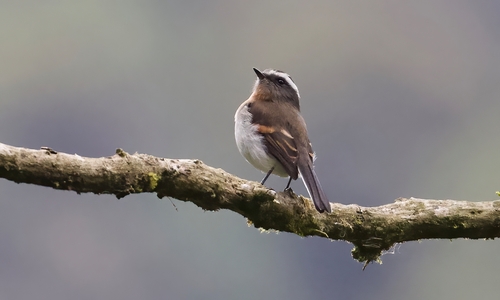
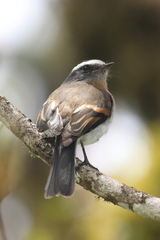
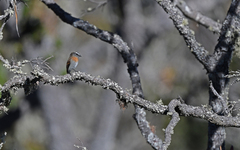
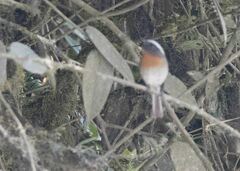

Rufous-breasted Chat-Tyrant

Rufous-breasted Chat-Tyrant

Ochthoeca rufipectoralis

Silhouette: Emily Willoughby · PhyloPic

LCLeast ConcernNTVUENCR
Daily sighting probability ~20% · Possible
at Podocarpus National Park

In 3 days ~40% in a week ~70%

263 Verified sightings at Podocarpus National Park From 2019 to 2026
479 In all 3 parks
August Best month
☀️ Diurnal When it's spotted

About the Rufous-breasted Chat-Tyrant

The rufous-breasted chat-tyrant (Ochthoeca rufipectoralis) is a species of bird in the family Tyrannidae, the tyrant flycatchers. It is found in Bolivia, Colombia, Ecuador, Peru, and Venezuela. The rufous-breasted chat-tyrant was formally described in 1837 as Fluvicola rufi-pectoralis.

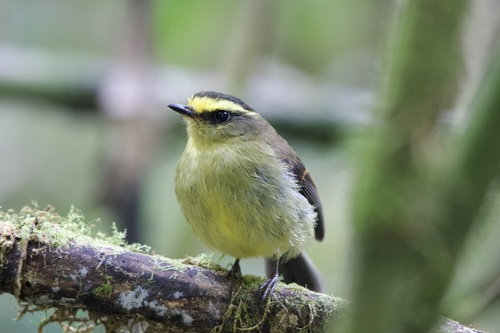
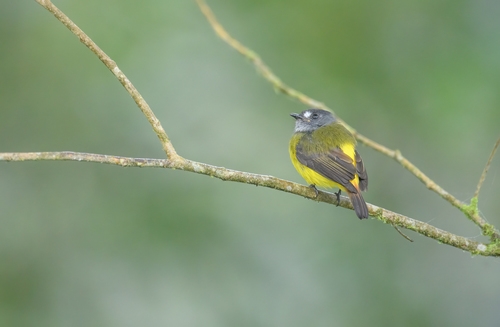
The rufous-breasted chat-tyrant has these seven subspecies: However, these assignments are not believed to be final, as there are intermediate forms that have not been extensively documented. The rufous-breasted chat-tyrant is 12.5 to 14 cm (4.9 to 5.5 in) long and weighs about 13 g (0.46 oz). The sexes have the same plumage. Adults of the nominate subspecies O. r. rufipectoralis have a sooty brown head with white above the bill that extends into a long wide white supercilium. Their upperparts are brown to sooty brown. Their wings are blackish with faint rufous or cinnamon-buff edges on the secondaries... Wikipedia →

Sounds

Call0:07

Ecuador · 2009

© Manuel Sánchez-Nivicela · XC1175835 · CC BY-NC-ND 4.0

Flight song0:12

Ecuador · 1991

© Niels Krabbe · XC250032 · CC BY-SA 4.0

Song0:12

Peru · 2011

© Meena Haribal · XC155247 · CC BY-NC-SA 3.0

Global Distribution

Parks Where Found

# Park Country Daily sighting probability
1 Podocarpus National Park 🇪🇨 Ecuador
~20%
2 Chingaza National Natural Park 🇨🇴 Colombia
~10%
3 Los Nevados National Natural Park 🇨🇴 Colombia
<5%

Before you go

What are the chances of seeing a Rufous-breasted Chat-Tyrant in Podocarpus National Park?

Possible

About 20% of wildlife watchers report a Rufous-breasted Chat-Tyrant sighting in Podocarpus National Park on a given day, based on 263 verified sightings from GBIF citizen-science data from 2019 to 2026. It is the 68th most-seen of the 446 birds we can rate there. Over three days the chance rises to about 40%, and over a week to about 70%, if each day is a fresh chance.

When is the best time to see a Rufous-breasted Chat-Tyrant in Podocarpus National Park?

August

In that month about 30% of wildlife watchers report a Rufous-breasted Chat-Tyrant in Podocarpus National Park on a given day, against about 10% in June and September–November, the lowest months.

What time of day is best to see a Rufous-breasted Chat-Tyrant?

Between 8 and 11 am

Across all the parks we cover, that three-hour window holds the most Rufous-breasted Chat-Tyrant sightings with a recorded time, and about 9 in 10 of them come between 6 am and 6 pm: it is a daytime animal.

Is Podocarpus National Park the best place to see a Rufous-breasted Chat-Tyrant?

Yes

Of the 3 parks where we can rate Rufous-breasted Chat-Tyrant sightings, Podocarpus National Park has the highest daily chance: about 20%. Next come Chingaza National Natural Park (Colombia, about 10%) and Los Nevados National Natural Park (Colombia, under 5%).

Which relatives of the Rufous-breasted Chat-Tyrant live in Podocarpus National Park?

Same genus: Ochthoeca

The closest relatives of the Rufous-breasted Chat-Tyrant that you can see in Podocarpus National Park (genus Ochthoeca, Typical Chat-Tyrants) are Yellow Bellied Chat Tyrant (about 10%) and Slaty-backed Chat-Tyrant (about 10%), with each one's daily chance of a sighting.

Where does the Rufous-breasted Chat-Tyrant sighting chance come from?

GBIF citizen-science records

It is estimated from how often the Rufous-breasted Chat-Tyrant is recorded against all the birds logged in Podocarpus National Park (263 verified sightings from 2019 to 2026), calibrated against known sighting rates. Figures are rounded to the nearest 10% because citizen-science data supports honest approximations, not decimals, and months with records from fewer than five people show "—". How it works.

← Back to Podocarpus National Park