
Swallow-tailed Nightjar

Swallow-tailed Nightjar

Uropsalis segmentata

Silhouette: Sheatherius · PhyloPic

LCLeast ConcernNTVUENCR
Daily sighting probability <5% · Rare
at Podocarpus National Park

In 3 days ~10%

31 Verified sightings at Podocarpus National Park From 2019 to 2026
37 In all 2 parks
May Best month
☀️🌙 Day & Night When it's spotted

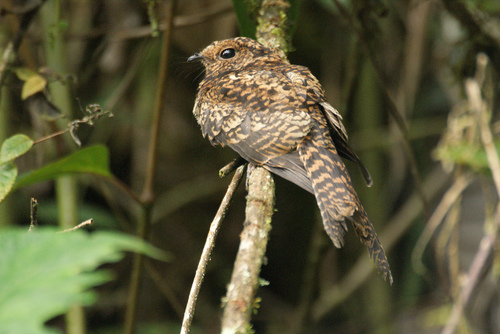
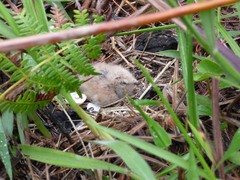
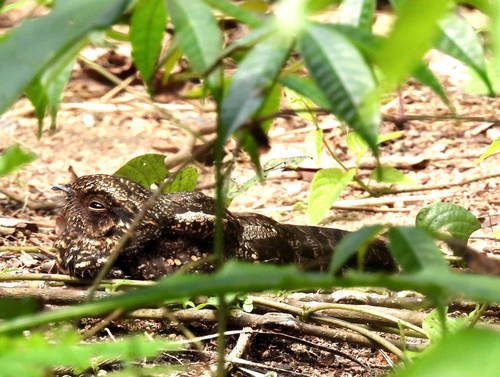
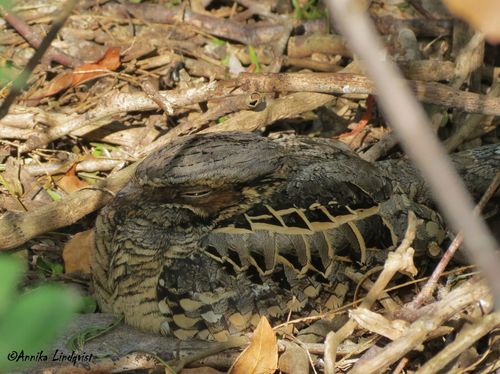
About the Swallow-tailed Nightjar

The swallow-tailed nightjar (Uropsalis segmentata) is a species of nightjar in the family Caprimulgidae. It is found in Bolivia, Colombia, Ecuador, and Peru. The nominate was originally described as Hydropsalis segmentata and U. s. kalinowskii as a separate species, Macropsalis kalinowskii.

The male swallow-tailed nightjar has extremely long outer tail feathers from which the species gets its name; the female's tail is much shorter and less graduated. The male is 66 cm (26 in) long including the tail streamers and weighs about 42 g (1.5 oz). The female is 23 cm (9.1 in) long and weighs about 43 g (1.5 oz). The upperparts of both sexes of the nominate subspecies are dark brown with many tawny spots. The tail is generally brown; the outer tail feathers of both sexes have white shafts and outer webs and the others have tawny bars and spots. The wings are brown to grayish brown with tawny spots. The chin and throat are dark brown with buff spots, the breast dark brown with... Wikipedia →

Sounds

Song0:30

Ecuador · 1997

© Paul Coopmans · XC264450 · CC BY-NC-SA 4.0

Call?0:28

Peru · 2010

© Matthias Dehling · XC93605 · CC BY-NC-ND 2.5

Call0:45

Peru · 2009

© Peter Boesman · XC231999 · CC BY-NC-ND 4.0

Global Distribution

Parks Where Found

# Park Country Daily sighting probability
1 Podocarpus National Park 🇪🇨 Ecuador
<5%
2 Chingaza National Natural Park 🇨🇴 Colombia
<5%

Before you go

What are the chances of seeing a Swallow-tailed Nightjar in Podocarpus National Park?

Rare

Under 5% of wildlife watchers report a Swallow-tailed Nightjar sighting in Podocarpus National Park on a given day, based on 31 verified sightings from GBIF citizen-science data from 2019 to 2026. It is the 274th most-seen of the 446 birds we can rate there. Over three days the chance rises to about 10%, if each day is a fresh chance.

When is the best time to see a Swallow-tailed Nightjar in Podocarpus National Park?

May

In that month about 10% of wildlife watchers report a Swallow-tailed Nightjar in Podocarpus National Park on a given day, against under 5% in June to April, the lowest months.

What time of day is best to see a Swallow-tailed Nightjar?

Between 9 am and noon

Across all the parks we cover, that three-hour window holds the most Swallow-tailed Nightjar sightings with a recorded time, and about 6 in 10 of them come between 6 am and 6 pm: it is seen both by day and at night.

Is Podocarpus National Park the best place to see a Swallow-tailed Nightjar?

Yes

Of the 2 parks where we can rate Swallow-tailed Nightjar sightings, Podocarpus National Park has the highest daily chance: under 5%. Next come Chingaza National Natural Park (Colombia, under 5%).

Where does the Swallow-tailed Nightjar sighting chance come from?

GBIF citizen-science records

It is estimated from how often the Swallow-tailed Nightjar is recorded against all the birds logged in Podocarpus National Park (31 verified sightings from 2019 to 2026), calibrated against known sighting rates. Figures are rounded to the nearest 10% because citizen-science data supports honest approximations, not decimals, and months with records from fewer than five people show "—". How it works.

← Back to Podocarpus National Park