Acorn Weevil

Acorn Weevil

Curculio glandium

Daily sighting probability <5% · Rare
at Pyrénées National Park

In 3 days ~10% in a week ~20%

5 Verified sightings at Pyrénées National Park From 2019 to 2026
32 In all 3 parks
September Best month
☀️🌙 Day & Night When it's spotted

About the Acorn Weevil

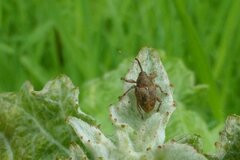
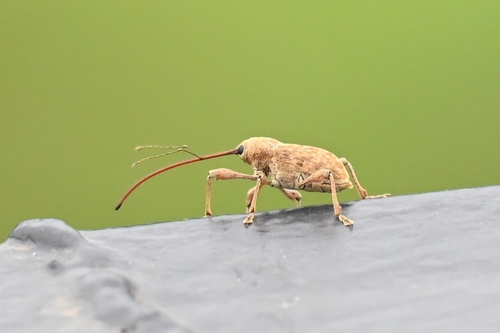
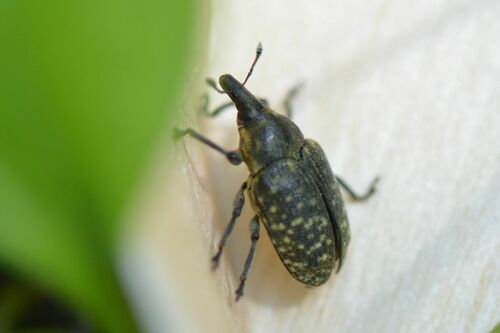
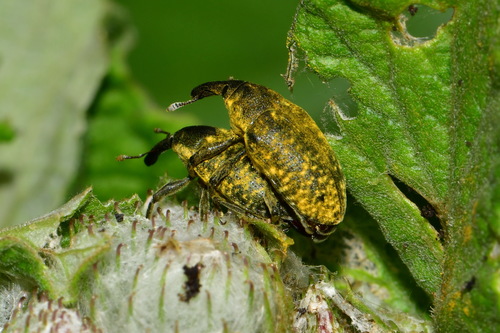
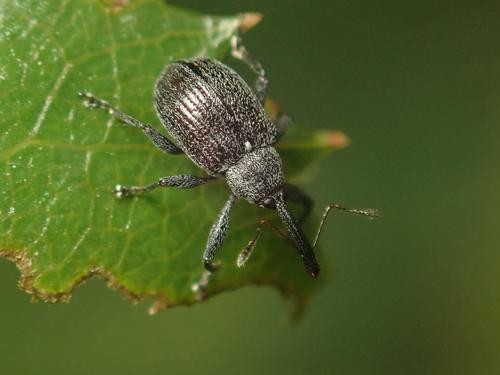
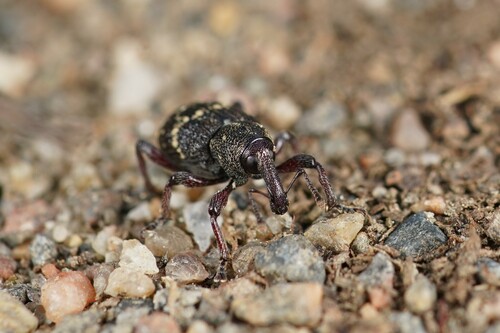
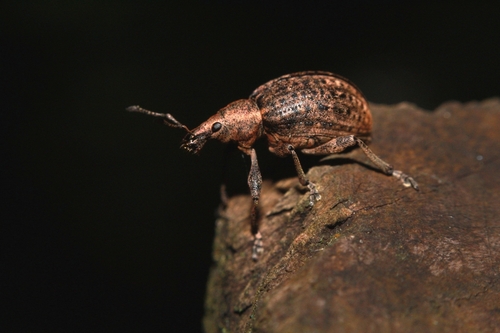
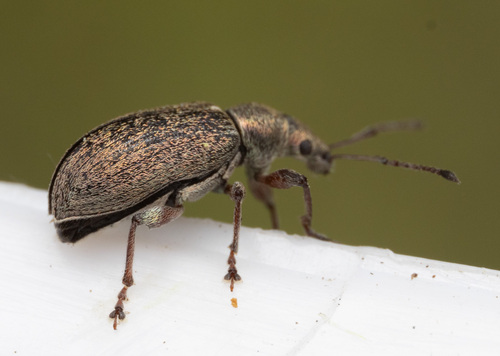
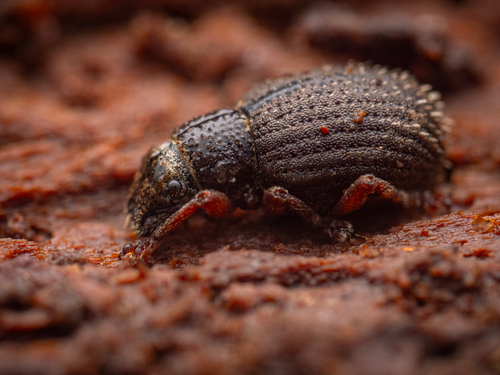
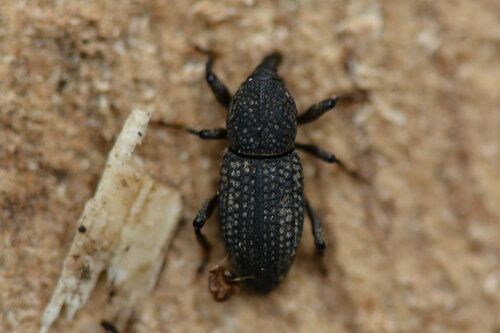
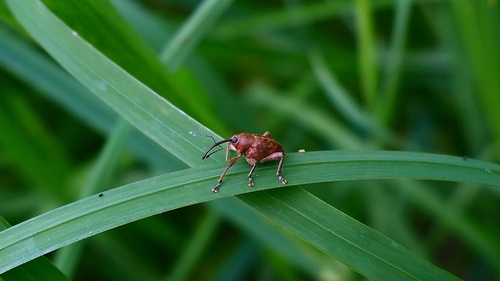
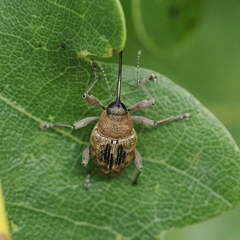
Curculio glandium, commonly known as the acorn weevil, is a species of European carpophagus weevil in the genus Curculio, the acorn and nut weevils. It eats by a rostrum, an elongated snout, that is used for piercing. Curculio glandium is a member of the genus Curculio, which comprises seed beetles. All members of Curculio have characteristically long rostrums and ovipositors, an adaptation that specifically developed by their reliance on seeds for food and reproduction.

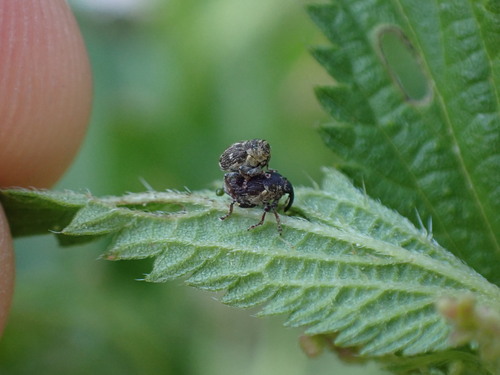
Male/female differentiation can be determined using the rostrum as the female's is longer. In female acorn weevils, their rostrums are around the size of their body or larger, while males have a rostrum around two thirds of that size. The larvae are short, and cylindrical in shape, and move by means of ridges on the underside of the body. Adults can reach a length of 4 to 8 mm (0.16 to 0.31 in).

Curculio glandium eggs are deposited in acorns by the adult weevil chewing channels into the fruit. The eggs are then released using an ovipositor, a long, narrow organ featured in female weevils. These do not reach the acorn's embryo and are healed by the plant, sealing the holes and protecting... Wikipedia →
Global Distribution

Parks Where Found

# Park Country Daily sighting probability
1 Bavarian Forest National Park 🇩🇪 Germany
~10%
2 Wadden Sea National Park 🇩🇪 Germany
<5%
3 Pyrénées National Park 🇫🇷 France
<5%

Cities Where Found

# City Country Daily sighting probability
1 Kharkiv 🇺🇦 Ukraine
~10%
2 Kyiv 🇺🇦 Ukraine
~10%
3 Berlin 🇩🇪 Germany
~10%
4 Hamburg 🇩🇪 Germany
~10%
5 London 🇬🇧 United Kingdom
~10%
6 Essen 🇩🇪 Germany
~10%
7 Munich 🇩🇪 Germany
<5%
8 Birmingham 🇬🇧 United Kingdom
<5%
9 Copenhagen 🇩🇰 Denmark
<5%
10 Warsaw 🇵🇱 Poland
<5%

Before you go

What are the chances of seeing an Acorn Weevil in Pyrénées National Park?

Rare

Under 5% of wildlife watchers report an Acorn Weevil sighting in Pyrénées National Park on a given day, based on 5 verified sightings from GBIF citizen-science data from 2019 to 2026. It is the 1144th most-seen of the 1277 insects we can rate there. Over three days the chance rises to about 10%, and over a week to about 20%, if each day is a fresh chance.

When is the best time to see an Acorn Weevil in Pyrénées National Park?

September

In that month about 10% of wildlife watchers report an Acorn Weevil in Pyrénées National Park on a given day, against under 5% in October to August, the lowest months.

What time of day is best to see an Acorn Weevil?

Between 10 am and 1 pm

Across all the parks we cover, that three-hour window holds the most Acorn Weevil sightings with a recorded time, and about half of them come between 6 am and 6 pm: it is seen both by day and at night.

Is Pyrénées National Park the best place to see an Acorn Weevil?

3rd of 3

Of the 3 parks where we can rate Acorn Weevil sightings, Pyrénées National Park ranks 3rd at under 5%. The best odds are in Bavarian Forest National Park (Germany, about 10%) and Wadden Sea National Park (Germany, under 5%).

Where does the Acorn Weevil sighting chance come from?

GBIF citizen-science records

It is estimated from how often the Acorn Weevil is recorded against all the insects logged in Pyrénées National Park (5 verified sightings from 2019 to 2026), calibrated against known sighting rates. Figures are rounded to the nearest 10% because citizen-science data supports honest approximations, not decimals, and months with records from fewer than five people show "—". How it works.

← Back to Pyrénées National Park