Black-And-Red Bug

Black-And-Red Bug

Lygaeus equestris

Daily sighting probability ~10% · With luck
at Pyrénées National Park

In 3 days ~20% in a week ~40%

35 Verified sightings at Pyrénées National Park From 2019 to 2026
98 In all 6 parks
March Best month
☀️ Diurnal When it's spotted

About the Black-And-Red Bug

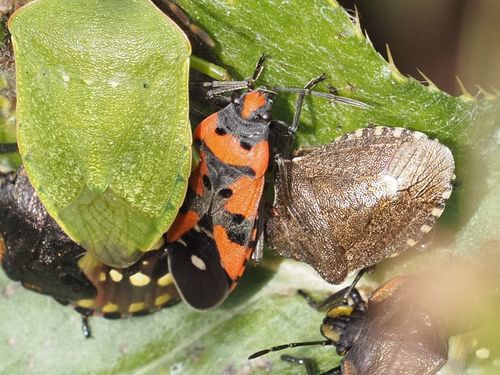
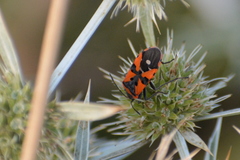
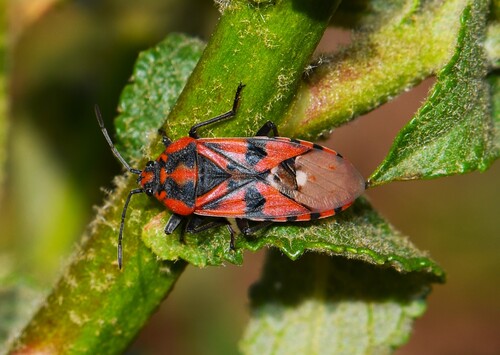
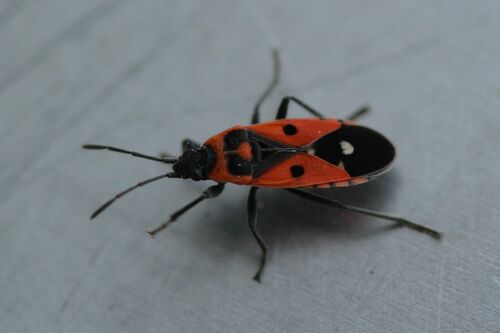
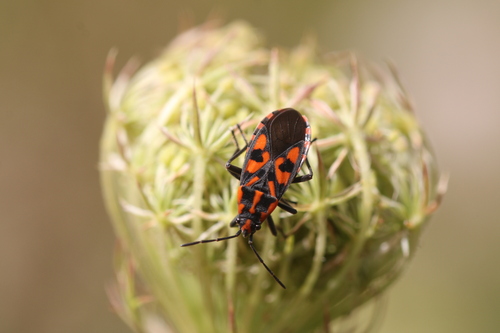
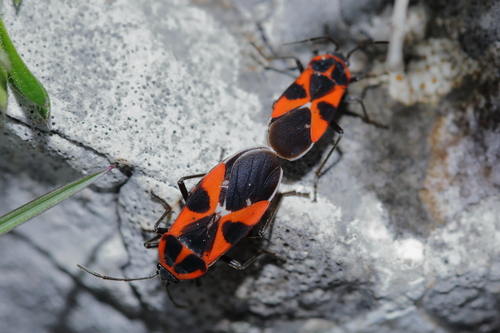
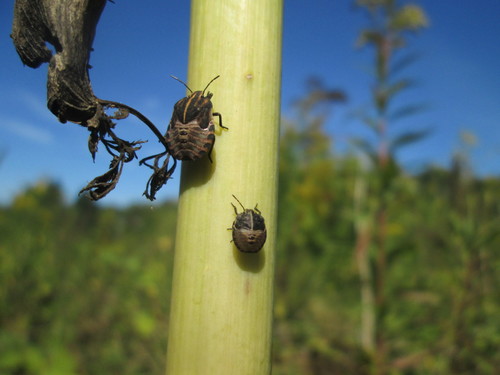
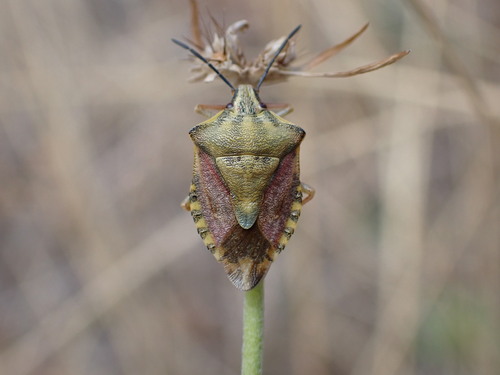
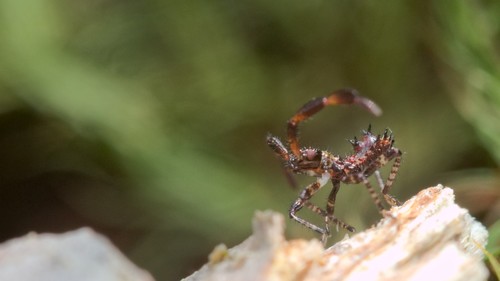
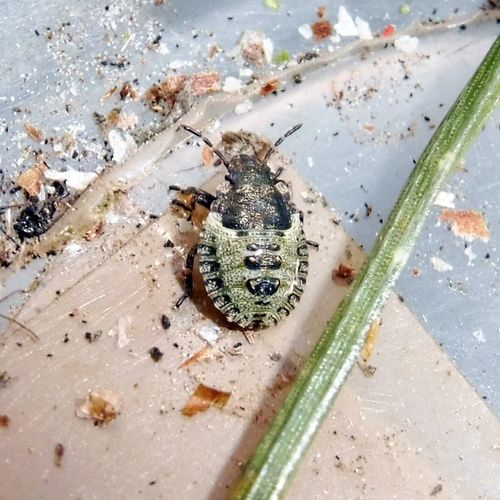
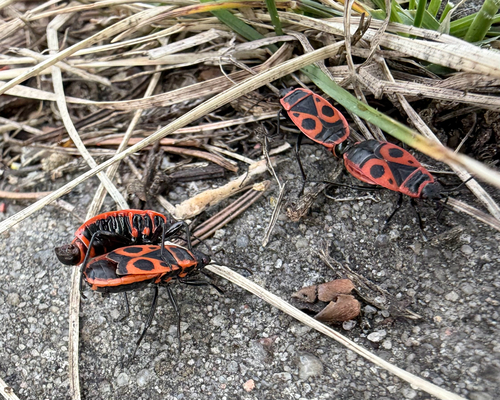
Lygaeus equestris, common name black-and-red-bug, is a species of seed bugs belonging to the family Lygaeidae, subfamily Lygaeinae. These bugs can reach about 11 to 12 millimetres (0.43 to 0.47 in) in length. They have a characteristic red-black pattern, fully developed wings and long, powerful legs. The hemelytra have two transverse bands that reach the margin and a round white spot on the membrane. Scutellum is without bristles but with tiny hairs. The black band close to the eye is wider than the same.

This species is very difficult to differentiate from Lygaeus simulans, that has a scutellum with long bristles, antennae with angulous tubercles and a larger red area on the head. The red-black pattern has a deterrent effect and serves to protect the insect (Müllerian mimicry or Batesian mimicry). By storing the toxic ingredients of their food plants, they are unpalatable to potential predators.

The nymphs and the imagos feed on juices of various plants, particularly milkweed (Vincetoxicum hirundinaria), Taraxacum species... Wikipedia →

Global Distribution

Parks Where Found

# Park Country Daily sighting probability
1 Vanoise National Park 🇫🇷 France
~10%
2 Cévennes National Park 🇫🇷 France
~10%
3 Mercantour National Park 🇫🇷 France
~10%
4 Pyrénées National Park 🇫🇷 France
~10%
5 Bavarian Forest National Park 🇩🇪 Germany
~10%
6 Sierra de Guadarrama National Park 🇪🇸 Spain
<5%

Cities Where Found

# City Country Daily sighting probability
1 Sapporo 🇯🇵 Japan
~20%
2 Jerusalem 🇮🇱 Israel
~10%
3 Stockholm 🇸🇪 Sweden
~10%
4 Kharkiv 🇺🇦 Ukraine
~10%
5 Prague 🇨🇿 Czechia
~10%
6 Madrid 🇪🇸 Spain
~10%
7 Lisbon 🇵🇹 Portugal
~10%
8 Budapest 🇭🇺 Hungary
~10%
9 Lyon 🇫🇷 France
<5%
10 Kyiv 🇺🇦 Ukraine
<5%

Before you go

What are the chances of seeing a Black-And-Red Bug in Pyrénées National Park?

With luck

About 10% of wildlife watchers report a Black-And-Red Bug sighting in Pyrénées National Park on a given day, based on 35 verified sightings from GBIF citizen-science data from 2019 to 2026. It is the 288th most-seen of the 1277 insects we can rate there. Over three days the chance rises to about 20%, and over a week to about 40%, if each day is a fresh chance.

When is the best time to see a Black-And-Red Bug in Pyrénées National Park?

March–October and December–January

In those months about 10% of wildlife watchers report a Black-And-Red Bug in Pyrénées National Park on a given day, against under 5% in February and November, the lowest months.

What time of day is best to see a Black-And-Red Bug?

Between 1 and 4 pm

Across all the parks we cover, that three-hour window holds the most Black-And-Red Bug sightings with a recorded time, and about 9 in 10 of them come between 6 am and 6 pm: it is a daytime animal.

Is Pyrénées National Park the best place to see a Black-And-Red Bug?

Among the best

Of the 6 parks where we can rate Black-And-Red Bug sightings, Pyrénées National Park ranks 4th at about 10%, level with the leaders once rounded. The best odds are in Vanoise National Park (France, about 10%), Cévennes National Park (France, about 10%) and Mercantour National Park (France, about 10%).

Where does the Black-And-Red Bug sighting chance come from?

GBIF citizen-science records

It is estimated from how often the Black-And-Red Bug is recorded against all the insects logged in Pyrénées National Park (35 verified sightings from 2019 to 2026), calibrated against known sighting rates. Figures are rounded to the nearest 10% because citizen-science data supports honest approximations, not decimals, and months with records from fewer than five people show "—". How it works.

← Back to Pyrénées National Park