
Daubenton's bat

Daubenton's bat

Myotis daubentonii

Silhouette: Archibald Thorburn · PhyloPic

LCLeast ConcernNTVUENCR
Daily sighting probability <5% · Rare
at Pyrénées National Park

In 3 days ~10% in a week ~20%

11 Verified sightings at Pyrénées National Park From 2019 to 2026
27 In all 2 parks
July Best month
☀️ Diurnal When it's spotted

About the Daubenton's bat

Daubenton's bat or Daubenton's myotis (Myotis daubentonii) is a Eurasian bat with rather short ears. It occurs across Eurasia, from Ireland in the west to Hokkaido in the east, and is believed to be increasing its numbers in many areas of its range.

This bat was first described in 1817 by Heinrich Kuhl, who named it in honour of French naturalist Louis-Jean-Marie Daubenton. Daubenton's bat is a medium-sized to small species. The bat's fluffy fur is brownish-grey on the back and silvery-grey on the underside. Juveniles have darker fur than adults. The bats have reddish-pink faces and noses, but the area around the eyes is bare. When the bat is agitated, the ears are held at right angles. The wings and tail membrane are dark brown.

Daubenton's bat is typically 45 to 55 mm long, with an average wingspan of 240 to 275 mm, and weighs between 7 and 15 g. Daubenton's bats can live for up to 22 years. In Lieto, Finland a male called Nestori that lives in an old water mill has been tracked since 2008 and was approximately 21 years old in 2024. Daubenton's bat is found throughout Ireland and Europe, and as far as Japan and Korea. The bat is mostly... Wikipedia →

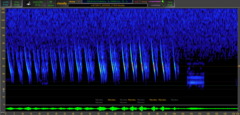
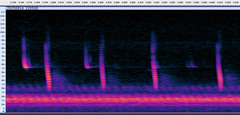
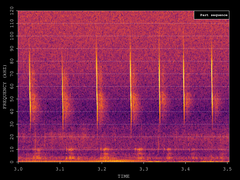
Sounds

Recording0:11

United Kingdom · 2021

© chris_sherlock · iNaturalist · CC BY 4.0

Recording0:10

Finland · 2024

© j-honey · iNaturalist · CC BY-NC 4.0

Recording0:05

United Kingdom · 2026

© brook1951 · iNaturalist · CC BY-NC 4.0

Global Distribution

Parks Where Found

# Park Country Daily sighting probability
1 Cévennes National Park 🇫🇷 France
~10%
2 Pyrénées National Park 🇫🇷 France
<5%

Cities Where Found

# City Country Daily sighting probability
1 Moscow 🇷🇺 Russia
<5%

Before you go

What are the chances of seeing a Daubenton's bat in Pyrénées National Park?

Rare

Under 5% of wildlife watchers report a Daubenton's bat sighting in Pyrénées National Park on a given day, based on 11 verified sightings from GBIF citizen-science data from 2019 to 2026. It is the 27th most-seen of the 30 mammals we can rate there. Over three days the chance rises to about 10%, and over a week to about 20%, if each day is a fresh chance.

When is the best time to see a Daubenton's bat in Pyrénées National Park?

July

In that month about 10% of wildlife watchers report a Daubenton's bat in Pyrénées National Park on a given day, against under 5% in August to June, the lowest months.

What time of day is best to see a Daubenton's bat?

Between 10 am and 1 pm

Across all the parks we cover, that three-hour window holds the most Daubenton's bat sightings with a recorded time, and about 7 in 10 of them come between 6 am and 6 pm: it is a daytime animal.

Is Pyrénées National Park the best place to see a Daubenton's bat?

2nd of 2

Of the 2 parks where we can rate Daubenton's bat sightings, Pyrénées National Park ranks 2nd at under 5%. The best odds are in Cévennes National Park (France, about 10%).

Where does the Daubenton's bat sighting chance come from?

GBIF citizen-science records

It is estimated from how often the Daubenton's bat is recorded against all the mammals logged in Pyrénées National Park (11 verified sightings from 2019 to 2026), calibrated against known sighting rates. Figures are rounded to the nearest 10% because citizen-science data supports honest approximations, not decimals, and months with records from fewer than five people show "—". How it works.

← Back to Pyrénées National Park