
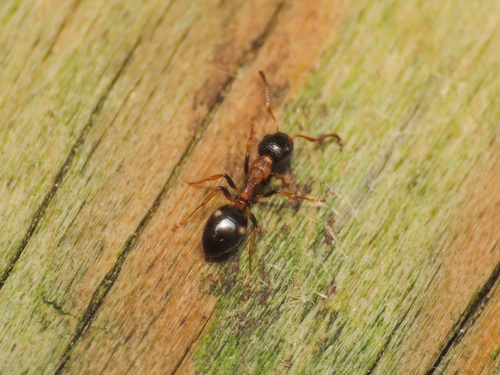
Hairy Carpenter Ant
Daily sighting probability ~10% · With luck
at Pyrénées National Park

In 3 days ~20% in a week ~30%

16 Verified sightings at Pyrénées National Park From 2019 to 2026
167 In all 7 parks
May Best month
☀️ Diurnal When it's spotted

About the Hairy Carpenter Ant

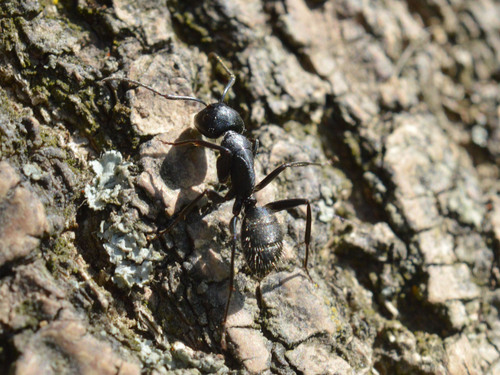
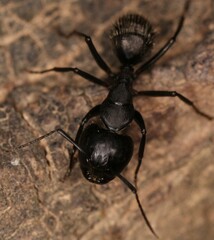
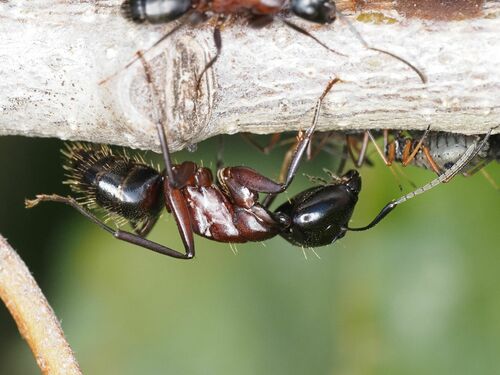
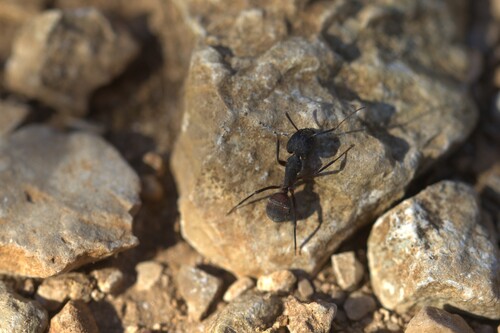
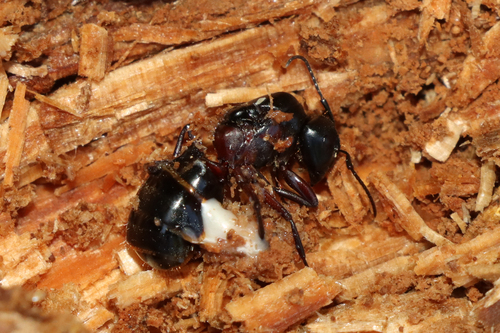
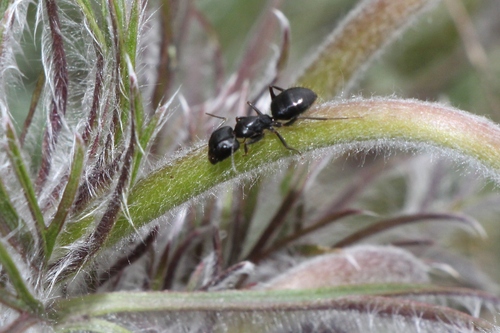
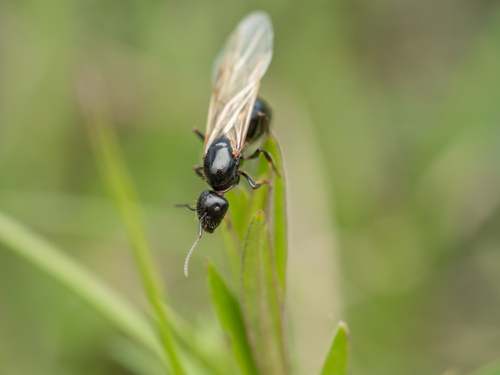
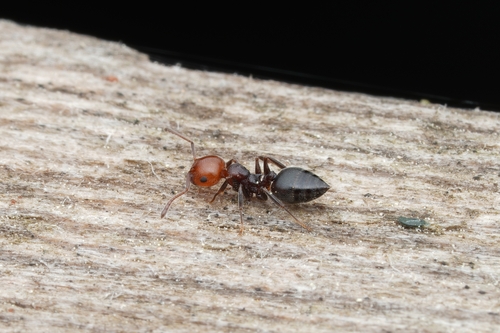
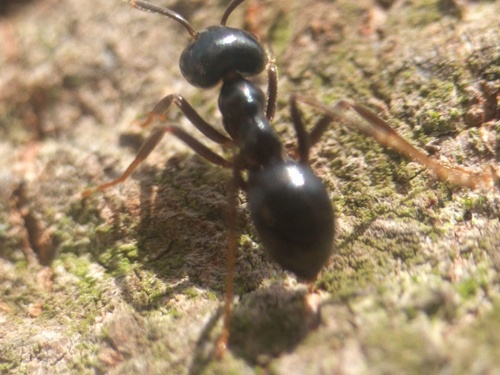
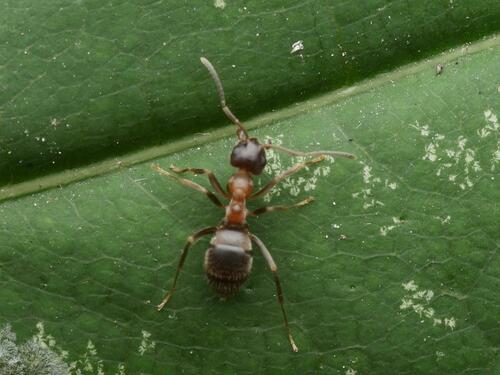
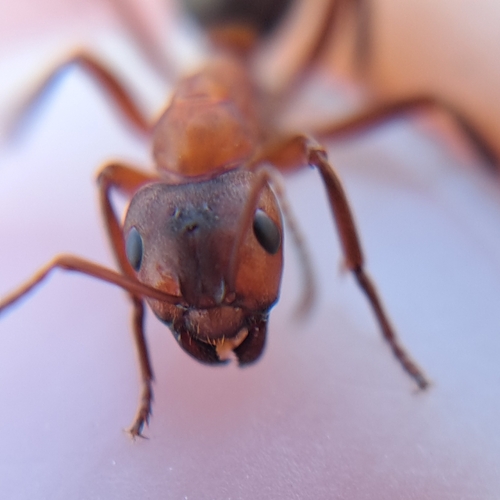
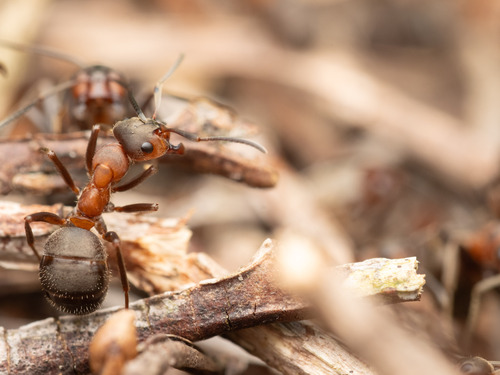
Camponotus vagus is a species of large, black carpenter ant with a wide range that includes much of Europe, a large area of Asia, and part of Africa. Camponotus vagus is a relatively distinctive species that is easily identified by its large size, uniform black colour, and the long and dense body "hairs" on its exoskeleton. A eusocial insect, individuals have continuous allometric variation in size and morphology to facilitate task allocation and partitioning of work. Workers are 6–12 mm in length. The larger "major workers" act as guards for in defence of the colony and protect the smaller "minor workers" when the latter go foraging outside the nests. The powerful mandibles of the major workers are capable of decapitating smaller arthropods captured as food and dismembering smaller ants of other species.

C. vagus is known to be both carnivorous and aphidicolous (living in a mutualistic relationship with aphids and feeding upon the honeydew these smaller insects release from the terminations of their alimentary canals). This species is especially prevalent in central Europe but has an overall range from southern Scandinavia to north-western... Wikipedia →

Global Distribution

Parks Where Found

# Park Country Daily sighting probability
1 Kiskunság National Park 🇭🇺 Hungary
~40%
2 Cévennes National Park 🇫🇷 France
~20%
3 Plitvice Lakes National Park 🇭🇷 Croatia
~20%
4 Triglav National Park 🇸🇮 Slovenia
~10%
5 Fertő-Hanság National Park 🇭🇺 Hungary
~10%
6 Pyrénées National Park 🇫🇷 France
~10%
7 Sierra de Guadarrama National Park 🇪🇸 Spain
<5%

Cities Where Found

# City Country Daily sighting probability
1 Budapest 🇭🇺 Hungary
~20%
2 Kyiv 🇺🇦 Ukraine
~10%
3 Naples 🇮🇹 Italy
~10%
4 Vienna 🇦🇹 Austria
~10%

Before you go

What are the chances of seeing a Hairy Carpenter Ant in Pyrénées National Park?

With luck

About 10% of wildlife watchers report a Hairy Carpenter Ant sighting in Pyrénées National Park on a given day, based on 16 verified sightings from GBIF citizen-science data from 2019 to 2026. It is the 521st most-seen of the 1277 insects we can rate there. Over three days the chance rises to about 20%, and over a week to about 30%, if each day is a fresh chance.

When is the best time to see a Hairy Carpenter Ant in Pyrénées National Park?

March–May and September

In those months about 10% of wildlife watchers report a Hairy Carpenter Ant in Pyrénées National Park on a given day, against under 5% in June–August and October–February, the lowest months.

What time of day is best to see a Hairy Carpenter Ant?

Between 3 and 6 pm

Across all the parks we cover, that three-hour window holds the most Hairy Carpenter Ant sightings with a recorded time, and about 8 in 10 of them come between 6 am and 6 pm: it is a daytime animal.

Which relatives of the Hairy Carpenter Ant live in Pyrénées National Park?

Same genus: Camponotus

The closest relatives of the Hairy Carpenter Ant that you can see in Pyrénées National Park (genus Camponotus, Carpenter Ants, Typical Sugar Ants and Allies) are Brown-Black Carpenter Ant (about 10%), Blood-Spotted Sugar Ant (about 10%) and Hercules Carpenter Ant (about 10%), with each one's daily chance of a sighting.

Where does the Hairy Carpenter Ant sighting chance come from?

GBIF citizen-science records

It is estimated from how often the Hairy Carpenter Ant is recorded against all the insects logged in Pyrénées National Park (16 verified sightings from 2019 to 2026), calibrated against known sighting rates. Figures are rounded to the nearest 10% because citizen-science data supports honest approximations, not decimals, and months with records from fewer than five people show "—". How it works.

← Back to Pyrénées National Park