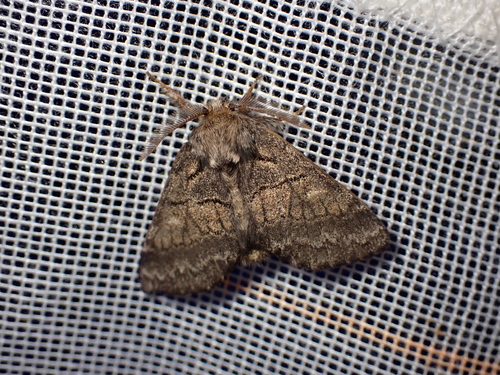
Lesser Swallow Prominent

Lesser Swallow Prominent

Pheosia gnoma

Daily sighting probability <5% · Rare
at Pyrénées National Park

In 3 days ~10% in a week ~20%

7 Verified sightings at Pyrénées National Park From 2019 to 2026
127 In all 5 parks
August Best month
☀️🌙 Day & Night When it's spotted

About the Lesser Swallow Prominent

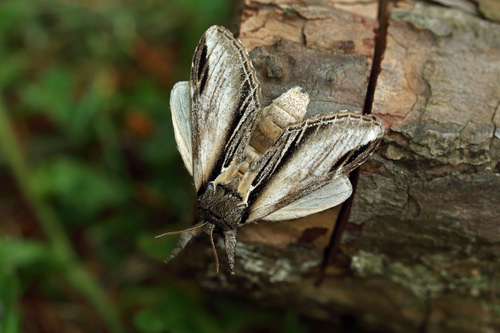
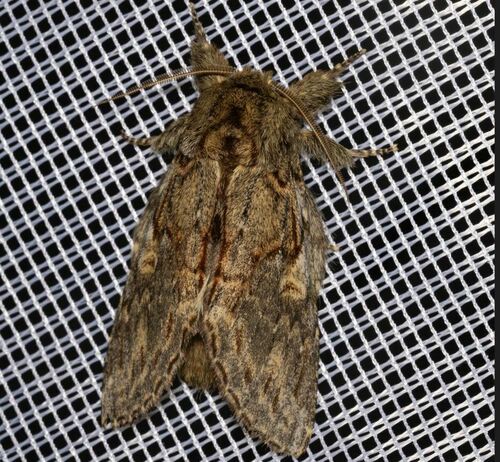
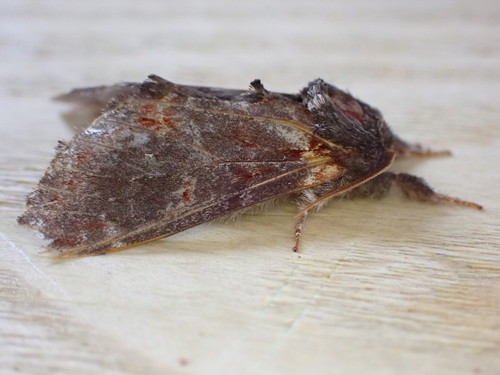
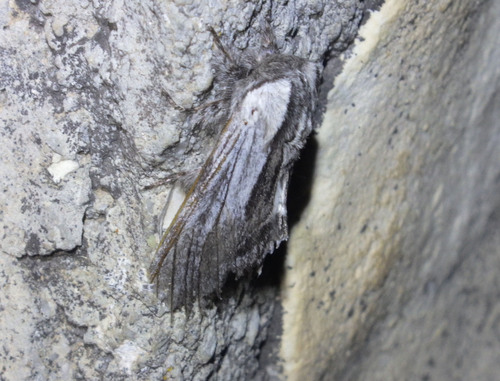
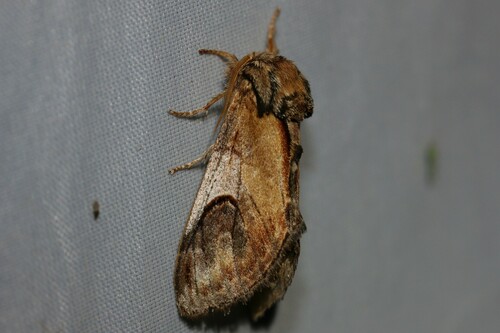
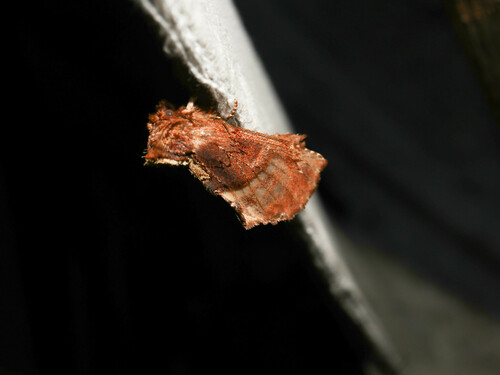
Pheosia gnoma, the lesser swallow prominent, is a moth from the family Notodontidae. The species was first described by Johan Christian Fabricius in 1777. The moth can be found across the Palearctic realm (northern and central Europe, Russia, eastern Siberia, Russian Far East, Amur). It has a forewing length of 20–26 mm.

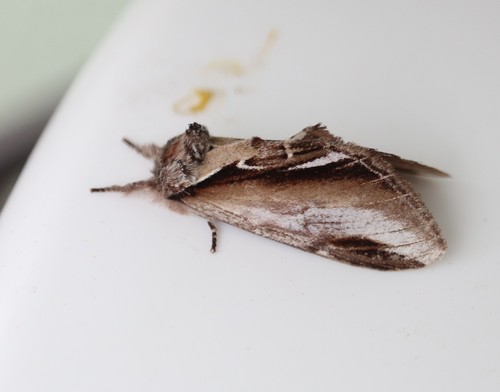
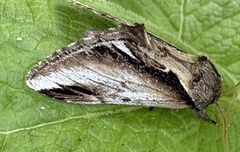
The imago can be easily confused with Pheosia tremula but P. gnoma is usually smaller, and the ground colour has usually less brown in it. The chief character by which it may be distinguished is the broader and clearer white wedge-shaped mark between veins 1 and 2 on the forewings of P. gnoma.

Seitz - Very similar to tremula, usually somewhat smaller, the white wedge-spot below vein 1 of the forewing shorter and entirely white, without dark scaling in it. Anal angle of hindwing brownish without white marginal line. In the Higher Alps occurs a dark form of this species, ab. leonis Stichel which is scarcely distinguishable from the Arctic form frigida Zett. (45f) from Lapland, in which the wedge-spot of the forewing is grey instead of white. — Throughout Central Europe, northward to Lapland, southward to Southern France, Northern Italy, Croatia, and... Wikipedia →
Global Distribution

Parks Where Found

# Park Country Daily sighting probability
1 Snowdonia National Park 🇬🇧 United Kingdom
~20%
2 Cairngorms National Park 🇬🇧 United Kingdom
~10%
3 Wadden Sea National Park 🇩🇪 Germany
~10%
4 Bavarian Forest National Park 🇩🇪 Germany
~10%
5 Pyrénées National Park 🇫🇷 France
<5%

Cities Where Found

# City Country Daily sighting probability
1 Liverpool 🇬🇧 United Kingdom
~10%
2 Helsinki 🇫🇮 Finland
<5%
3 Manchester 🇬🇧 United Kingdom
<5%
4 London 🇬🇧 United Kingdom
<5%
5 Moscow 🇷🇺 Russia
<5%

Before you go

What are the chances of seeing a Lesser Swallow Prominent in Pyrénées National Park?

Rare

Under 5% of wildlife watchers report a Lesser Swallow Prominent sighting in Pyrénées National Park on a given day, based on 7 verified sightings from GBIF citizen-science data from 2019 to 2026. It is the 1026th most-seen of the 1277 insects we can rate there. Over three days the chance rises to about 10%, and over a week to about 20%, if each day is a fresh chance.

When is the best time to see a Lesser Swallow Prominent in Pyrénées National Park?

August

In that month about 10% of wildlife watchers report a Lesser Swallow Prominent in Pyrénées National Park on a given day, against under 5% in September to July, the lowest months.

What time of day is best to see a Lesser Swallow Prominent?

Between 11 pm and 2 am

Across all the parks we cover, that three-hour window holds the most Lesser Swallow Prominent sightings with a recorded time, and about half of them come between 6 am and 6 pm: it is seen both by day and at night.

Is Pyrénées National Park the best place to see a Lesser Swallow Prominent?

5th of 5

Of the 5 parks where we can rate Lesser Swallow Prominent sightings, Pyrénées National Park ranks 5th at under 5%. The best odds are in Snowdonia National Park (United Kingdom, about 20%), Cairngorms National Park (United Kingdom, about 10%) and Wadden Sea National Park (Germany, about 10%).

Where does the Lesser Swallow Prominent sighting chance come from?

GBIF citizen-science records

It is estimated from how often the Lesser Swallow Prominent is recorded against all the insects logged in Pyrénées National Park (7 verified sightings from 2019 to 2026), calibrated against known sighting rates. Figures are rounded to the nearest 10% because citizen-science data supports honest approximations, not decimals, and months with records from fewer than five people show "—". How it works.

← Back to Pyrénées National Park