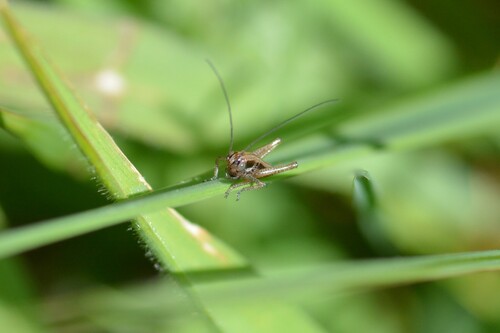
Long-Winged Conehead

Long-Winged Conehead

Conocephalus fuscus

Daily sighting probability <5% · Rare
at Pyrénées National Park

In 3 days ~10% in a week ~20%

9 Verified sightings at Pyrénées National Park From 2019 to 2026
29 In all 3 parks
September Best month
☀️ Diurnal When it's spotted

About the Long-Winged Conehead

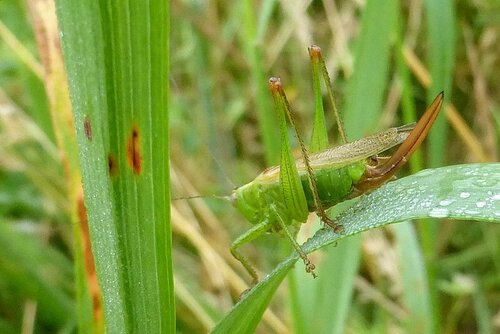
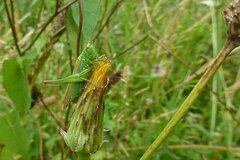
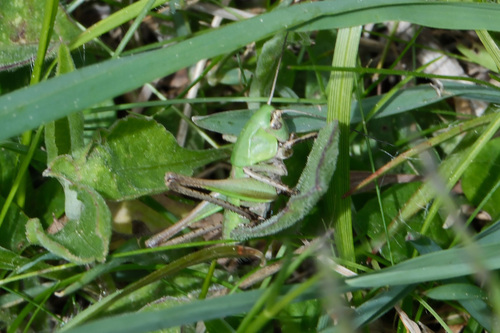
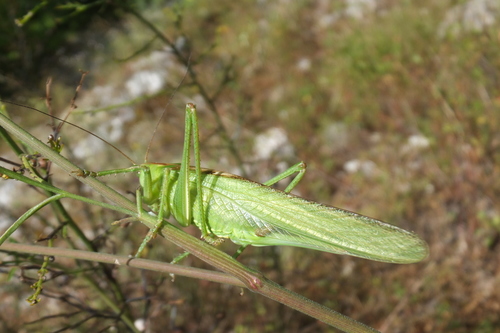
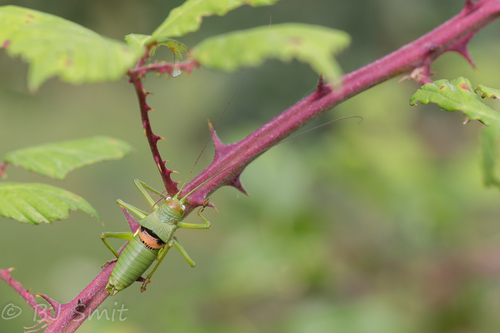
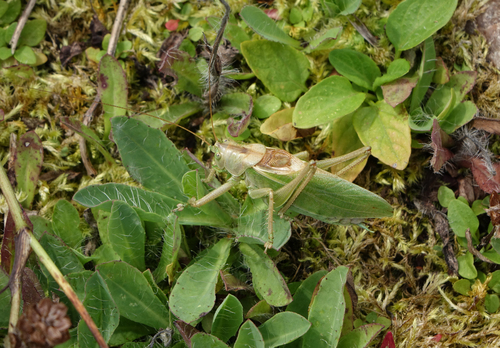
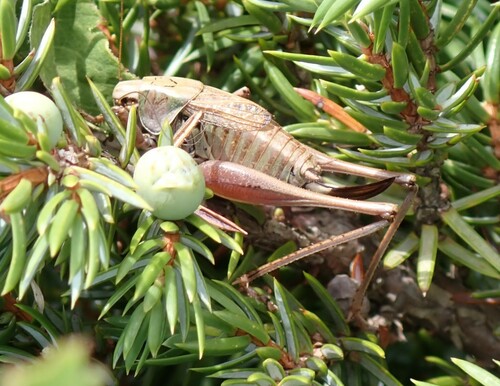
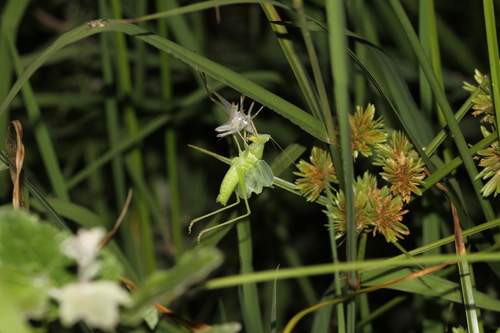
Conocephalus fuscus, the long-winged conehead, is a member of the family Tettigoniidae, the bush-crickets and is distributed through much of Europe and temperate Asia. This bush-cricket is native to the British Isles where it may confused with the short-winged conehead (Conocephalus dorsalis). These two species are phenotypically similar; however, the distinguishing factor between the two is the fully developed set of wings the long-winged conehead possesses that allows for flight. In the short-winged coneheads the hind wings are shorter than the abdomen, causing the wings to be vestigial and the species is incapable of flight. For this reason it is hard to discriminate between the two species during the early stages of their life cycle before the wings have fully developed. The colouration of the conehead is typically a grass green with a distinctive brown stripe down its back, though there are some brown phenotypes.

The debate hinges on whether the specific epithet used by Fabricius in the combination Locusta fusca should... Wikipedia →

Global Distribution

Parks Where Found

# Park Country Daily sighting probability
1 Białowieża National Park 🇵🇱 Poland
~10%
2 Cévennes National Park 🇫🇷 France
~10%
3 Pyrénées National Park 🇫🇷 France
<5%

Cities Where Found

# City Country Daily sighting probability
1 Kharkiv 🇺🇦 Ukraine
~10%
2 Birmingham 🇬🇧 United Kingdom
~10%
3 Warsaw 🇵🇱 Poland
~10%
4 Berlin 🇩🇪 Germany
~10%
5 Kyiv 🇺🇦 Ukraine
~10%
6 Minsk 🇧🇾 Belarus
~10%
7 Brussels 🇧🇪 Belgium
~10%
8 London 🇬🇧 United Kingdom
~10%
9 Moscow 🇷🇺 Russia
~10%
10 Vienna 🇦🇹 Austria
~10%

Before you go

What are the chances of seeing a Long-Winged Conehead in Pyrénées National Park?

Rare

Under 5% of wildlife watchers report a Long-Winged Conehead sighting in Pyrénées National Park on a given day, based on 9 verified sightings from GBIF citizen-science data from 2019 to 2026. It is the 869th most-seen of the 1277 insects we can rate there. Over three days the chance rises to about 10%, and over a week to about 20%, if each day is a fresh chance.

When is the best time to see a Long-Winged Conehead in Pyrénées National Park?

August to October

In those months about 10% of wildlife watchers report a Long-Winged Conehead in Pyrénées National Park on a given day, against under 5% in November to July, the lowest months.

What time of day is best to see a Long-Winged Conehead?

Between 2 and 5 pm

Across all the parks we cover, that three-hour window holds the most Long-Winged Conehead sightings with a recorded time, and about 9 in 10 of them come between 6 am and 6 pm: it is a daytime animal.

Is Pyrénées National Park the best place to see a Long-Winged Conehead?

3rd of 3

Of the 3 parks where we can rate Long-Winged Conehead sightings, Pyrénées National Park ranks 3rd at under 5%. The best odds are in Białowieża National Park (Poland, about 10%) and Cévennes National Park (France, about 10%).

Which relatives of the Long-Winged Conehead live in Pyrénées National Park?

Same family: Tettigoniidae

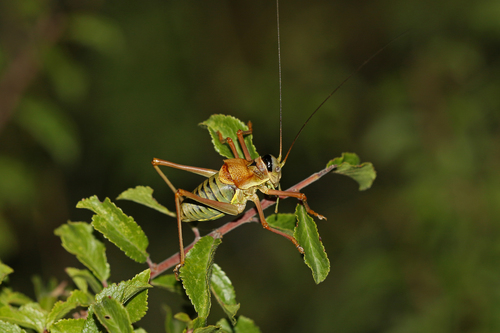
The closest relatives of the Long-Winged Conehead that you can see in Pyrénées National Park (family Tettigoniidae, Katydids) are Wart-Biter (about 20%), Western Saddle Bush-Cricket (about 20%) and Great Green Bush-Cricket (about 20%), with each one's daily chance of a sighting.

Where does the Long-Winged Conehead sighting chance come from?

GBIF citizen-science records

It is estimated from how often the Long-Winged Conehead is recorded against all the insects logged in Pyrénées National Park (9 verified sightings from 2019 to 2026), calibrated against known sighting rates. Figures are rounded to the nearest 10% because citizen-science data supports honest approximations, not decimals, and months with records from fewer than five people show "—". How it works.

← Back to Pyrénées National Park