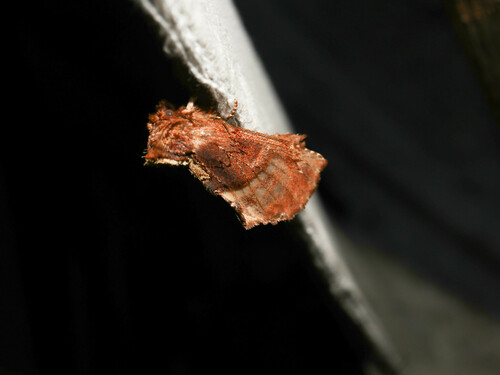
Marbled Brown

Marbled Brown

Drymonia dodonaea

Daily sighting probability <5% · Rare
at Pyrénées National Park

In 3 days ~10% in a week ~20%

7 Verified sightings at Pyrénées National Park From 2019 to 2026
53 In all 4 parks
May Best month
☀️🌙 Day & Night When it's spotted

About the Marbled Brown

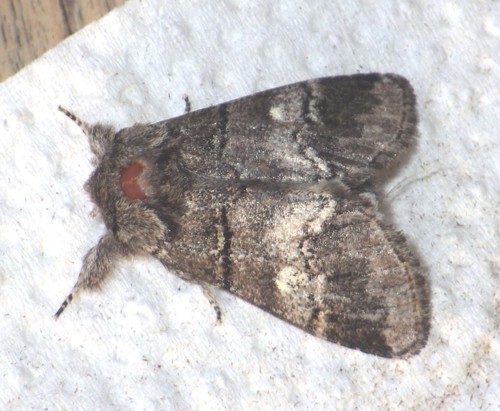
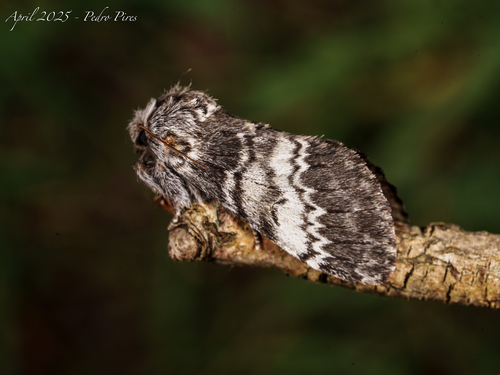
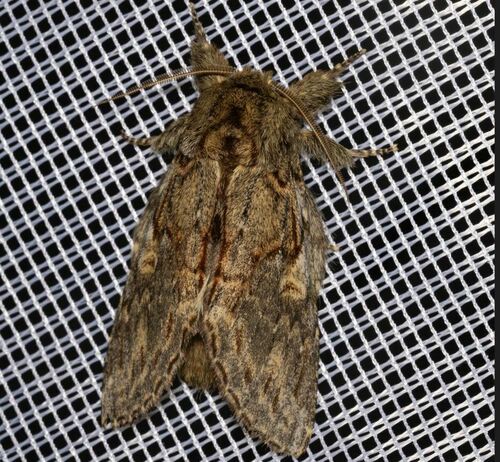
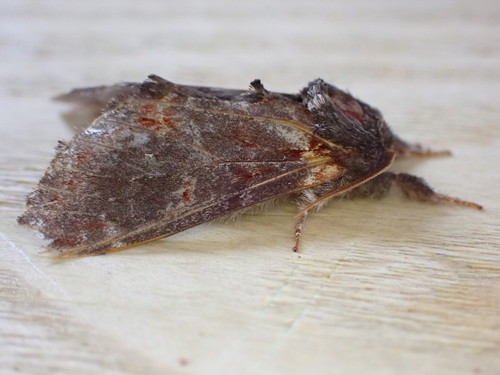
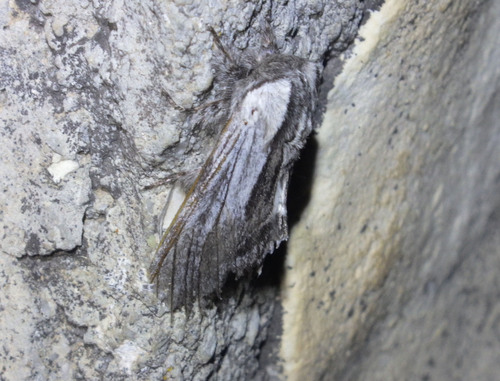
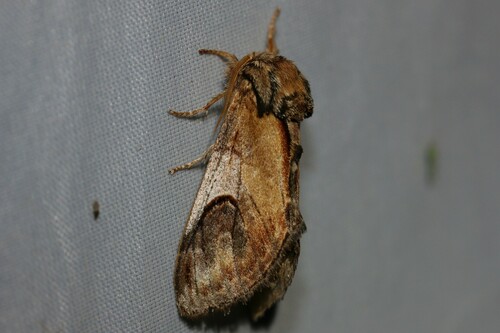
Drymonia dodonaea, the marbled brown, is a moth of the family Notodontidae. The species was first described by Michael Denis and Ignaz Schiffermüller in 1775. It is found in Europe and in the area surrounding the Caucasus.

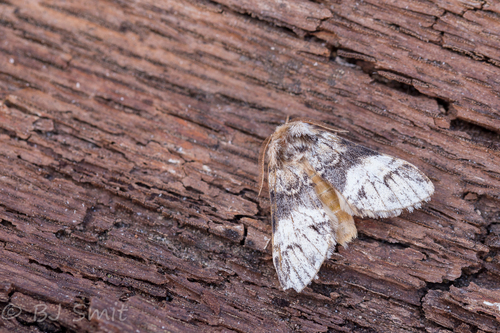
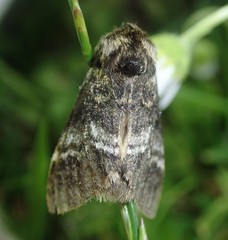
The wingspan is 33–38 mm. Similar to Drymonia ruficornis, but the forewings are generally whiter; the crosslines are less straight, and there is no black crescent above the centre of the wings. The larva is naked and without any conspicuous outgrowths. It is yellow-green on the dorsum, has a red-edged yellow lateral stripe and it is bluish-green under this stripe.

Forewing whitish grey, with 2 black basal dots, a broad transverse band which is constricted in the middle and proximally edged with blackish scaling, and a distal dark dentate band which is broad at the costal margin, tapers to the hind margin and forms an intensely black-brown angle-mark on vein 2; distal margin with sharp dark brown spots. Hindwing grey brown. The scheme of markings of the forewing somewhat recalls Cerura. ab. albida Rebel belongs to trimacula [synonym]; the whole median area of the forewing is uniformly white apart from the two bands. — In... Wikipedia →
Global Distribution

Parks Where Found

# Park Country Daily sighting probability
1 Snowdonia National Park 🇬🇧 United Kingdom
~10%
2 Cévennes National Park 🇫🇷 France
~10%
3 Bavarian Forest National Park 🇩🇪 Germany
~10%
4 Pyrénées National Park 🇫🇷 France
<5%

Cities Where Found

# City Country Daily sighting probability
1 Prague 🇨🇿 Czechia
<5%

Before you go

What are the chances of seeing a Marbled Brown in Pyrénées National Park?

Rare

Under 5% of wildlife watchers report a Marbled Brown sighting in Pyrénées National Park on a given day, based on 7 verified sightings from GBIF citizen-science data from 2019 to 2026. It is the 1026th most-seen of the 1277 insects we can rate there. Over three days the chance rises to about 10%, and over a week to about 20%, if each day is a fresh chance.

When is the best time to see a Marbled Brown in Pyrénées National Park?

May

In that month about 10% of wildlife watchers report a Marbled Brown in Pyrénées National Park on a given day, against under 5% in June to April, the lowest months.

What time of day is best to see a Marbled Brown?

Between 10 pm and 1 am

Across all the parks we cover, that three-hour window holds the most Marbled Brown sightings with a recorded time, and about half of them come between 6 pm and 6 am: it is seen both by day and at night.

Where does the Marbled Brown sighting chance come from?

GBIF citizen-science records

It is estimated from how often the Marbled Brown is recorded against all the insects logged in Pyrénées National Park (7 verified sightings from 2019 to 2026), calibrated against known sighting rates. Figures are rounded to the nearest 10% because citizen-science data supports honest approximations, not decimals, and months with records from fewer than five people show "—". How it works.

← Back to Pyrénées National Park