Scalloped Oak

Scalloped Oak

Crocallis elinguaria

Daily sighting probability ~10% · With luck
at Pyrénées National Park

In 3 days ~10% in a week ~30%

15 Verified sightings at Pyrénées National Park From 2019 to 2026
148 In all 6 parks
August Best month
☀️🌙 Day & Night When it's spotted

About the Scalloped Oak

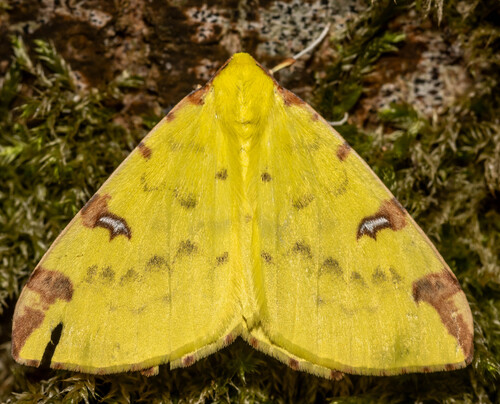
The scalloped oak (Crocallis elinguaria) is a moth of the family Geometridae. The species was first described by Carl Linnaeus in his 1758 10th edition of Systema Naturae. This common species can be found from Europe to eastern Siberia.

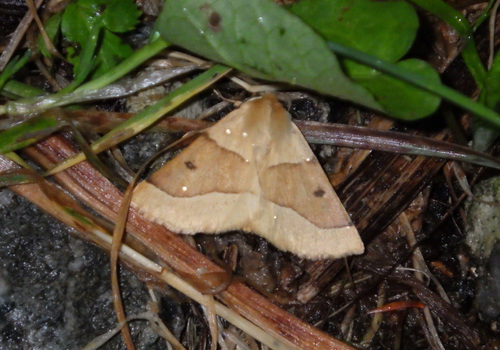
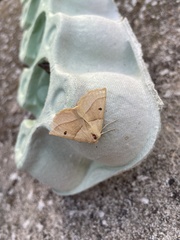
This species inhabits a wide range of habitats, including mixed and deciduous forests, bushes, heaths, scrub, hedgerows, bogs, parks and gardens. The wingspan is 32–46 mm. This is a distinctive species, usually with yellow-tan forewings with a broad orange-brown band and a pointed apex. Females are usually paler. There can be considerable variation, with the central band sometimes the same colour as the rest of the forewing, ranging from pale yellow to orange brown. Melanic forms are also known. There is always a blackish discal spot on the forewing in middle of band towards the costa. The thorax is hairy. The hindwings are plain whitish. Last instar caterpillars have a brownish or yellowish colouration. On the dorsum there is a dark brown line which is extended at the segment incisions. There are sometimes some dark spots or slashes on the sides. Characteristic are two small pointed warts on the eleventh... Wikipedia →

Global Distribution

Parks Where Found

# Park Country Daily sighting probability
1 Wadden Sea National Park 🇩🇪 Germany
~10%
2 Cairngorms National Park 🇬🇧 United Kingdom
~10%
3 Snowdonia National Park 🇬🇧 United Kingdom
~10%
4 Bavarian Forest National Park 🇩🇪 Germany
~10%
5 Pyrénées National Park 🇫🇷 France
~10%
6 Cévennes National Park 🇫🇷 France
<5%

Cities Where Found

# City Country Daily sighting probability
1 London 🇬🇧 United Kingdom
~10%
2 Liverpool 🇬🇧 United Kingdom
~10%
3 Manchester 🇬🇧 United Kingdom
~10%
4 Birmingham 🇬🇧 United Kingdom
~10%
5 Leeds 🇬🇧 United Kingdom
~10%
6 Helsinki 🇫🇮 Finland
~10%
7 Copenhagen 🇩🇰 Denmark
~10%
8 Amsterdam 🇳🇱 Netherlands
<5%
9 Vienna 🇦🇹 Austria
<5%

Before you go

What are the chances of seeing a Scalloped Oak in Pyrénées National Park?

With luck

About 10% of wildlife watchers report a Scalloped Oak sighting in Pyrénées National Park on a given day, based on 15 verified sightings from GBIF citizen-science data from 2019 to 2026. It is the 576th most-seen of the 1277 insects we can rate there. Over three days the chance rises to about 10%, and over a week to about 30%, if each day is a fresh chance.

When is the best time to see a Scalloped Oak in Pyrénées National Park?

August and September

In those months about 10% of wildlife watchers report a Scalloped Oak in Pyrénées National Park on a given day, against under 5% in October to July, the lowest months.

What time of day is best to see a Scalloped Oak?

Between 11 pm and 2 am

Across all the parks we cover, that three-hour window holds the most Scalloped Oak sightings with a recorded time, and about half of them come between 6 pm and 6 am: it is seen both by day and at night.

Is Pyrénées National Park the best place to see a Scalloped Oak?

Among the best

Of the 6 parks where we can rate Scalloped Oak sightings, Pyrénées National Park ranks 5th at about 10%, level with the leaders once rounded. The best odds are in Wadden Sea National Park (Germany, about 10%), Cairngorms National Park (United Kingdom, about 10%) and Snowdonia National Park (United Kingdom, about 10%).

Which relatives of the Scalloped Oak live in Pyrénées National Park?

Same family: Geometridae

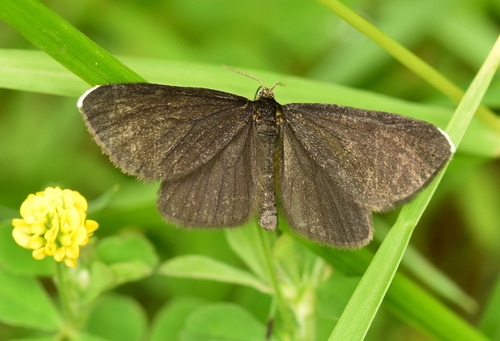
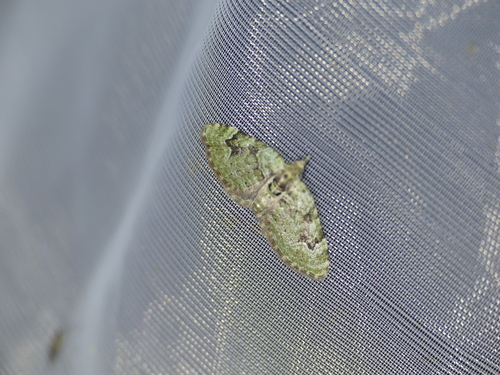
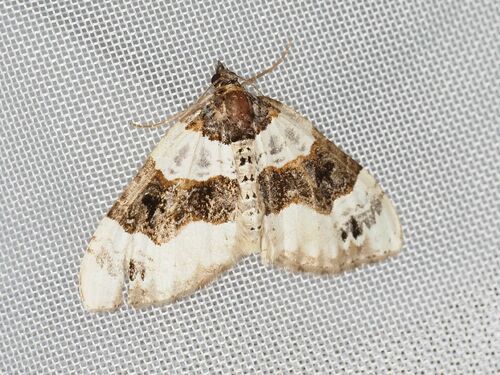
The closest relatives of the Scalloped Oak that you can see in Pyrénées National Park (family Geometridae, Geometer Moths) are Latticed Heath (about 10%), Common Heath (about 10%) and Willow Beauty (about 10%), with each one's daily chance of a sighting.

Where does the Scalloped Oak sighting chance come from?

GBIF citizen-science records

It is estimated from how often the Scalloped Oak is recorded against all the insects logged in Pyrénées National Park (15 verified sightings from 2019 to 2026), calibrated against known sighting rates. Figures are rounded to the nearest 10% because citizen-science data supports honest approximations, not decimals, and months with records from fewer than five people show "—". How it works.
← Back to Pyrénées National Park