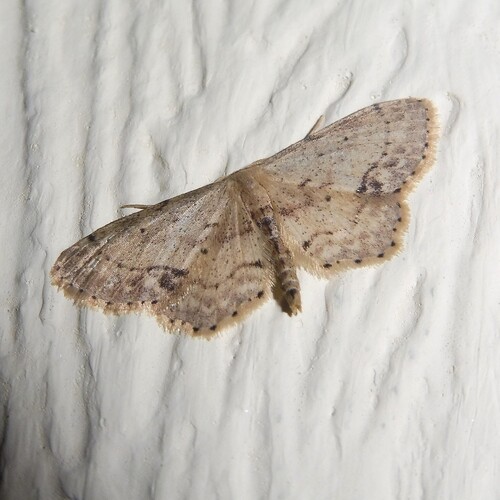
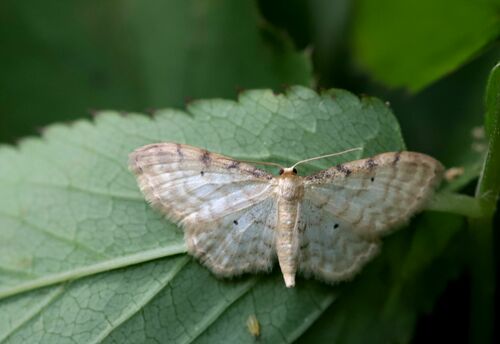
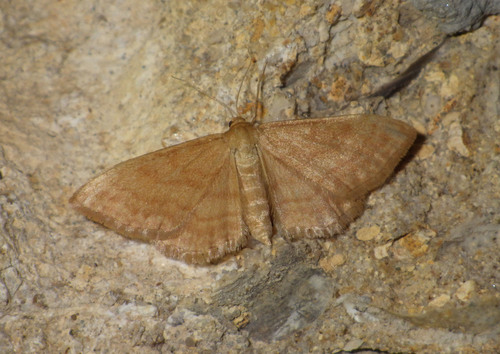
Weaver's Wave

Weaver's Wave

Idaea contiguaria

Daily sighting probability <5% · Rare
at Pyrénées National Park

In 3 days ~10% in a week ~30%

9 Verified sightings at Pyrénées National Park From 2019 to 2026
32 In all 3 parks
July Best month
🌙 Nocturnal When it's spotted

About the Weaver's Wave

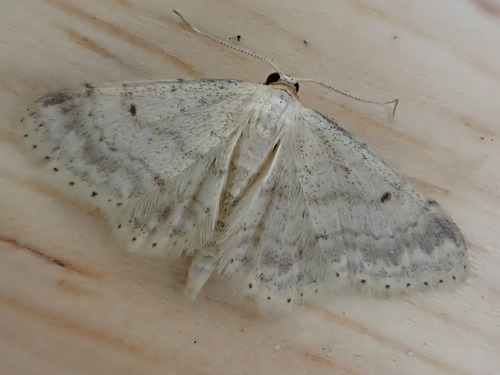
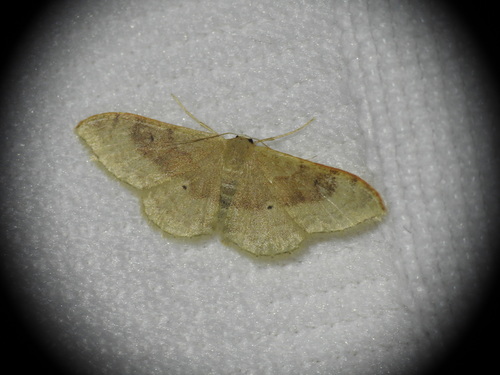
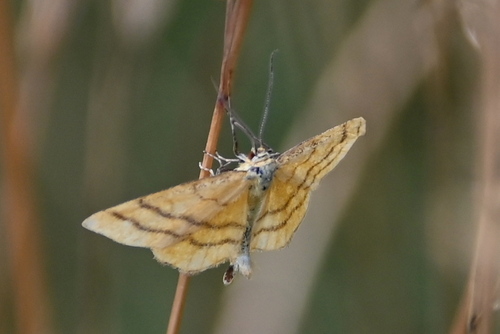
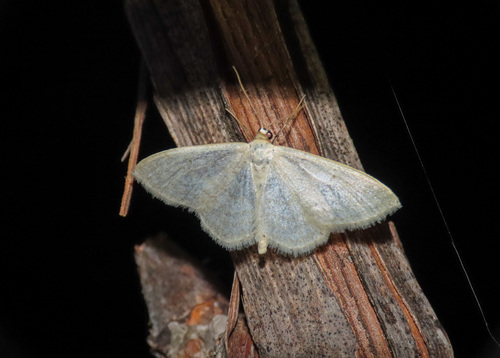
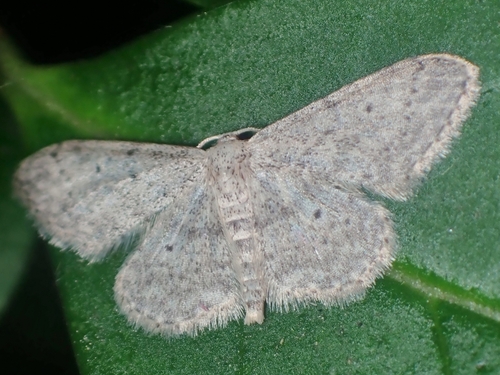
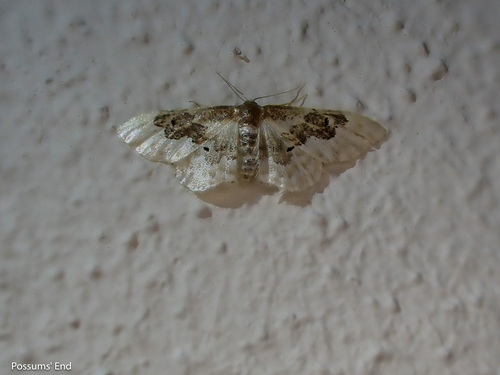
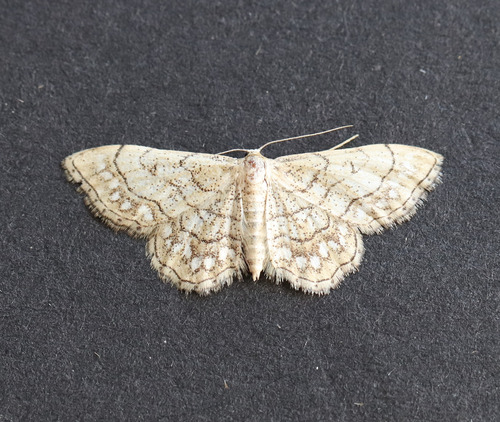
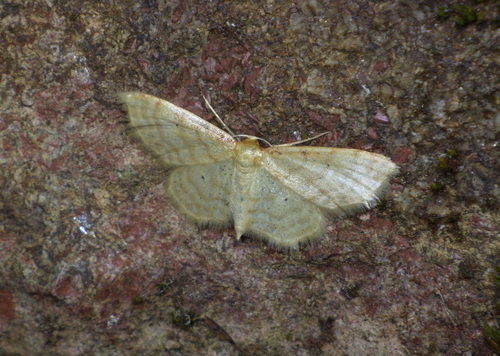
Idaea contiguaria, the Weaver's wave, is a moth of the family Geometridae. It was first described by Jacob Hübner in 1799 and is found in Europe. The species has a wingspan of about 20 mm.South describes it- "In colour, the moth is whity brown, more or less dusted or clouded with dark grey; except in the darker forms, three irregular black lines on the fore wings, and two on the hind wings, are clearly seen. It flies at dusk in June and July and sits by day on lichen-covered rocks. The caterpillar is pale ochreous brown, with irregular dark brown lines. It feeds on ling (Calluna) and crowberry (Empetrum) from September to May; but when eggs are obtained, the caterpillar hatching from them may be kept on chickweed, knotgrass, etc., and the moth be reared the same year. Mr R. Tait records the finding of ten caterpillars on navelwort (Cotyledon) growing among the heather in a very sheltered corner among rocks in North Wales, at Easter, 1906. He also notes that moths reared in captivity pair readily. The British localities, all in North Wales, are Aber, Bangor, Barmouth, Bettws-y-coed, Conway, Dolgelly, Llanfairfechan, and Penmaenmawr."

The adults fly in one generation from June to July [1]. The larvae feed on heather, crowberry and Umbilicus. Wikipedia →
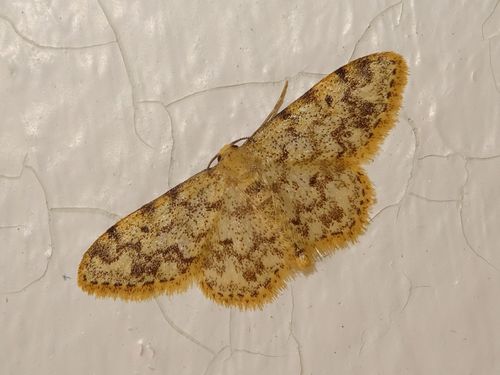
Global Distribution

Parks Where Found

# Park Country Daily sighting probability
1 Cévennes National Park 🇫🇷 France
~10%
2 Pyrénées National Park 🇫🇷 France
<5%
3 Sierra de Guadarrama National Park 🇪🇸 Spain
<5%

Before you go

What are the chances of seeing a Weaver's Wave in Pyrénées National Park?

Rare

Under 5% of wildlife watchers report a Weaver's Wave sighting in Pyrénées National Park on a given day, based on 9 verified sightings from GBIF citizen-science data from 2019 to 2026. It is the 806th most-seen of the 1277 insects we can rate there. Over three days the chance rises to about 10%, and over a week to about 30%, if each day is a fresh chance.

When is the best time to see a Weaver's Wave in Pyrénées National Park?

July and August

In those months about 10% of wildlife watchers report a Weaver's Wave in Pyrénées National Park on a given day, against under 5% in September to June, the lowest months.

What time of day is best to see a Weaver's Wave?

Between 9 pm and midnight

Across all the parks we cover, that three-hour window holds the most Weaver's Wave sightings with a recorded time, and about 8 in 10 of them come between 6 pm and 6 am: it is mostly seen at night.

Is Pyrénées National Park the best place to see a Weaver's Wave?

2nd of 3

Of the 3 parks where we can rate Weaver's Wave sightings, Pyrénées National Park ranks 2nd at under 5%. The best odds are in Cévennes National Park (France, about 10%).

Which relatives of the Weaver's Wave live in Pyrénées National Park?

Same genus: Idaea

The closest relatives of the Weaver's Wave that you can see in Pyrénées National Park (genus Idaea) are Riband Wave (about 10%), Small Fan-Footed Wave (about 10%) and Portland Ribbon Wave (about 10%), with each one's daily chance of a sighting.

Where does the Weaver's Wave sighting chance come from?

GBIF citizen-science records

It is estimated from how often the Weaver's Wave is recorded against all the insects logged in Pyrénées National Park (9 verified sightings from 2019 to 2026), calibrated against known sighting rates. Figures are rounded to the nearest 10% because citizen-science data supports honest approximations, not decimals, and months with records from fewer than five people show "—". How it works.

← Back to Pyrénées National Park