Kob

Kob

Kobus kob

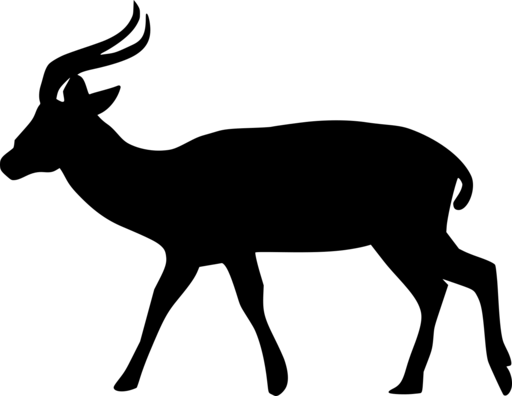
Silhouette: Augustin Brouillet · PhyloPic

LCLeast ConcernNTVUENCR
Daily sighting probability ~70% · Very likely
at Queen Elizabeth National Park

In 3 days >90%

215 Verified sightings at Queen Elizabeth National Park From 2019 to 2026
523 In all 5 parks
February Best month
☀️ Diurnal When it's spotted

About the Kob

The kob (Kobus kob) is an antelope found across Central Africa and parts of West Africa and East Africa. Together with the closely related reedbucks, waterbucks, lechwe, Nile lechwe, and puku, it forms the Reduncinae tribe. Found along the northern savanna, it is often seen in Murchison Falls and Queen Elizabeth National Park, Uganda; Garamba and Virunga National Park, and the Democratic Republic of the Congo, as well as grassy floodplains of South Sudan.

Kob are found in wet areas (such as floodplains), where they eat grasses. Kob are diurnal, but inactive during the heat of the day. They live in groups of either females and calves or just males. These groups generally range from five to forty animals.

Among the kobs of eastern Africa, the Ugandan kob (Kobus kob thomasi) appears on the coat of arms of Uganda, and white-eared kob (Kobus kob leucotis), found in South Sudan, southwest Ethiopia, and extreme northeast Uganda, participate in large-scale migrations.

The kob resembles the impala but is more heavily built. Males are more robust than females and have horns. Males have shoulder heights of 90–100 cm (35–39 in) and an average weight of 94 kg (207 lb). Females... Wikipedia →

Global Distribution

Parks Where Found

# Park Country Daily sighting probability
1 Murchison Falls National Park 🇺🇬 Uganda
~80%
2 Queen Elizabeth National Park 🇺🇬 Uganda
~70%
3 Niokolo-Koba National Park 🇸🇳 Senegal
~70%
4 Kidepo Valley National Park 🇺🇬 Uganda
~60%
5 Virunga National Park 🇨🇩 Democratic Republic of the Congo
~40%

Zoos & Centres Where Found

# Zoo / Centre Country
1 San Diego Zoo Safari Park 🇺🇸 United States In captivity
2 Planète Sauvage 🇫🇷 France In captivity
3 Zacango Zoo 🇲🇽 Mexico In captivity
4 Chapultepec Zoo 🇲🇽 Mexico In captivity
5 Terra Natura Murcia 🇪🇸 Spain In captivity
6 Reserva Zoológica Oasys MiniHollywood 🇪🇸 Spain In captivity
7 Parc animalier de Sarakawa 🇹🇬 Togo In captivity

Before you go

What are the chances of seeing a Kob in Queen Elizabeth National Park?

Very likely

About 70% of wildlife watchers report a Kob sighting in Queen Elizabeth National Park on a given day, based on 215 verified sightings from GBIF citizen-science data from 2019 to 2026. It is the 2nd most-seen of the 24 mammals we can rate there. Over three days the chance rises to over 90%, if each day is a fresh chance.

When is the best time to see a Kob in Queen Elizabeth National Park?

June, September and December–March

In those months about 80% of wildlife watchers report a Kob in Queen Elizabeth National Park on a given day, against about 50% in April and May, the lowest months.

What time of day is best to see a Kob?

Between 2 and 5 pm

Across all the parks we cover, that three-hour window holds the most Kob sightings with a recorded time, and about 9 in 10 of them come between 6 am and 6 pm: it is a daytime animal.

Is Queen Elizabeth National Park the best place to see a Kob?

2nd of 5

Of the 5 parks where we can rate Kob sightings, Queen Elizabeth National Park ranks 2nd at about 70%. The best odds are in Murchison Falls National Park (Uganda, about 80%). All parks ranked.

Where does the Kob sighting chance come from?

GBIF citizen-science records

It is estimated from how often the Kob is recorded against all the mammals logged in Queen Elizabeth National Park (215 verified sightings from 2019 to 2026), calibrated against known sighting rates. Figures are rounded to the nearest 10% because citizen-science data supports honest approximations, not decimals, and months with records from fewer than five people show "—". How it works.

← Back to Queen Elizabeth National Park