Hooded Monarch

Hooded Monarch

Symposiachrus manadensis

Silhouette: Sheatherius · PhyloPic

LCLeast ConcernNTVUENCR
Daily sighting probability <5% · Rare
at Raja Ampat

In 3 days <5% in a week ~10%

22 Verified sightings at Raja Ampat From 2019 to 2026
22 In 1 park
July Best month
☀️🌙 Day & Night When it's spotted

About the Hooded Monarch

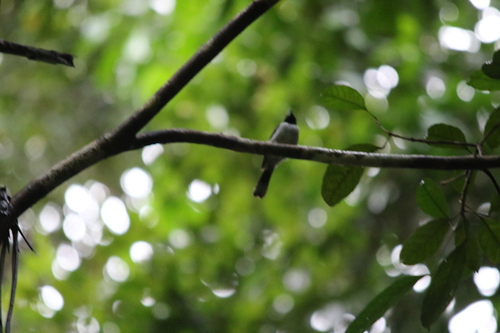
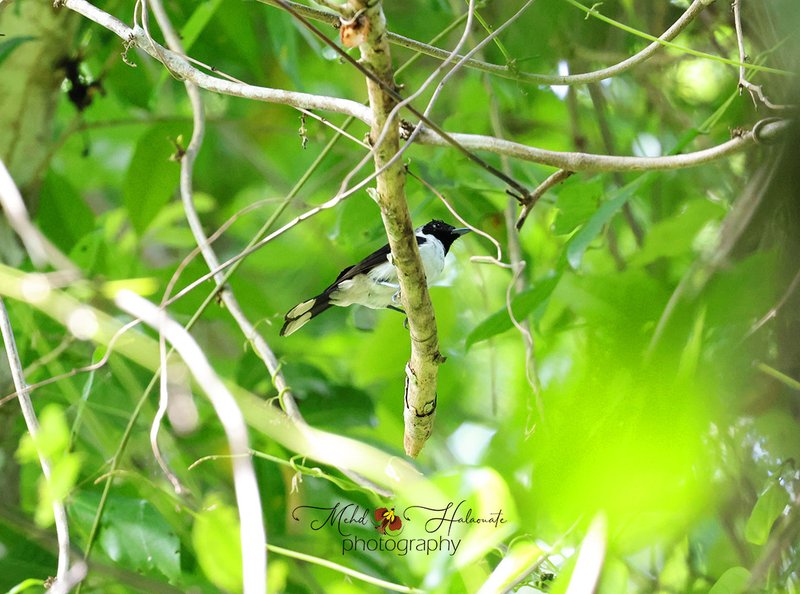
The hooded monarch (Symposiachrus manadensis) is a species of bird in the family Monarchidae. It is found on New Guinea. Its natural habitat is subtropical or tropical moist lowland forests. It is identified as jet black and with a white belly and feeds on small invertebrates and larvae.

The hooded monarch was described by the French zoologists Jean Quoy and Joseph Gaimard in 1832 from a specimen which they mistakenly claimed had been collected in Manado on the island of Célèbes (now Sulawesi). They coined the binomial name, Muscicapa manadensis. In 1941 the type locality was redesignated as Manokwari in New Guinea.

The hooded monarch was originally described in the genus Muscicapa and then placed in Monarcha until moved to Symposiachrus in 2009. Alternate names include the black-and-white monarch, black-and-white monarch flycatcher and white-bellied monarch.

Superspecies Monarcha manadensis comprises 13 mainly black and white or “pied” species and ranges from the Western Islands of the Lesser Sundas into parts of Micronesia, and throughout New Guinea, tropical Australia, and the Solomons. It has a generation length of 3.27 years, with a decreasing population... Wikipedia →


Sounds

Call0:07

Papua New Guinea · 2010

© Iain Woxvold · XC557753 · CC BY-NC-SA 4.0

Song0:18

Indonesia · 2019

© Marc Anderson · XC628114 · CC BY-NC-ND 4.0

Call0:29

Papua New Guinea · 1996

© John V. Moore · XC279406 · CC BY-NC-SA 4.0

Global Distribution

Parks Where Found

# Park Country Daily sighting probability
1 Raja Ampat 🇮🇩 Indonesia
<5%

More parks will be added in future updates.

Before you go

What are the chances of seeing a Hooded Monarch in Raja Ampat?

Rare

Under 5% of wildlife watchers report a Hooded Monarch sighting in Raja Ampat on a given day, based on 22 verified sightings from GBIF citizen-science data from 2019 to 2026. It is the 158th most-seen of the 200 birds we can rate there. Over three days the chance rises to under 5%, and over a week to about 10%, if each day is a fresh chance.

When is the best time to see a Hooded Monarch in Raja Ampat?

July

In that month about 10% of wildlife watchers report a Hooded Monarch in Raja Ampat on a given day, against under 5% in August to June, the lowest months. That is one of Raja Ampat's wettest months, with about 360 mm of rain against 180 mm in October.

What time of day is best to see a Hooded Monarch?

Between midnight and 3 am

Across all the parks we cover, that three-hour window holds the most Hooded Monarch sightings with a recorded time, and about 6 in 10 of them come between 6 pm and 6 am: it is seen both by day and at night.

Where else can you see a Hooded Monarch?

Only Raja Ampat, in our data

Raja Ampat is the only park on Wallace's Line with enough records to rate Hooded Monarch sightings: under 5% of wildlife watchers there report one on a given day.

Which relatives of the Hooded Monarch live in Raja Ampat?

Same genus: Symposiachrus

The closest relatives of the Hooded Monarch that you can see in Raja Ampat (genus Symposiachrus, Black-and-white Monarchs and Allies) are Spot-winged Monarch (about 10%) and Black-backed Monarch (about 10%), with each one's daily chance of a sighting.

Where does the Hooded Monarch sighting chance come from?

GBIF citizen-science records

It is estimated from how often the Hooded Monarch is recorded against all the birds logged in Raja Ampat (22 verified sightings from 2019 to 2026), calibrated against known sighting rates. Figures are rounded to the nearest 10% because citizen-science data supports honest approximations, not decimals, and months with records from fewer than five people show "—". How it works.

← Back to Raja Ampat