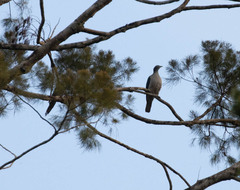
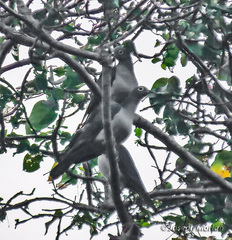
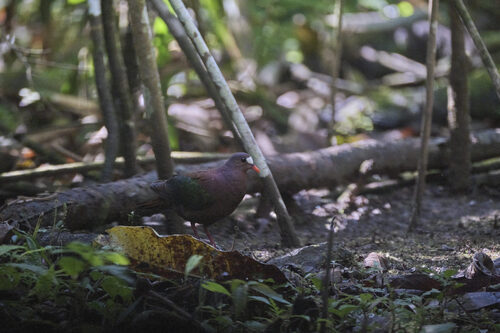
Spectacled Imperial-Pigeon

Spectacled Imperial-Pigeon

Ducula perspicillata

Silhouette: Sheatherius · PhyloPic

LCLeast ConcernNTVUENCR
Daily sighting probability ~10% · With luck
at Raja Ampat

In 3 days ~10% in a week ~30%

65 Verified sightings at Raja Ampat From 2019 to 2026
65 In 1 park
October Best month
🌅 Crepuscular When it's spotted

About the Spectacled Imperial-Pigeon

The spectacled imperial pigeon (Ducula perspicillata) is a species of bird in the family Columbidae. It is endemic to the Maluku Islands. Its natural habitats are subtropical or tropical moist lowland forest and subtropical or tropical mangrove forest, especially recently disturbed forests.

The spectacled imperial pigeon is a species in the large genus of imperial pigeons, Ducula. Within the genus, it is most closely related to the Seram imperial pigeon, with which it is sometimes considered conspecific. These two species form a species group with the green imperial pigeon and elegant imperial pigeon.

The species' generic name comes from the Neo-Latin ducula (duke), while the specific epithet perspicillata is from the Modern Latin perspicillata (spectacled), derived the Latin perspicillum (lens), which is itself from the Latin perspicere (to see through). Alternative names for the orange fruit dove include white-eyed imperial pigeon, white-spectacled imperial pigeon, and Moluccan imperial pigeon.

It is monotypic. However, the Seram imperial pigeon is sometimes considered to be a subspecies of this species. Gibbs, David... Wikipedia →

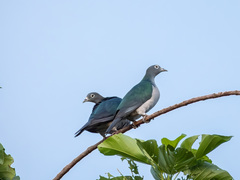
Sounds

Recording1:00

Indonesia · 2022

© Barry Edmonston · XC820128 · CC BY-NC-SA 4.0

Song0:42

Indonesia · 2019

© Marc Anderson · XC533528 · CC BY-NC-ND 4.0

Call0:20

Indonesia · 2013

© Mike Nelson · XC151756 · CC BY-NC-SA 3.0

Global Distribution

Parks Where Found

# Park Country Daily sighting probability
1 Raja Ampat 🇮🇩 Indonesia
~10%

More parks will be added in future updates.

Zoos & Centres Where Found

# Zoo / Centre Country
1 Houston Zoo 🇺🇸 United States In captivity

Before you go

What are the chances of seeing a Spectacled Imperial-Pigeon in Raja Ampat?

With luck

About 10% of wildlife watchers report a Spectacled Imperial-Pigeon sighting in Raja Ampat on a given day, based on 65 verified sightings from GBIF citizen-science data from 2019 to 2026. It is the 122nd most-seen of the 200 birds we can rate there. Over three days the chance rises to about 10%, and over a week to about 30%, if each day is a fresh chance.

When is the best time to see a Spectacled Imperial-Pigeon in Raja Ampat?

October

In that month about 20% of wildlife watchers report a Spectacled Imperial-Pigeon in Raja Ampat on a given day, against under 5% in May–September and December–March, the lowest months.

What time of day is best to see a Spectacled Imperial-Pigeon?

Between 5 and 8 am

Across all the parks we cover, that three-hour window holds the most Spectacled Imperial-Pigeon sightings with a recorded time, and about 6 in 10 of them come between 6 am and 6 pm: it is most active around dawn and dusk.

Where else can you see a Spectacled Imperial-Pigeon?

Only Raja Ampat, in our data

Raja Ampat is the only park on Wallace's Line with enough records to rate Spectacled Imperial-Pigeon sightings: about 10% of wildlife watchers there report one on a given day.

Which relatives of the Spectacled Imperial-Pigeon live in Raja Ampat?

Same genus: Ducula

The closest relatives of the Spectacled Imperial-Pigeon that you can see in Raja Ampat (genus Ducula, Imperial Pigeons) are Pinon Imperial-Pigeon (about 60%), Spice Imperial-Pigeon (about 40%) and Pied Imperial Pigeon (about 30%), with each one's daily chance of a sighting.

Where does the Spectacled Imperial-Pigeon sighting chance come from?

GBIF citizen-science records

It is estimated from how often the Spectacled Imperial-Pigeon is recorded against all the birds logged in Raja Ampat (65 verified sightings from 2019 to 2026), calibrated against known sighting rates. Figures are rounded to the nearest 10% because citizen-science data supports honest approximations, not decimals, and months with records from fewer than five people show "—". How it works.

← Back to Raja Ampat