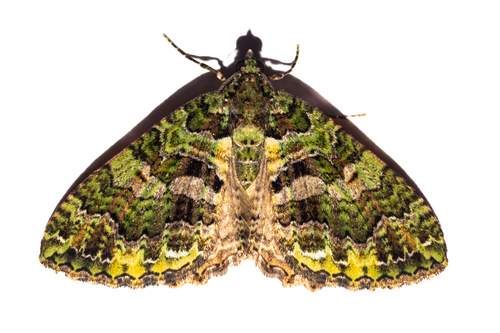
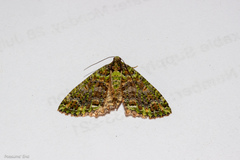
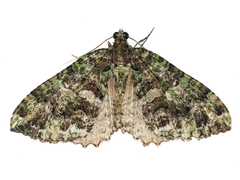
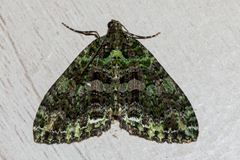
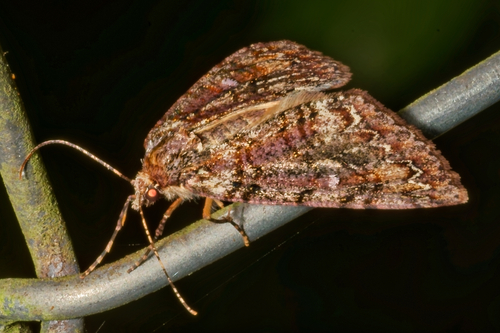
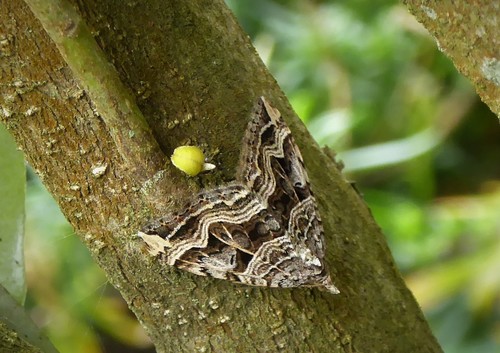
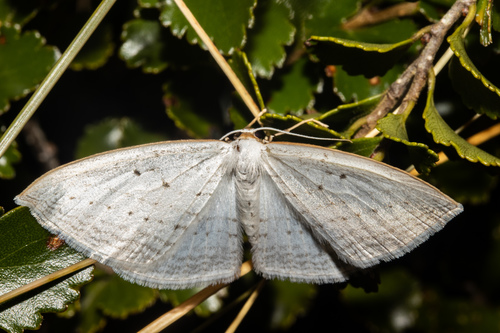
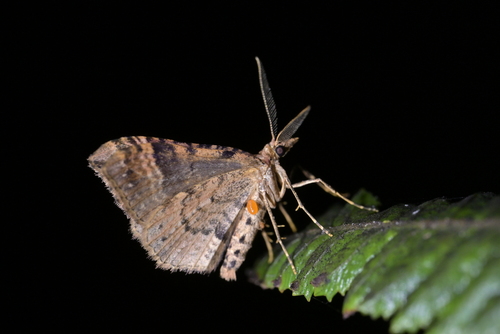
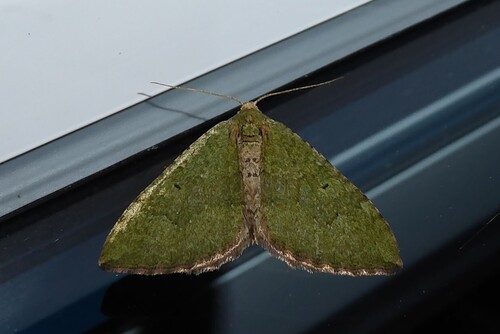
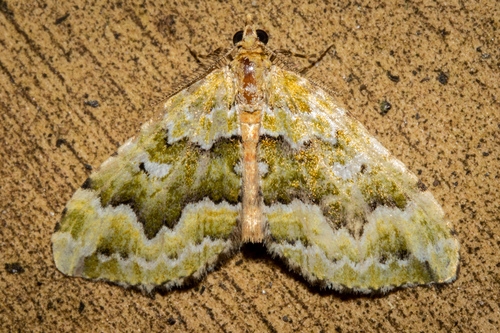
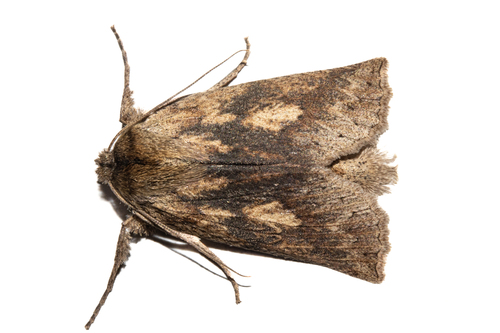
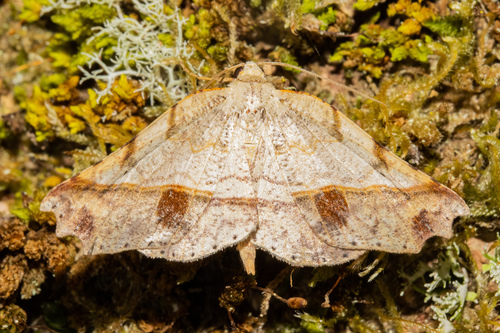
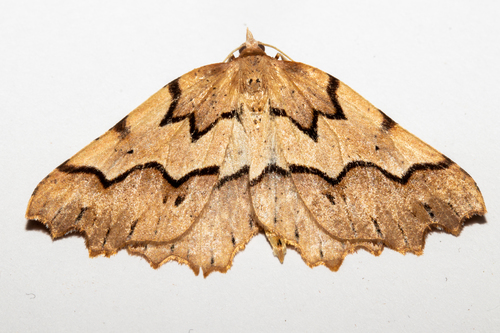
Dark Coprosma Carpet

Dark Coprosma Carpet

Austrocidaria similata

Endemic
Daily sighting probability ~20% · Possible
at Rakiura National Park

In 3 days ~40% in a week ~70%

14 Verified sightings at Rakiura National Park From 2019 to 2026
27 In all 2 parks
May Best month
☀️🌙 Day & Night When it's spotted

About the Dark Coprosma Carpet

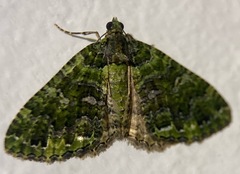
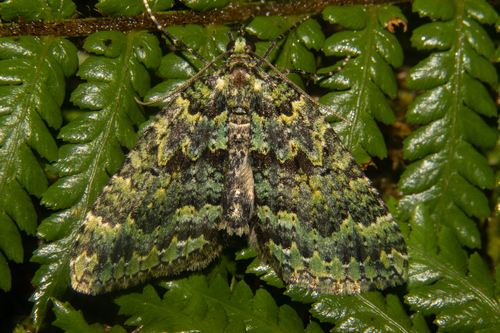
Austrocidaria similata is a species of moth of the family Geometridae. It is endemic to New Zealand and is found throughout the country, including offshore and subantarctic islands. It inhabits native forest and shrubland.

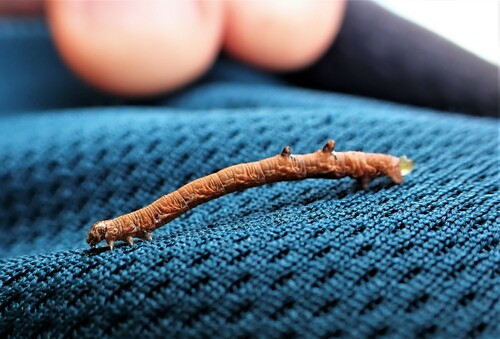
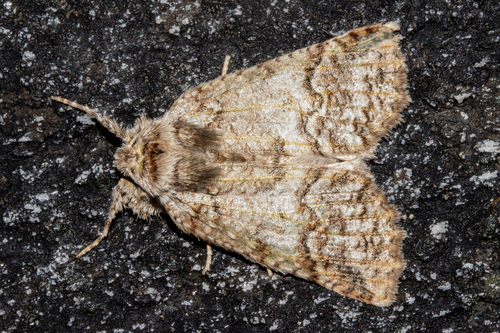
The white, oval eggs take about three weeks to mature. Larvae feed on Coprosma plants and mimic the appearance of a moss-covered twig. It has been hypothesised that the species overwinters as larvae. The larvae pupate on the ground, with the pupa being enclosed in a thin cocoon made up of silk and refuse. Adults are on the wing all year but are most commonly observed from October until March. Adults are nocturnal and are attracted to light. During the day they can be observed resting on tree trunks, where their forewing colouration provides camouflage protection from predators.

The species was first described by Francis Walker in 1862 using a specimen obtained by William Colenso, collected either in Hawke's Bay or Taupō, and named Cidaria similata. In 1875 Felder and Rogenhofer named it Cidaria timarata, thinking they were describing a new species. This name was synonymised by Edward Meyrick in 1883. George Hudson discussed and illustrated the species... Wikipedia →

Global Distribution

Parks Where Found

# Park Country Daily sighting probability
1 Rakiura National Park 🇳🇿 New Zealand
~20%
2 Fiordland National Park 🇳🇿 New Zealand
~10%

Cities Where Found

# City Country Daily sighting probability
1 Auckland 🇳🇿 New Zealand
~10%

Before you go

What are the chances of seeing a Dark Coprosma Carpet in Rakiura National Park?

Possible

About 20% of wildlife watchers report a Dark Coprosma Carpet sighting in Rakiura National Park on a given day, based on 14 verified sightings from GBIF citizen-science data from 2019 to 2026. It is the 45th most-seen of the 118 insects we can rate there. Over three days the chance rises to about 40%, and over a week to about 70%, if each day is a fresh chance.

When is the best time to see a Dark Coprosma Carpet in Rakiura National Park?

May and October–November

In those months about 30% of wildlife watchers report a Dark Coprosma Carpet in Rakiura National Park on a given day, against under 5% in February–March and June–September, the lowest months.

What time of day is best to see a Dark Coprosma Carpet?

Between 9 pm and midnight

Across all the parks we cover, that three-hour window holds the most Dark Coprosma Carpet sightings with a recorded time, and about 7 in 10 of them come between 6 pm and 6 am: it is seen both by day and at night.

Is Rakiura National Park the best place to see a Dark Coprosma Carpet?

Yes

Of the 2 parks where we can rate Dark Coprosma Carpet sightings, Rakiura National Park has the highest daily chance: about 20%. Next come Fiordland National Park (New Zealand, about 10%).

Which relatives of the Dark Coprosma Carpet live in Rakiura National Park?

Same genus: Austrocidaria

The closest relatives of the Dark Coprosma Carpet that you can see in Rakiura National Park (genus Austrocidaria) are Barred Coprosma Carpet (about 20%) and Green Coprosma Carpet (about 10%), with each one's daily chance of a sighting.

Where does the Dark Coprosma Carpet sighting chance come from?

GBIF citizen-science records

It is estimated from how often the Dark Coprosma Carpet is recorded against all the insects logged in Rakiura National Park (14 verified sightings from 2019 to 2026), calibrated against known sighting rates. Figures are rounded to the nearest 10% because citizen-science data supports honest approximations, not decimals, and months with records from fewer than five people show "—". How it works.

← Back to Rakiura National Park