Pale-Banded Crescent

Pale-Banded Crescent

Anthanassa tulcis

Daily sighting probability ~40% · Likely
at Ría Lagartos Biosphere Reserve

In 3 days ~80% in a week >90%

85 Verified sightings at Ría Lagartos Biosphere Reserve From 2019 to 2026
142 In all 7 parks
January Best month
☀️ Diurnal When it's spotted

About the Pale-Banded Crescent

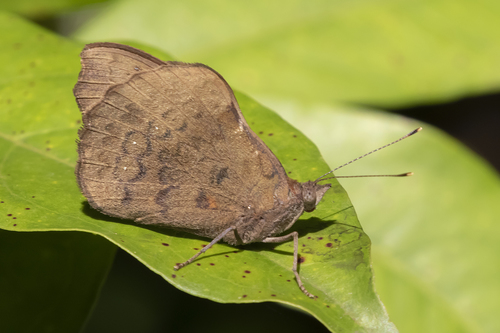
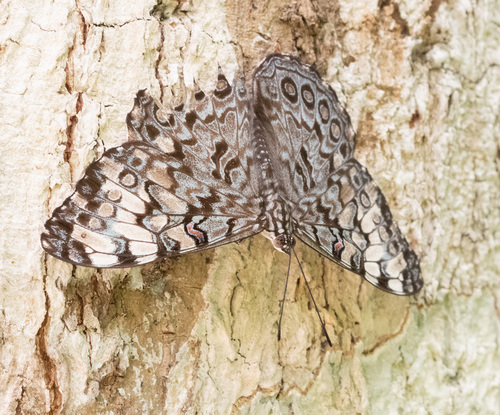
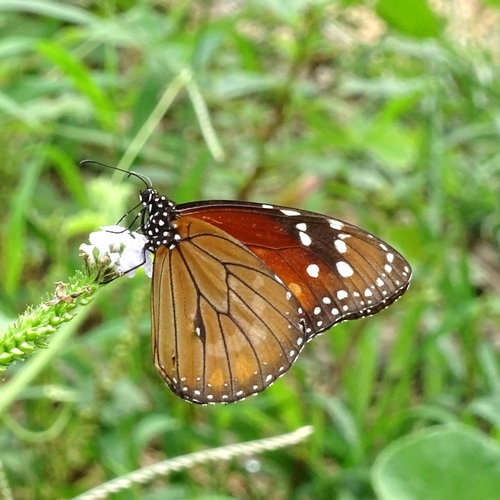
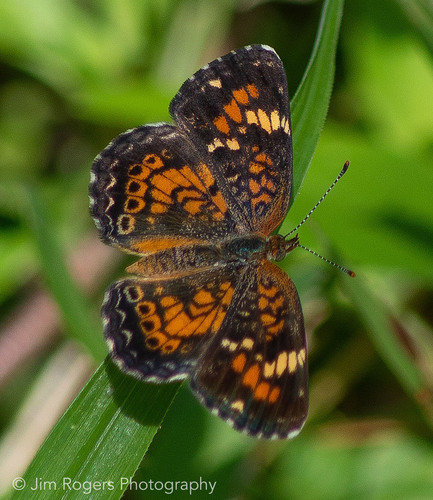
Anthanassa frisia, the Cuban crescentspot, Cuban checkerspot or Cuban crescent, is a butterfly of the family Nymphalidae. Subspecies tulcis is known by the common names pale-banded crescent or Tulcis crescent; it is treated as a species by some authors.

Anthanassa frisia frisia (West Indies, Florida) Anthanassa frisia hermas (Brazil (Pernambuco, Bahia, São Paulo, Mato Grosso), Paraguay, northern Argentina, Ecuador) Anthanassa frisia taeniata (Ecuador, western Peru) Anthanassa frisia dubia (coasts of Venezuela and Colombia)

Anthanassa frisia tulcis (Texas, Arizona, Mexico, Guatemala to Panama) The wingspan of subspecies frisia is 32–45 mm. Adults are on wing most of the year in southern Florida and throughout the year in the tropics. Subspecies tulcis has a wingspan of 32–35 mm. Adults are on wing from May to November in southern Texas.

The nominate subspecies is found in the West Indies and southern Florida, with strays to northern Florida. Subspecies tulcis is found from Argentina north through Central America and Mexico to southern Texas, strays to west Texas and southern Arizona. Other subspecies are resident to South America... Wikipedia →

Global Distribution

Parks Where Found

# Park Country Daily sighting probability
1 Ría Lagartos Biosphere Reserve 🇲🇽 Mexico
~40%
2 Biotopo Cerro Cahuí 🇬🇹 Guatemala
~20%
3 Arrecifes de Cozumel National Park 🇲🇽 Mexico
~10%
4 Cañón del Sumidero National Park 🇲🇽 Mexico
~10%
5 Calakmul Biosphere Reserve 🇲🇽 Mexico
~10%
6 Lago de Yojoa 🇭🇳 Honduras
~10%
7 Soberanía National Park 🇵🇦 Panama
~10%

Cities Where Found

# City Country Daily sighting probability
1 Guatemala City 🇬🇹 Guatemala
~10%
2 San José 🇨🇷 Costa Rica
~10%
3 San Salvador 🇸🇻 El Salvador
~10%

Before you go

What are the chances of seeing a Pale-Banded Crescent in Ría Lagartos Biosphere Reserve?

Likely

About 40% of wildlife watchers report a Pale-Banded Crescent sighting in Ría Lagartos Biosphere Reserve on a given day, based on 85 verified sightings from GBIF citizen-science data from 2019 to 2026. It is the most-seen of the 112 insects we can rate there. Over three days the chance rises to about 80%, and over a week to over 90%, if each day is a fresh chance.

When is the best time to see a Pale-Banded Crescent in Ría Lagartos Biosphere Reserve?

January

In that month about 70% of wildlife watchers report a Pale-Banded Crescent in Ría Lagartos Biosphere Reserve on a given day, against under 5% in May and October, the lowest months.

What time of day is best to see a Pale-Banded Crescent?

Between 11 am and 2 pm

Across all the parks we cover, that three-hour window holds the most Pale-Banded Crescent sightings with a recorded time, and nearly all of them come between 6 am and 6 pm: it is a daytime animal.

Is Ría Lagartos Biosphere Reserve the best place to see a Pale-Banded Crescent?

Yes

Of the 7 parks where we can rate Pale-Banded Crescent sightings, Ría Lagartos Biosphere Reserve has the highest daily chance: about 40%. Next come Biotopo Cerro Cahuí (Guatemala, about 20%) and Arrecifes de Cozumel National Park (Mexico, about 10%).

Which relatives of the Pale-Banded Crescent live in Ría Lagartos Biosphere Reserve?

Same family: Nymphalidae

The closest relatives of the Pale-Banded Crescent that you can see in Ría Lagartos Biosphere Reserve (family Nymphalidae, Brush-footed Butterflies) are Julia Heliconian (about 40%), Gulf Fritillary (about 30%) and White Peacock (about 30%), with each one's daily chance of a sighting.

Where does the Pale-Banded Crescent sighting chance come from?

GBIF citizen-science records

It is estimated from how often the Pale-Banded Crescent is recorded against all the insects logged in Ría Lagartos Biosphere Reserve (85 verified sightings from 2019 to 2026), calibrated against known sighting rates. Figures are rounded to the nearest 10% because citizen-science data supports honest approximations, not decimals, and months with records from fewer than five people show "—". How it works.

← Back to Ría Lagartos Biosphere Reserve