Mediterranean Mantis

Mediterranean Mantis

Iris oratoria

Daily sighting probability ~10% · With luck
at Saguaro National Park

In 3 days ~20% in a week ~30%

13 Verified sightings at Saguaro National Park From 2019 to 2026
72 In all 4 parks
September Best month
☀️🌙 Day & Night When it's spotted

About the Mediterranean Mantis

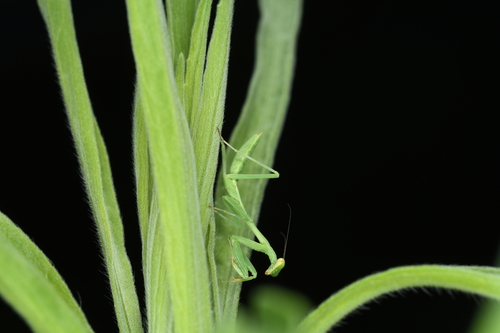
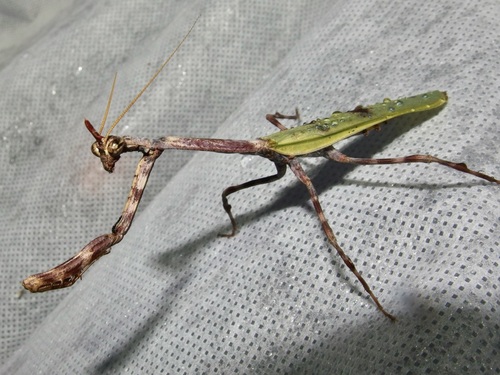
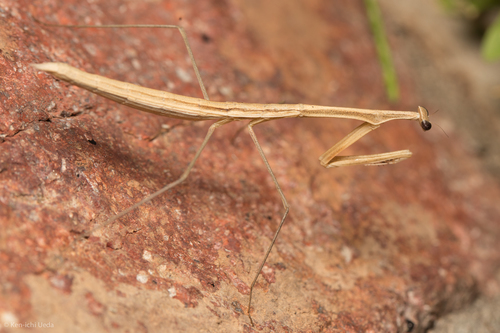
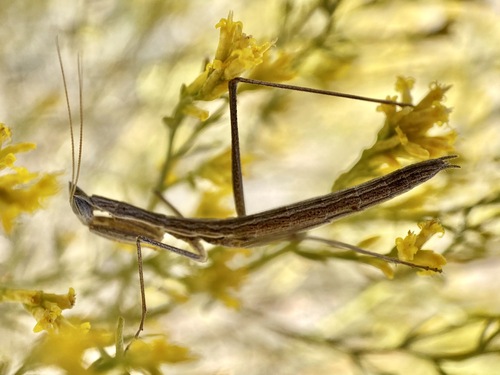
Iris oratoria, known by the common name Mediterranean mantis (or less frequently iris mantis), due to humans first studying it in lands around the Mediterranean Sea, is a species of praying mantis. Its range is expanding in the Middle East, Western Asia and the United States.

Albania, Bulgaria, Brač Island, Korčula Island, France (Including Corsica), Greece (Including Ionian Islands, Crete, Cyclades Islands), Italy (Including Sardinia, Sicily), North Macedonia, Portugal, Spain (Including Balearic Islands), Yugoslavia (Including Serbia, Kosovo, Voivodina, Montenegro), North Africa (Morocco, Algeria, Tunisia, Libya, Egypt, North Chad), Cyprus, West, Central and South Asia (Asian Turkey, India, Israel, Iran, Jordan, Lebanon, Pakistan, Palestine, Syria, Turkestan), Non-native to the Southwestern United States (Arizona, California, Nevada, Texas.).

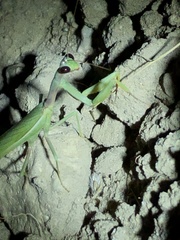
I. oratoria is very pale when young but matures to grass green, and grows to about 6.5 cm (2.6 in) long. The species may be distinguished from Mantis religiosa and other mantids with which it shares a range and general size and shape by the red-orange spot on the ventral side of the fourth (second to last) abdominal... Wikipedia →

Global Distribution

Parks Where Found

# Park Country Daily sighting probability
1 Sierra Nevada National Park 🇪🇸 Spain
~20%
2 Death Valley National Park 🇺🇸 United States
~10%
3 Joshua Tree National Park 🇺🇸 United States
~10%
4 Saguaro National Park 🇺🇸 United States
~10%

Cities Where Found

# City Country Daily sighting probability
1 Mesa 🇺🇸 United States
~30%
2 Ciudad Juárez 🇲🇽 México
~30%
3 Phoenix 🇺🇸 United States
~20%
4 Las Vegas 🇺🇸 United States
~10%
5 Tijuana 🇲🇽 México
~10%
6 Algiers 🇩🇿 Algeria
~10%
7 Torreón 🇲🇽 México
~10%
8 Athens 🇬🇷 Greece
~10%
9 Madrid 🇪🇸 Spain
~10%
10 Barcelona 🇪🇸 Spain
~10%

Before you go

What are the chances of seeing a Mediterranean Mantis in Saguaro National Park?

With luck

About 10% of wildlife watchers report a Mediterranean Mantis sighting in Saguaro National Park on a given day, based on 13 verified sightings from GBIF citizen-science data from 2019 to 2026. It is the 157th most-seen of the 354 insects we can rate there. Over three days the chance rises to about 20%, and over a week to about 30%, if each day is a fresh chance.

When is the best time to see a Mediterranean Mantis in Saguaro National Park?

February and August–October

In those months about 10% of wildlife watchers report a Mediterranean Mantis in Saguaro National Park on a given day, against under 5% in March–July and November–January, the lowest months.

What time of day is best to see a Mediterranean Mantis?

Between 6 and 9 pm

Across all the parks we cover, that three-hour window holds the most Mediterranean Mantis sightings with a recorded time, and about 6 in 10 of them come between 6 am and 6 pm: it is seen both by day and at night.

Which relatives of the Mediterranean Mantis live in Saguaro National Park?

Same order: Mantodea

The closest relatives of the Mediterranean Mantis that you can see in Saguaro National Park (order Mantodea, Mantises) are Arizona Mantis (about 10%), Obscure Ground Mantis (about 10%) and Arizona Unicorn Mantis (about 10%), with each one's daily chance of a sighting.

Where does the Mediterranean Mantis sighting chance come from?

GBIF citizen-science records

It is estimated from how often the Mediterranean Mantis is recorded against all the insects logged in Saguaro National Park (13 verified sightings from 2019 to 2026), calibrated against known sighting rates. Figures are rounded to the nearest 10% because citizen-science data supports honest approximations, not decimals, and months with records from fewer than five people show "—". How it works.

← Back to Saguaro National Park