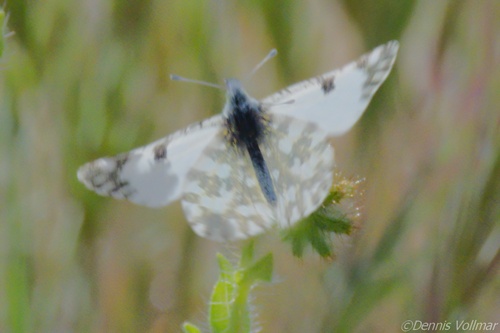
Dainty Sulphur

Dainty Sulphur

Nathalis iole

Daily sighting probability ~30% · Possible
at Saguaro National Park

In 3 days ~60% in a week ~90%

288 Verified sightings at Saguaro National Park From 2019 to 2026
645 In all 12 parks
December Best month
☀️ Diurnal When it's spotted

About the Dainty Sulphur

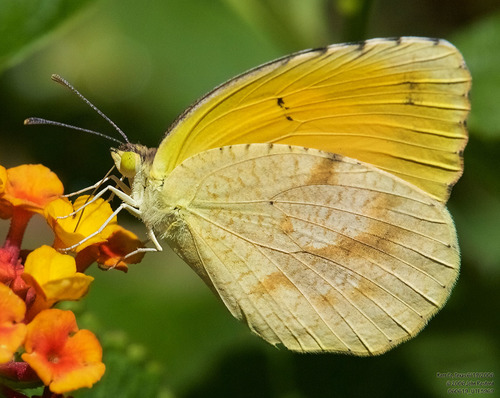
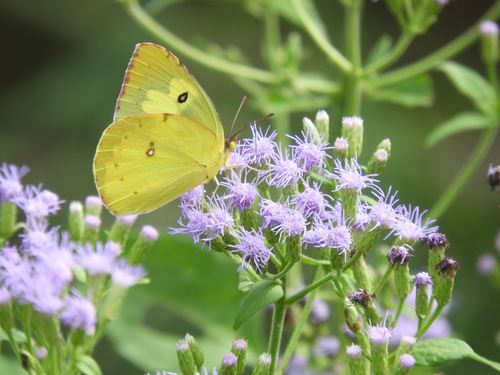
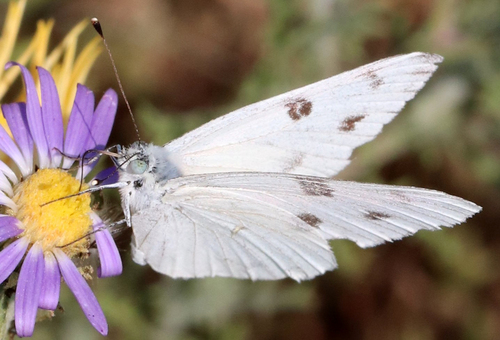
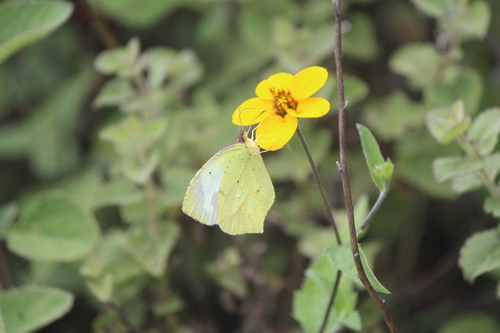
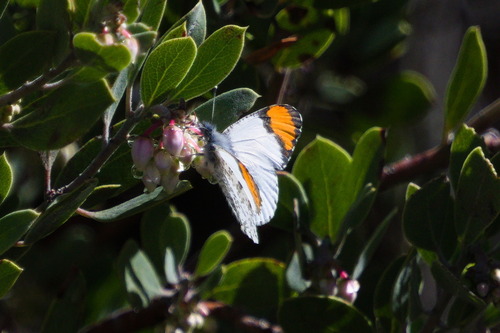
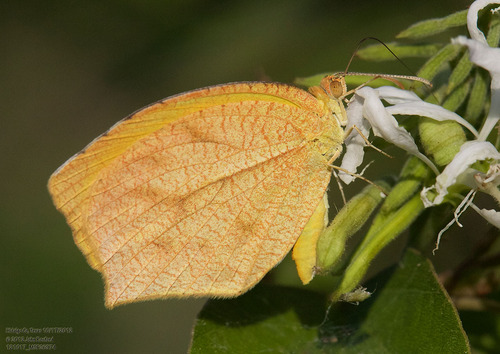
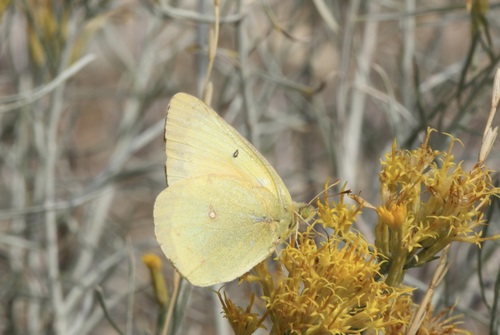
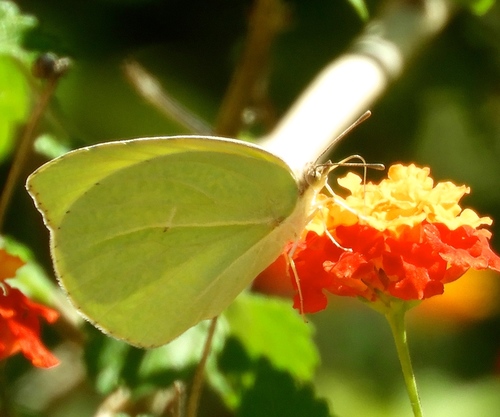
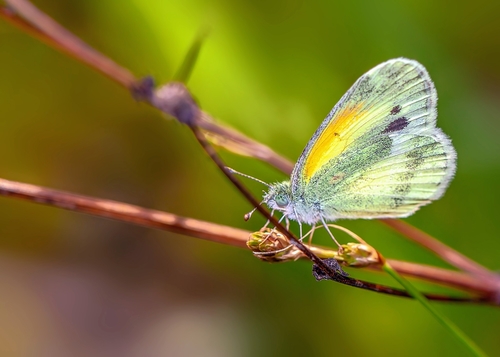
Nathalis iole, the dainty sulphur or dwarf yellow, is a North American butterfly in the family Pieridae. This species is the smallest North American pierid. A rare population, known from Homestead (Smith et al., 1994), is said to have mostly white individuals. Some feel that the dainty sulphur is so unique among pierids, in shape and in several structural features, that it should belong in a separate subfamily. Its appearance is highly variable but a subset of distinctive features aid in identification. The forewings' elongated shape is distinctive. The upperside of the wings is yellow with the tip of the forewing being black. Black bars extend along the trailing edge of the forewing and the leading edge of the hindwing. Male dainty sulphurs have an oval scent patch (called an androconial spot) in each hindwing bar. The androconial spot is reddish orange but fades to pale yellow after death. The underside of the wings varies depending on the season. Summer individuals have yellowish hindwings whereas winter individuals have greenish-gray hindwings. Both forms have black spots near the forewing margin and have a yellowish-orange patch near the base of the... Wikipedia →

Global Distribution

Parks Where Found

# Park Country Daily sighting probability
1 Big Bend National Park 🇺🇸 United States
~30%
2 Saguaro National Park 🇺🇸 United States
~30%
3 Bahía de Loreto National Park 🇲🇽 Mexico
~20%
4 Guadalupe Mountains National Park 🇺🇸 United States
~20%
5 Joshua Tree National Park 🇺🇸 United States
~20%
6 Padre Island National Seashore 🇺🇸 United States
~10%
7 Merritt Island National Wildlife Refuge 🇺🇸 United States
~10%
8 Everglades National Park 🇺🇸 United States
~10%
9 Grand Canyon National Park 🇺🇸 United States
~10%
10 Zion National Park 🇺🇸 United States
~10%
11 Rocky Mountain National Park 🇺🇸 United States
~10%
12 Cumbres de Monterrey National Park 🇲🇽 Mexico
~10%

Cities Where Found

# City Country Daily sighting probability
1 Miami 🇺🇸 United States
~10%
2 Austin 🇺🇸 United States
~10%
3 San Antonio 🇺🇸 United States
~10%
4 Ciudad Juárez 🇲🇽 México
~10%
5 Mexico City 🇲🇽 México
~10%
6 Dallas 🇺🇸 United States
~10%
7 Puebla 🇲🇽 México
~10%
8 Torreón 🇲🇽 México
~10%
9 San Luis Potosí 🇲🇽 México
~10%
10 Mesa 🇺🇸 United States
~10%

Before you go

What are the chances of seeing a Dainty Sulphur in Saguaro National Park?

Possible

About 30% of wildlife watchers report a Dainty Sulphur sighting in Saguaro National Park on a given day, based on 288 verified sightings from GBIF citizen-science data from 2019 to 2026. It is the 5th most-seen of the 354 insects we can rate there. Over three days the chance rises to about 60%, and over a week to about 90%, if each day is a fresh chance.

When is the best time to see a Dainty Sulphur in Saguaro National Park?

November and December

In those months about 40% of wildlife watchers report a Dainty Sulphur in Saguaro National Park on a given day, against about 10% in July, the lowest month.

What time of day is best to see a Dainty Sulphur?

Between noon and 3 pm

Across all the parks we cover, that three-hour window holds the most Dainty Sulphur sightings with a recorded time, and nearly all of them come between 6 am and 6 pm: it is a daytime animal.

Is Saguaro National Park the best place to see a Dainty Sulphur?

Among the best

Of the 12 parks where we can rate Dainty Sulphur sightings, Saguaro National Park ranks 2nd at about 30%, level with the leaders once rounded. The best odds are in Big Bend National Park (United States, about 30%).

Which relatives of the Dainty Sulphur live in Saguaro National Park?

Same family: Pieridae

The closest relatives of the Dainty Sulphur that you can see in Saguaro National Park (family Pieridae, Whites, Yellows, and Sulphurs) are Sleepy Orange (about 20%), Southern Dogface (about 20%) and Checkered White (about 20%), with each one's daily chance of a sighting.

Where does the Dainty Sulphur sighting chance come from?

GBIF citizen-science records

It is estimated from how often the Dainty Sulphur is recorded against all the insects logged in Saguaro National Park (288 verified sightings from 2019 to 2026), calibrated against known sighting rates. Figures are rounded to the nearest 10% because citizen-science data supports honest approximations, not decimals, and months with records from fewer than five people show "—". How it works.
← Back to Saguaro National Park