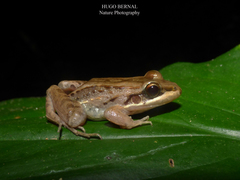
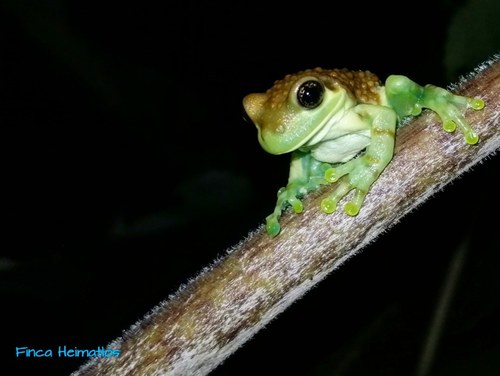
Mexican White-lipped Frog

Mexican White-lipped Frog

Leptodactylus fragilis

Silhouette: Jose Carlos Arenas-Monroy · PhyloPic

LCLeast ConcernNTVUENCR
Daily sighting probability ~10% · With luck
at Santa Rosa National Park

In 3 days ~40% in a week ~60%

5 Verified sightings at Santa Rosa National Park From 2019 to 2026
65 In all 5 parks
June Best month
🌅 Crepuscular When it's spotted

About the Mexican White-lipped Frog

Leptodactylus fragilis, known under many common names such as the Mexican white-lipped frog, American white-lipped frog or simply white-lipped frog, is a species of leptodactylid frog. Its distribution ranges from the Lower Rio Grande Valley of Texas in the United States south through Mexico and Central America to Colombia and Venezuela.

Mexican white-lipped frogs are grey-brown in color with brown or black mottling. They have a distinctive white stripe along their upper lip which gives them their name. They grow to 3–5 cm (1.2–2.0 in) in length. Mexican white-lipped frog is a widespread and common species found in a range of habitats, in savanna, grassland, semi-arid lands, and open habitats in humid and dry, lowland and montane tropical forests. It is often seen near water. Scientists have observed it as high as 1,530 metres (5,020 ft) above sea level.

Mexican white-lipped frogs are nocturnal and carnivorous. During the heat of the day, they... Wikipedia →

Sounds

Advertisement call0:07

Mexico · 2017

© Chris Harrison · XC893972 · CC BY-NC-SA 4.0

Recording0:22

Guatemala · 2023

© Cornelio Chablé · iNaturalist · CC BY-NC 4.0

Recording0:11

Panama · 2026

© Scott Harris · iNaturalist · CC BY 4.0

Global Distribution

Parks Where Found

# Park Country Daily sighting probability
1 Palo Verde National Park 🇨🇷 Costa Rica
~20%
2 Soberanía National Park 🇵🇦 Panama
~20%
3 Santa Rosa National Park 🇨🇷 Costa Rica
~10%
4 Parque Natural Metropolitano 🇵🇦 Panama
~10%
5 La Amistad International Park (Panama) 🇵🇦 Panama
<5%

Cities Where Found

# City Country Daily sighting probability
1 Panama City 🇵🇦 Panama
~10%

Before you go

What are the chances of seeing a Mexican White-lipped Frog in Santa Rosa National Park?

With luck

About 10% of wildlife watchers report a Mexican White-lipped Frog sighting in Santa Rosa National Park on a given day, based on 5 verified sightings from GBIF citizen-science data from 2019 to 2026. It is the 13th most-seen of the 14 amphibians we can rate there. Over three days the chance rises to about 40%, and over a week to about 60%, if each day is a fresh chance.

When is the best time to see a Mexican White-lipped Frog in Santa Rosa National Park?

June

In that month about 40% of wildlife watchers report a Mexican White-lipped Frog in Santa Rosa National Park on a given day, against under 5% in January–March, May and July–November, the lowest months. That is one of Santa Rosa National Park's wettest months, with about 330 mm of rain against almost none in February.

What time of day is best to see a Mexican White-lipped Frog?

Between 7 and 10 pm

Across all the parks we cover, that three-hour window holds the most Mexican White-lipped Frog sightings with a recorded time, and about 7 in 10 of them come between 6 pm and 6 am: it is most active around dawn and dusk.

Is Santa Rosa National Park the best place to see a Mexican White-lipped Frog?

3rd of 5

Of the 5 parks where we can rate Mexican White-lipped Frog sightings, Santa Rosa National Park ranks 3rd at about 10%. The best odds are in Palo Verde National Park (Costa Rica, about 20%) and Soberanía National Park (Panama, about 20%).

Where does the Mexican White-lipped Frog sighting chance come from?

GBIF citizen-science records

It is estimated from how often the Mexican White-lipped Frog is recorded against all the amphibians logged in Santa Rosa National Park (5 verified sightings from 2019 to 2026), calibrated against known sighting rates. Figures are rounded to the nearest 10% because citizen-science data supports honest approximations, not decimals, and months with records from fewer than five people show "—". How it works.

← Back to Santa Rosa National Park