

Sierra Newt

Sierra Newt

Taricha sierrae

Silhouette: Neil Kelley · PhyloPic

LCLeast ConcernNTVUENCR Endemic
Daily sighting probability ~20% · Possible
at Sequoia and Kings Canyon National Parks

In 3 days ~50% in a week ~80%

27 Verified sightings at Sequoia and Kings Canyon National Parks From 2019 to 2026
150 In all 2 parks
February Best month
☀️ Diurnal When it's spotted

About the Sierra Newt

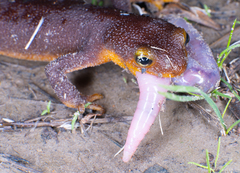
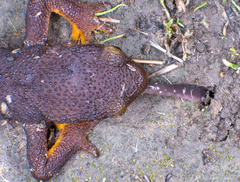
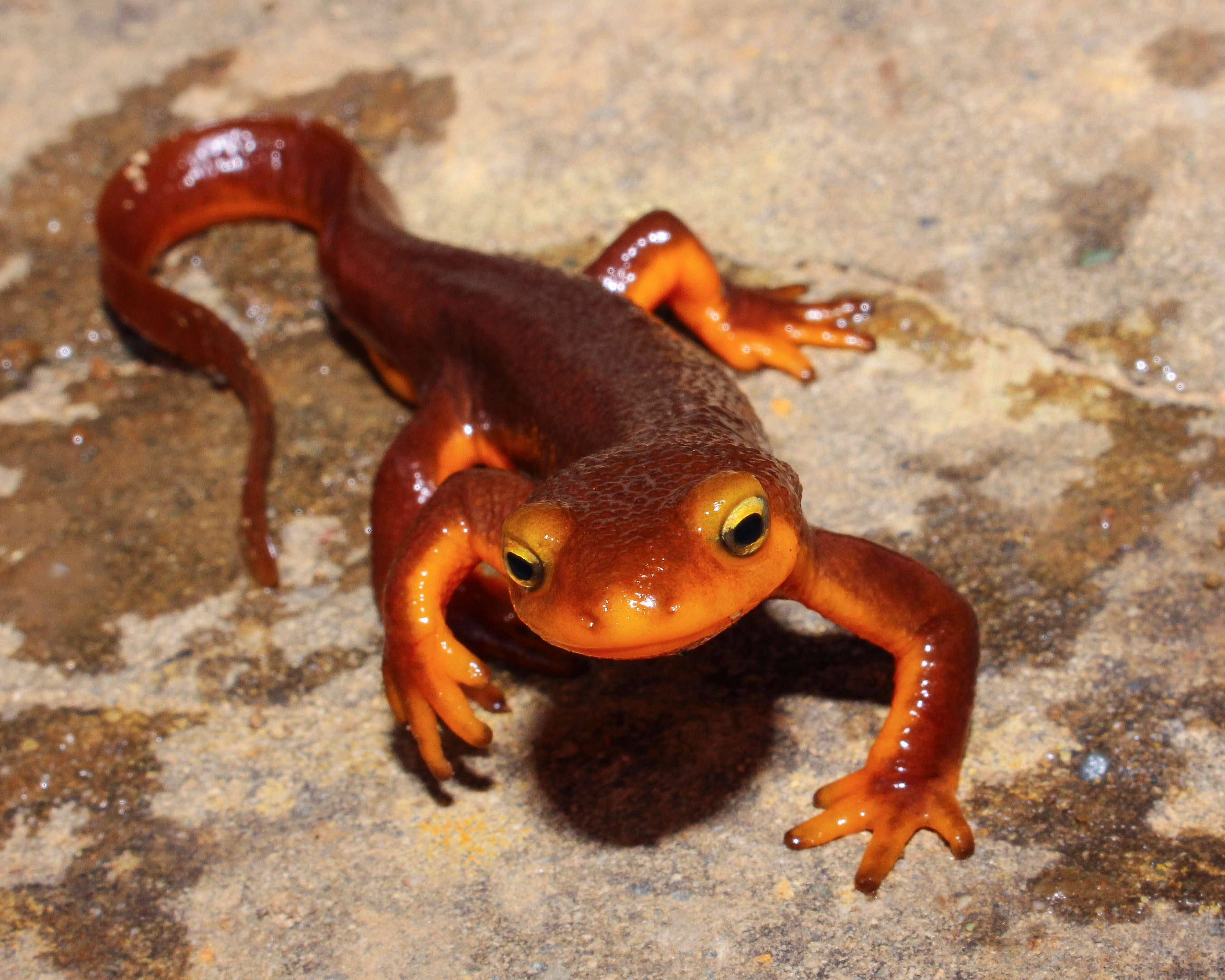
The Sierra newt (Taricha sierrae) is a newt found west of the Sierra Nevada, from Shasta county to Tulare County, in California, Western North America. Its adult length can range from 5 to 8 in (13 to 20 cm). Its skin produces a potent toxin.

Sierra Newts communicates with other through making a clicking noise. The Sierra newt was formerly regarded as a subspecies (Taricha torosa sierrae) of the California newt (Taricha torosa). In 2007 it was determined that the two represent "distinct evolutionary lineages". When looking at the Sierra Newt and California newt they possess different phenotypically. This is seen when looking at the head shape, color pattern, and the fact that patterns of differentiation in these characters are aligned with the genetic clines seen in the two newts.

Sierra newts exist primarily in between the Cascades and Sierra Nevada, up to about 2000m. They prefer less humid climates than the rough-skinned newts. The Sierra newt migrates between aquatic and terrestrial habitats seasonally. Outside the breeding season, the newts are land-dwelling, preferring rock crevices and logs, in habitats such as forests, woodlands, and... Wikipedia →

Global Distribution

Parks Where Found

# Park Country Daily sighting probability
1 Yosemite National Park 🇺🇸 United States
~20%
2 Sequoia and Kings Canyon National Parks 🇺🇸 United States
~20%

Before you go

What are the chances of seeing a Sierra Newt in Sequoia and Kings Canyon National Parks?

Possible

About 20% of wildlife watchers report a Sierra Newt sighting in Sequoia and Kings Canyon National Parks on a given day, based on 27 verified sightings from GBIF citizen-science data from 2019 to 2026. It is the 4th most-seen of the 12 amphibians we can rate there. Over three days the chance rises to about 50%, and over a week to about 80%, if each day is a fresh chance.

When is the best time to see a Sierra Newt in Sequoia and Kings Canyon National Parks?

February and March

In those months about 60% of wildlife watchers report a Sierra Newt in Sequoia and Kings Canyon National Parks on a given day, against under 5% in July to December, the lowest months. Those are among Sequoia and Kings Canyon National Parks's wettest months, with about 150 mm of rain a month against 10 mm in September.

What time of day is best to see a Sierra Newt?

Between 4 and 7 pm

Across all the parks we cover, that three-hour window holds the most Sierra Newt sightings with a recorded time, and about 7 in 10 of them come between 6 am and 6 pm: it is a daytime animal.

Is Sequoia and Kings Canyon National Parks the best place to see a Sierra Newt?

Among the best

Of the 2 parks where we can rate Sierra Newt sightings, Sequoia and Kings Canyon National Parks ranks 2nd at about 20%, level with the leaders once rounded. The best odds are in Yosemite National Park (United States, about 20%).

Where does the Sierra Newt sighting chance come from?

GBIF citizen-science records

It is estimated from how often the Sierra Newt is recorded against all the amphibians logged in Sequoia and Kings Canyon National Parks (27 verified sightings from 2019 to 2026), calibrated against known sighting rates. Figures are rounded to the nearest 10% because citizen-science data supports honest approximations, not decimals, and months with records from fewer than five people show "—". How it works.

← Back to Sequoia and Kings Canyon National Parks