Yosemite Toad

Yosemite Toad

Anaxyrus canorus

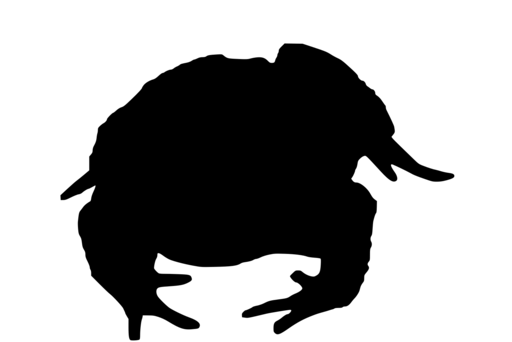
Silhouette: Michael Scroggie, from original photograph by Gary M. Stolz, USFWS (original photograph in public domain). · PhyloPic

LCNTVUVulnerableENCR Endemic
Daily sighting probability ~20% · Possible
at Sequoia and Kings Canyon National Parks

In 3 days ~50% in a week ~80%

86 Verified sightings at Sequoia and Kings Canyon National Parks From 2019 to 2026
278 In all 2 parks
August Best month
☀️ Diurnal When it's spotted

About the Yosemite Toad

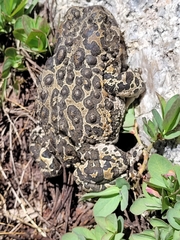
The Yosemite toad (Anaxyrus canorus, formerly Bufo canorus) is a species of true toad in the family Bufonidae. Endemic to the Sierra Nevada of California, the species ranges from the Alpine County to Fresno County. Yosemite toads are only found in the montane to subalpine elevational zone of 1,950–3,445 m (6,398–11,302 ft) asl. The Yosemite toad is similar to the nearby western toad (A. boreas), but in many ways adapted to a high elevation lifestyle. It was initially described during the Grinnell Survey of California, by an undergraduate student of Joseph Grinnell named Charles Camp.

Yosemite toads are medium-sized (48–84 millimetres or 1.9–3.3 inches SVL) stocky toads, with females averaging larger than males. They generally lack cranial crests, but males will rarely have weakly developed ones. Their eyes have a dark brown iris with gold iridophores. In comparison with the closely related western toad (A. boreas), the parotoid glands are large, narrowly spaced, and irregularly shaped (oval or flattened), less than one gland width apart. Like the parotoids, the eyes are spaced narrowly apart, usually less than the width of the upper eyelid. The warts... Wikipedia →

Sounds

Recording0:10

United States · 2019

© johnwmyles · iNaturalist · CC BY-NC 4.0

Recording0:24

United States · 2022

© Beth Pratt · iNaturalist · CC BY-NC-ND 4.0

Global Distribution

Parks Where Found

# Park Country Daily sighting probability
1 Yosemite National Park 🇺🇸 United States
~20%
2 Sequoia and Kings Canyon National Parks 🇺🇸 United States
~20%

Zoos & Centres Where Found

# Zoo / Centre Country
1 San Francisco Zoo 🇺🇸 United States In captivity

Before you go

What are the chances of seeing a Yosemite Toad in Sequoia and Kings Canyon National Parks?

Possible

About 20% of wildlife watchers report a Yosemite Toad sighting in Sequoia and Kings Canyon National Parks on a given day, based on 86 verified sightings from GBIF citizen-science data from 2019 to 2026. It is the 4th most-seen of the 12 amphibians we can rate there. Over three days the chance rises to about 50%, and over a week to about 80%, if each day is a fresh chance.

When is the best time to see a Yosemite Toad in Sequoia and Kings Canyon National Parks?

July and August

In those months about 30% of wildlife watchers report a Yosemite Toad in Sequoia and Kings Canyon National Parks on a given day, against under 5% in November to April, the lowest months. Those are among Sequoia and Kings Canyon National Parks's driest months, with about 25 mm of rain a month against 190 mm in January.

What time of day is best to see a Yosemite Toad?

Between 11 am and 2 pm

Across all the parks we cover, that three-hour window holds the most Yosemite Toad sightings with a recorded time, and about 8 in 10 of them come between 6 am and 6 pm: it is a daytime animal.

Is Sequoia and Kings Canyon National Parks the best place to see a Yosemite Toad?

Among the best

Of the 2 parks where we can rate Yosemite Toad sightings, Sequoia and Kings Canyon National Parks ranks 2nd at about 20%, level with the leaders once rounded. The best odds are in Yosemite National Park (United States, about 20%).

Where does the Yosemite Toad sighting chance come from?

GBIF citizen-science records

It is estimated from how often the Yosemite Toad is recorded against all the amphibians logged in Sequoia and Kings Canyon National Parks (86 verified sightings from 2019 to 2026), calibrated against known sighting rates. Figures are rounded to the nearest 10% because citizen-science data supports honest approximations, not decimals, and months with records from fewer than five people show "—". How it works.

← Back to Sequoia and Kings Canyon National Parks