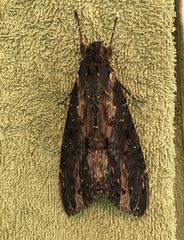
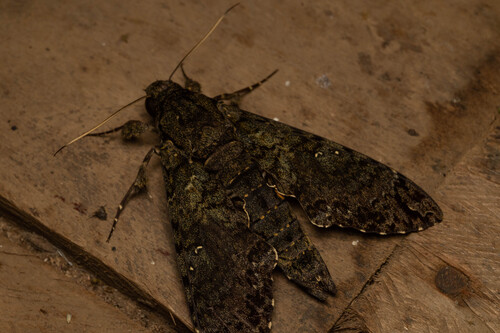
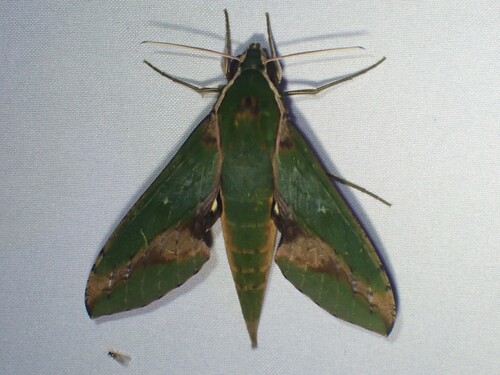
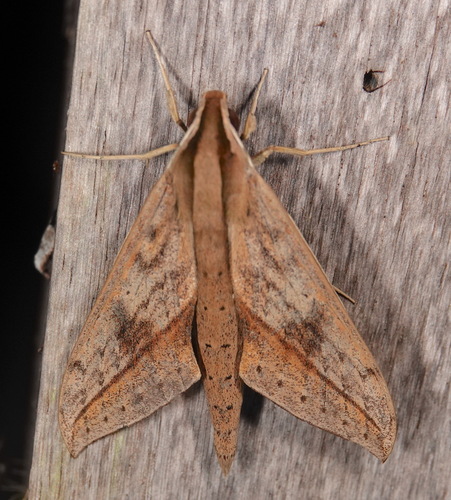
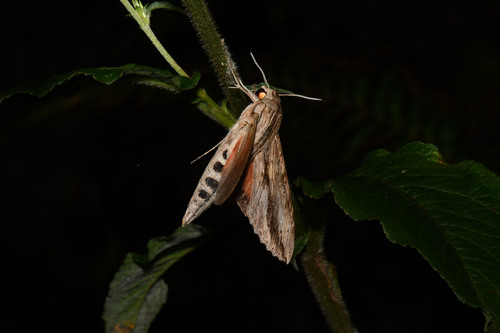
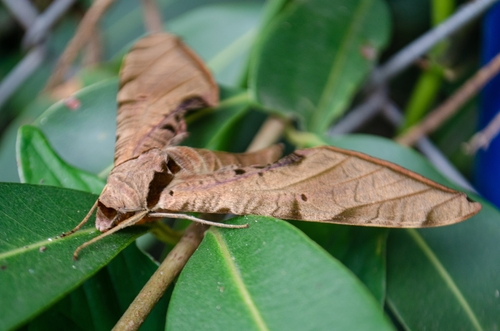
Neococytius cluentius

Neococytius cluentius

Neococytius cluentius

Daily sighting probability ~10% · With luck
at Serra dos Órgãos National Park

In 3 days ~30% in a week ~60%

5 Verified sightings at Serra dos Órgãos National Park From 2019 to 2026
42 In all 5 parks
August Best month
🌙 Nocturnal When it's spotted

About the Neococytius cluentius

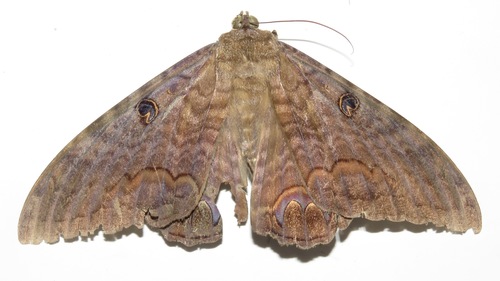
Neococytius is a monotypic moth genus in the family Sphingidae erected by Ronald W. Hodges in 1971. Its only species, Neococytius cluentius, the Cluentius sphinx, was first described by Pieter Cramer in 1775 as Sphinx cluentius. It is found in northern South America, Central America, Mexico and the Caribbean. It is rare on Cuba. It has been recorded in North America, from Mississippi north to Michigan and Illinois.

The wingspan is 140–160 mm. There are at least three generations in the tropics, with adults on wing from December to January, May to June (or July in Jamaica) and October. The larvae have been recorded on Annonaceae and Piperaceae species as well as Ipomoea batatas.

Otto Porsch in 1939 discussed the potential role of the species (under the synonym Cocytius cluentius) in pollinating cacti, giving the length of its tongue as 25 cm, and noting the corresponding lengths of the flowers of night-blooming cacti. A discussion of the possible pollinators of the cactus Strophocactus wittii in 1997 used the species name Cocytius "cruentus"; however, it cited a source that uses the correct specific name cluentius.

"Cluentius sphinx (Neococytius... Wikipedia →
Global Distribution

Parks Where Found

# Park Country Daily sighting probability
1 Serra dos Órgãos National Park 🇧🇷 Brazil
~10%
2 Tambopata National Reserve 🇵🇪 Peru
~10%
3 Manu National Park 🇵🇪 Peru
~10%
4 Braulio Carrillo National Park 🇨🇷 Costa Rica
~10%
5 Iguazú National Park 🇦🇷 Argentina
~10%

Cities Where Found

# City Country Daily sighting probability
1 Manaus 🇧🇷 Brazil
~10%
2 Brasilia 🇧🇷 Brazil
~10%

Before you go

What are the chances of seeing a Neococytius cluentius in Serra dos Órgãos National Park?

With luck

About 10% of wildlife watchers report a Neococytius cluentius sighting in Serra dos Órgãos National Park on a given day, based on 5 verified sightings from GBIF citizen-science data from 2019 to 2026. It is the 83rd most-seen of the 117 insects we can rate there. Over three days the chance rises to about 30%, and over a week to about 60%, if each day is a fresh chance.

When is the best time to see a Neococytius cluentius in Serra dos Órgãos National Park?

March–April and June–August

In those months about 20% of wildlife watchers report a Neococytius cluentius in Serra dos Órgãos National Park on a given day, against under 5% in May and September–February, the lowest months.

What time of day is best to see a Neococytius cluentius?

Between 7 and 10 pm

Across all the parks we cover, that three-hour window holds the most Neococytius cluentius sightings with a recorded time, and about 8 in 10 of them come between 6 pm and 6 am: it is mostly seen at night.

Is Serra dos Órgãos National Park the best place to see a Neococytius cluentius?

Yes

Of the 5 parks where we can rate Neococytius cluentius sightings, Serra dos Órgãos National Park has the highest daily chance: about 10%. Next come Tambopata National Reserve (Peru, about 10%) and Manu National Park (Peru, about 10%).

Which relatives of the Neococytius cluentius live in Serra dos Órgãos National Park?

Same family: Sphingidae

The closest relatives of the Neococytius cluentius that you can see in Serra dos Órgãos National Park (family Sphingidae, Sphinx Moths) are Duponchel's Sphinx (about 20%), Leafy Sphinx (about 20%) and Xylophanes anubus (about 20%), with each one's daily chance of a sighting.

Where does the Neococytius cluentius sighting chance come from?

GBIF citizen-science records

It is estimated from how often the Neococytius cluentius is recorded against all the insects logged in Serra dos Órgãos National Park (5 verified sightings from 2019 to 2026), calibrated against known sighting rates. Figures are rounded to the nearest 10% because citizen-science data supports honest approximations, not decimals, and months with records from fewer than five people show "—". How it works.

← Back to Serra dos Órgãos National Park