American Rubyspot

American Rubyspot

Hetaerina americana

Daily sighting probability ~10% · With luck
at Shenandoah National Park

In 3 days ~20% in a week ~30%

13 Verified sightings at Shenandoah National Park From 2019 to 2026
59 In all 4 parks
September Best month
☀️ Diurnal When it's spotted

About the American Rubyspot

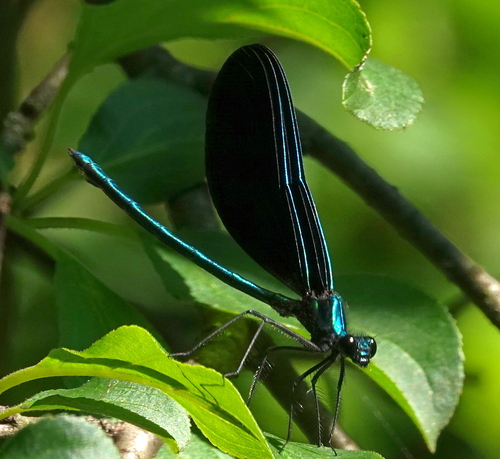
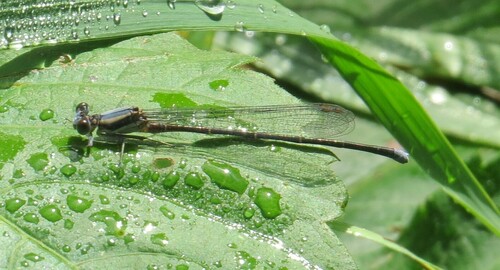
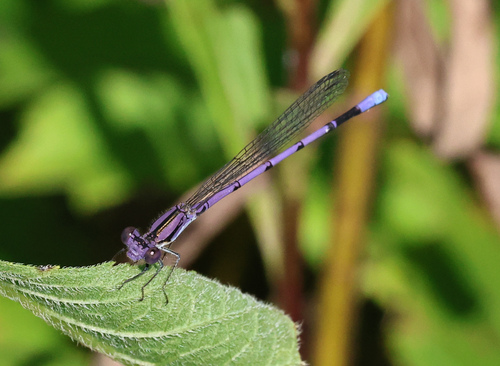
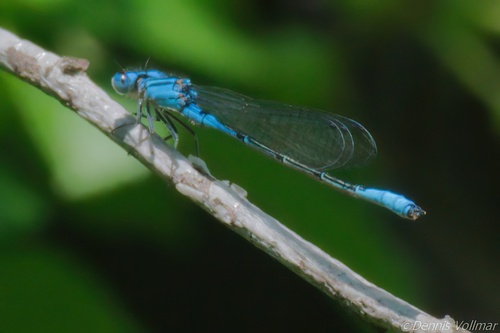
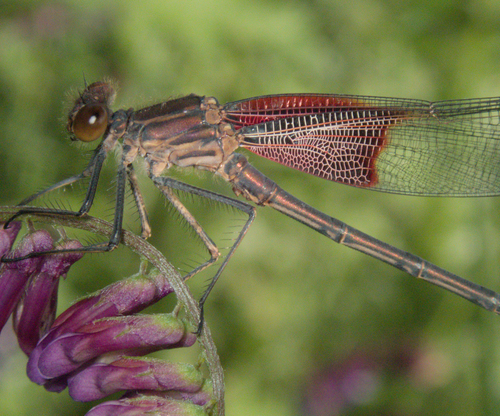
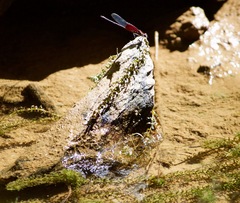
The American rubyspot (Hetaerina americana) is a damselfly of the family Calopterygidae. Males have a lustrous red head and thorax and a large red spot at the base of each wing. The abdomen of both genders is brilliant green.

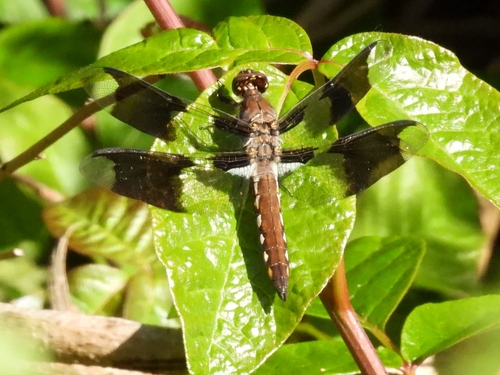
The female may have either green or copper colored marks on the thorax and possess faint amber wing spots with patterned bodies that vary from brown to green. The species has served as a widely used model system in studies of sexual selection, territorial behavior, and population genetics.

The name highlights this damselfly's status as the most widespread of the North American rubyspots. Hetaerina americana was first formally described by Fabricius in 1798. It is one of 37 sexually dichromatic species in the genus Hetaerina. Most rubyspots are concentrated in the neotropical region, with the greatest number of species found in South America. Members of the genus Hetaerina are difficult to identify because they closely resemble each other in body size, coloration, and habitat use. The most reliable way to distinguish species is through the shape of male caudal appendages, the structures at the tip of the abdomen used to grasp females... Wikipedia →
Global Distribution

Parks Where Found

# Park Country Daily sighting probability
1 Saguaro National Park 🇺🇸 United States
~10%
2 Shenandoah National Park 🇺🇸 United States
~10%
3 Cumbres de Monterrey National Park 🇲🇽 Mexico
~10%
4 Great Smoky Mountains National Park 🇺🇸 United States
<5%

Cities Where Found

# City Country Daily sighting probability
1 Austin 🇺🇸 United States
~10%
2 Denver 🇺🇸 United States
~10%
3 Dallas 🇺🇸 United States
~10%
4 Monterrey 🇲🇽 México
<5%
5 Sacramento 🇺🇸 United States
<5%
6 Minneapolis [Saint Paul] 🇺🇸 United States
<5%
7 San Antonio 🇺🇸 United States
<5%
8 Toronto 🇨🇦 Canada
<5%
9 Houston 🇺🇸 United States
<5%
10 San Francisco 🇺🇸 United States
<5%

Before you go

What are the chances of seeing an American Rubyspot in Shenandoah National Park?

With luck

About 10% of wildlife watchers report an American Rubyspot sighting in Shenandoah National Park on a given day, based on 13 verified sightings from GBIF citizen-science data from 2019 to 2026. It is the 363rd most-seen of the 723 insects we can rate there. Over three days the chance rises to about 20%, and over a week to about 30%, if each day is a fresh chance.

When is the best time to see an American Rubyspot in Shenandoah National Park?

July to September

In those months about 10% of wildlife watchers report an American Rubyspot in Shenandoah National Park on a given day, against under 5% in October to June, the lowest months.

What time of day is best to see an American Rubyspot?

Between 11 am and 2 pm

Across all the parks we cover, that three-hour window holds the most American Rubyspot sightings with a recorded time, and nearly all of them come between 6 am and 6 pm: it is a daytime animal.

Is Shenandoah National Park the best place to see an American Rubyspot?

Among the best

Of the 4 parks where we can rate American Rubyspot sightings, Shenandoah National Park ranks 2nd at about 10%, level with the leaders once rounded. The best odds are in Saguaro National Park (United States, about 10%).

Where does the American Rubyspot sighting chance come from?

GBIF citizen-science records

It is estimated from how often the American Rubyspot is recorded against all the insects logged in Shenandoah National Park (13 verified sightings from 2019 to 2026), calibrated against known sighting rates. Figures are rounded to the nearest 10% because citizen-science data supports honest approximations, not decimals, and months with records from fewer than five people show "—". How it works.

← Back to Shenandoah National Park