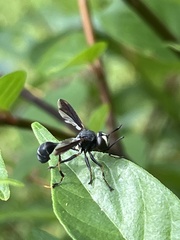
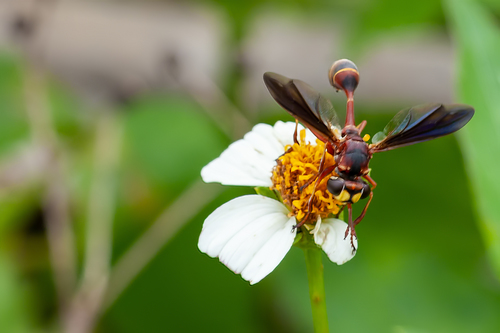
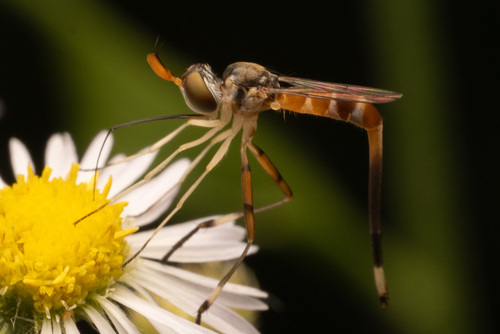
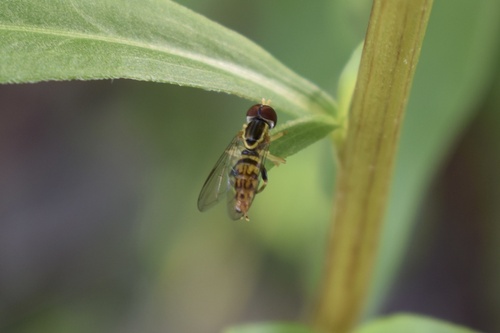

Common Eastern Physocephala

Common Eastern Physocephala

Physocephala tibialis

Daily sighting probability ~10% · With luck
at Shenandoah National Park

In 3 days ~20% in a week ~50%

23 Verified sightings at Shenandoah National Park From 2019 to 2026
40 In all 2 parks
July Best month
☀️ Diurnal When it's spotted

About the Common Eastern Physocephala

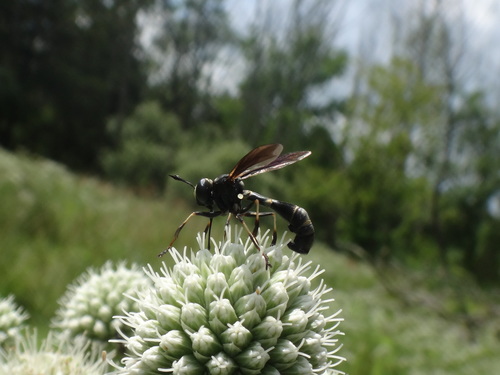
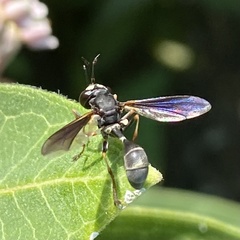
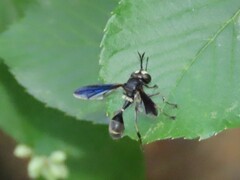
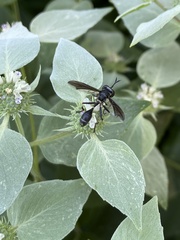
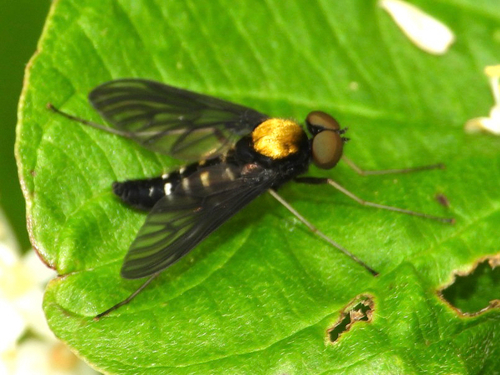
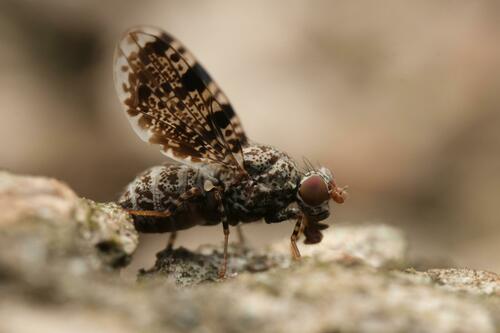
Physocephala tibialis, the common eastern physocephala, is a species of thick-headed fly (family Conopidae) found throughout the eastern United States, often near flowering plants. The adult fly is primarily black with a yellow face and thin white stripes on the abdomen. It is commonly found along the east coast of the United States and is often found near flowering plants.

P. tibialis flies parasitize many different species of bees by laying their eggs inside the abdomen of their host. The larva hatches inside of the host and grows and develops until it takes up the majority of the host's abdomen. The host then dies and the larva envelopes itself in a puparium and pupates inside of the corpse. After an extended period of pupation, the adult emerges from the corpse of the host bee. When a bee becomes parasitized by a P. tibialis larva, certain behaviors such as induced grave digging and changes in flower preference often occur.

P. tibialis is found in North America, primarily along the east coast of the United States. They can be seen as far north as Massachusetts and as south as Florida. They have also been seen as far west as Wisconsin and Texas.

��2... Wikipedia →

Global Distribution

Parks Where Found

# Park Country Daily sighting probability
1 Shenandoah National Park 🇺🇸 United States
~10%
2 Great Smoky Mountains National Park 🇺🇸 United States
~10%

Cities Where Found

# City Country Daily sighting probability
1 Boston 🇺🇸 United States
~10%
2 Minneapolis [Saint Paul] 🇺🇸 United States
~10%
3 Philadelphia 🇺🇸 United States
~10%
4 Baltimore 🇺🇸 United States
~10%
5 New York City 🇺🇸 United States
~10%
6 Washington 🇺🇸 United States
<5%
7 Toronto 🇨🇦 Canada
<5%
8 Chicago 🇺🇸 United States
<5%

Before you go

What are the chances of seeing a Common Eastern Physocephala in Shenandoah National Park?

With luck

About 10% of wildlife watchers report a Common Eastern Physocephala sighting in Shenandoah National Park on a given day, based on 23 verified sightings from GBIF citizen-science data from 2019 to 2026. It is the 156th most-seen of the 723 insects we can rate there. Over three days the chance rises to about 20%, and over a week to about 50%, if each day is a fresh chance.

When is the best time to see a Common Eastern Physocephala in Shenandoah National Park?

July

In that month about 20% of wildlife watchers report a Common Eastern Physocephala in Shenandoah National Park on a given day, against under 5% in November to April, the lowest months.

What time of day is best to see a Common Eastern Physocephala?

Between noon and 3 pm

Across all the parks we cover, that three-hour window holds the most Common Eastern Physocephala sightings with a recorded time, and about 8 in 10 of them come between 6 am and 6 pm: it is a daytime animal.

Is Shenandoah National Park the best place to see a Common Eastern Physocephala?

Yes

Of the 2 parks where we can rate Common Eastern Physocephala sightings, Shenandoah National Park has the highest daily chance: about 10%. Next come Great Smoky Mountains National Park (United States, about 10%).

Where does the Common Eastern Physocephala sighting chance come from?

GBIF citizen-science records

It is estimated from how often the Common Eastern Physocephala is recorded against all the insects logged in Shenandoah National Park (23 verified sightings from 2019 to 2026), calibrated against known sighting rates. Figures are rounded to the nearest 10% because citizen-science data supports honest approximations, not decimals, and months with records from fewer than five people show "—". How it works.

← Back to Shenandoah National Park