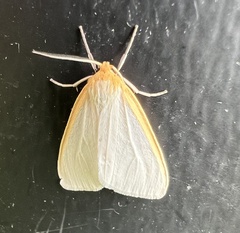
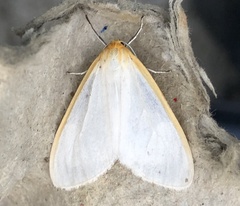
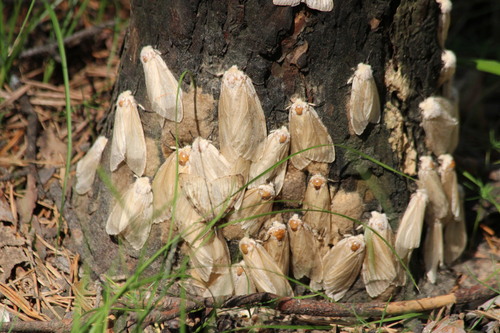
Delicate Cycnia Moth

Delicate Cycnia Moth

Cycnia tenera

Daily sighting probability ~10% · With luck
at Shenandoah National Park

In 3 days ~20% in a week ~40%

14 Verified sightings at Shenandoah National Park From 2019 to 2026
21 In all 2 parks
August Best month
☀️🌙 Day & Night When it's spotted

About the Delicate Cycnia Moth

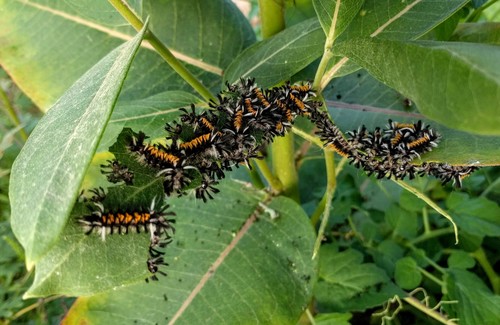
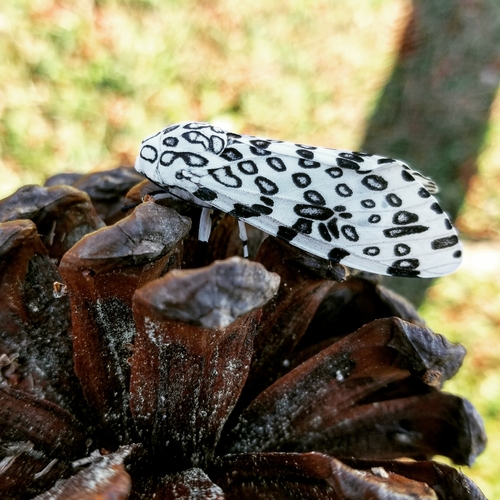
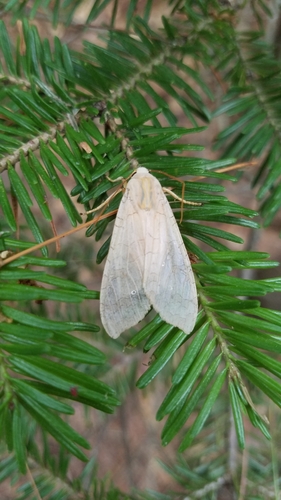
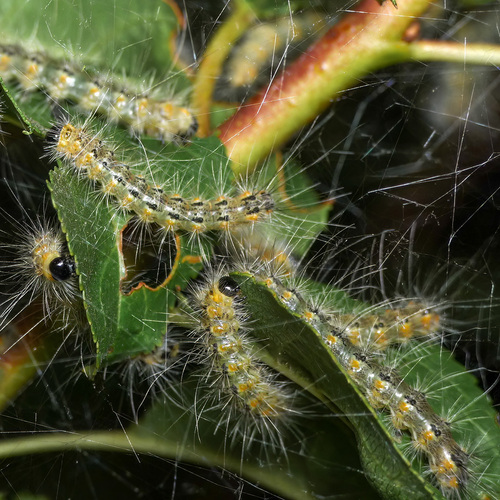
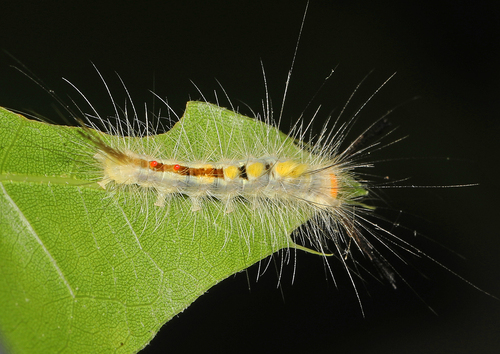
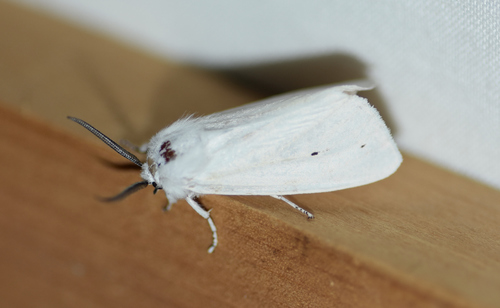
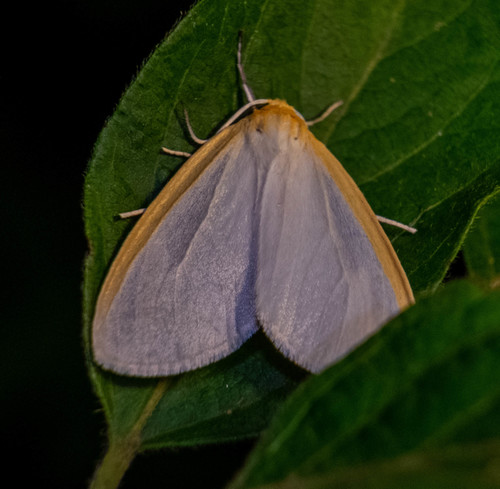
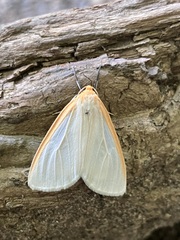
Cycnia tenera, the dogbane tiger moth or delicate cycnia, is a moth in the family Erebidae. It occurs throughout North America, from southern British Columbia to Nova Scotia southwards to Arizona and Florida. The species is distasteful and there is evidence that it emits aposematic ultrasound signals; these may also jam bat echolocation, as the functions are not mutually exclusive.

It is a common feeder on Apocynum cannabinum (dogbane, Indian hemp) which produces a milky latex containing cardenolides, toxic cardiac glycoside that defend against herbivores. It also feeds on milkweed species, Asclepias, at least in parts of its range, but is most commonly reported from dogbane. Its interactions with bats have been much studied, but are an area of dispute regarding whether the clicks emitted by adult moths are disruptive of bat echolocation, or merely aposematic warning signals. The two functions are not mutually exclusive, however, so it may not be possible to resolve the issue. The moth's coloration appears to be aposematic for insectivorous birds. Chemical signals do not prevent bats from attacking, but do cause bats to release C. tenera they have caught. Wikipedia →
Global Distribution

Parks Where Found

# Park Country Daily sighting probability
1 Shenandoah National Park 🇺🇸 United States
~10%
2 Glacier National Park 🇺🇸 United States
~10%

Cities Where Found

# City Country Daily sighting probability
1 Washington 🇺🇸 United States
~10%
2 Baltimore 🇺🇸 United States
~10%
3 Philadelphia 🇺🇸 United States
<5%
4 New York City 🇺🇸 United States
<5%
5 Toronto 🇨🇦 Canada
<5%
6 Chicago 🇺🇸 United States
<5%

Before you go

What are the chances of seeing a Delicate Cycnia Moth in Shenandoah National Park?

With luck

About 10% of wildlife watchers report a Delicate Cycnia Moth sighting in Shenandoah National Park on a given day, based on 14 verified sightings from GBIF citizen-science data from 2019 to 2026. It is the 301st most-seen of the 723 insects we can rate there. Over three days the chance rises to about 20%, and over a week to about 40%, if each day is a fresh chance.

When is the best time to see a Delicate Cycnia Moth in Shenandoah National Park?

May and July–August

In those months about 10% of wildlife watchers report a Delicate Cycnia Moth in Shenandoah National Park on a given day, against under 5% in June and September–April, the lowest months.

What time of day is best to see a Delicate Cycnia Moth?

Between 9 pm and midnight

Across all the parks we cover, that three-hour window holds the most Delicate Cycnia Moth sightings with a recorded time, and about 6 in 10 of them come between 6 pm and 6 am: it is seen both by day and at night.

Is Shenandoah National Park the best place to see a Delicate Cycnia Moth?

Yes

Of the 2 parks where we can rate Delicate Cycnia Moth sightings, Shenandoah National Park has the highest daily chance: about 10%. Next come Glacier National Park (United States, about 10%).

Which relatives of the Delicate Cycnia Moth live in Shenandoah National Park?

Same family: Erebidae

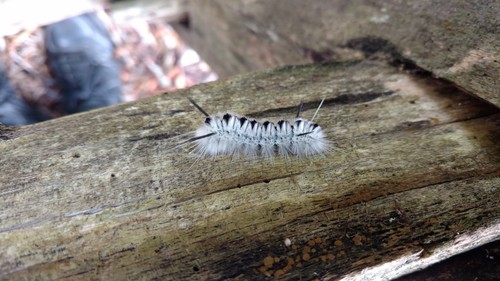
The closest relatives of the Delicate Cycnia Moth that you can see in Shenandoah National Park (family Erebidae, Underwing, Tiger, Tussock, and Allied Moths) are Spongy Moth (about 40%), Isabella Tiger Moth (about 30%) and Hickory Tussock Moth (about 30%), with each one's daily chance of a sighting.

Where does the Delicate Cycnia Moth sighting chance come from?

GBIF citizen-science records

It is estimated from how often the Delicate Cycnia Moth is recorded against all the insects logged in Shenandoah National Park (14 verified sightings from 2019 to 2026), calibrated against known sighting rates. Figures are rounded to the nearest 10% because citizen-science data supports honest approximations, not decimals, and months with records from fewer than five people show "—". How it works.

← Back to Shenandoah National Park