Locust Underwing

Locust Underwing

Euparthenos nubilis

Daily sighting probability ~10% · With luck
at Shenandoah National Park

In 3 days ~20% in a week ~40%

18 Verified sightings at Shenandoah National Park From 2019 to 2026
45 In all 2 parks
August Best month
☀️🌙 Day & Night When it's spotted

About the Locust Underwing

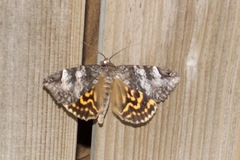
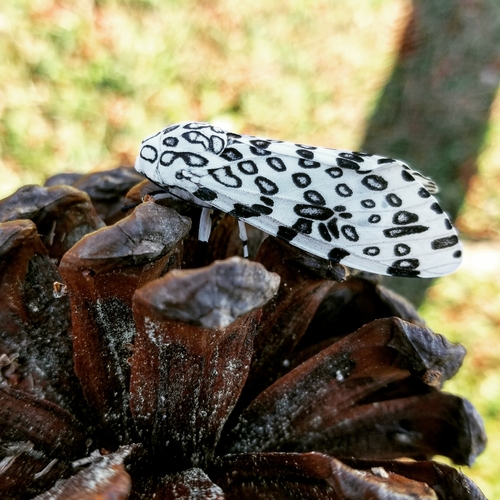
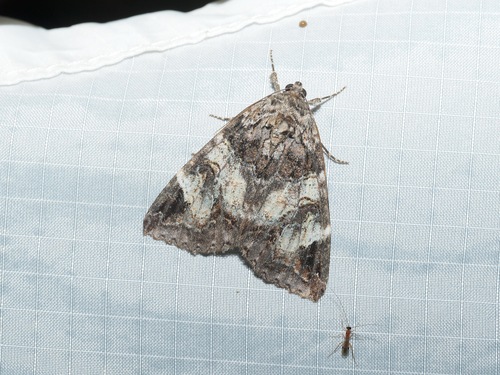
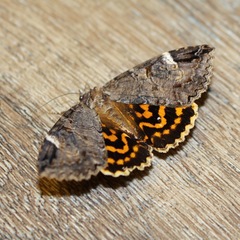
Euparthenos is a monotypic genus of moth in the family Erebidae erected by Augustus Radcliffe Grote in 1876. Its only species, Euparthenos nubilis, the locust underwing, was first described by Jacob Hübner in 1823. The adults resemble some of the underwing moths of genus Catocala, which are fairly close relatives, in color, pattern, and the habit of resting on tree trunks. But E. nubilis can usually be immediately recognized by the four concentric black bands per hindwing, as opposed to one or two (at most three) in Catocala. Color morphs of E. nubilis with altered pattern are known, however, and these may be hard to recognize without detailed examination.

This moth has light grey forewings with a pattern of darker grey and brown lines and shading. The hindwings are yellow orange with the aforementioned four black bands each. The wingspan is 56–70 mm (over 2 to almost 3 inches.

The species is found in North America from Maine, Ontario and Quebec, south to northern Florida, west to Nebraska and Arizona. Adults are on wing from April to September. There are two generations per year. The larvae feed on Robinia (locust tree) species, such as black locust (R. pseudoacacia). The adults like to drink the juice of fermenting fruit, and are attracted to lights. Wikipedia →
Global Distribution

Parks Where Found

# Park Country Daily sighting probability
1 Great Smoky Mountains National Park 🇺🇸 United States
~10%
2 Shenandoah National Park 🇺🇸 United States
~10%

Cities Where Found

# City Country Daily sighting probability
1 Toronto 🇨🇦 Canada
<5%
2 Washington 🇺🇸 United States
<5%
3 Montreal 🇨🇦 Canada
<5%
4 New York City 🇺🇸 United States
<5%

Before you go

What are the chances of seeing a Locust Underwing in Shenandoah National Park?

With luck

About 10% of wildlife watchers report a Locust Underwing sighting in Shenandoah National Park on a given day, based on 18 verified sightings from GBIF citizen-science data from 2019 to 2026. It is the 220th most-seen of the 723 insects we can rate there. Over three days the chance rises to about 20%, and over a week to about 40%, if each day is a fresh chance.

When is the best time to see a Locust Underwing in Shenandoah National Park?

May to August

In those months about 10% of wildlife watchers report a Locust Underwing in Shenandoah National Park on a given day, against under 5% in September to April, the lowest months.

What time of day is best to see a Locust Underwing?

Between 9 pm and midnight

Across all the parks we cover, that three-hour window holds the most Locust Underwing sightings with a recorded time, and about 6 in 10 of them come between 6 pm and 6 am: it is seen both by day and at night.

Is Shenandoah National Park the best place to see a Locust Underwing?

Among the best

Of the 2 parks where we can rate Locust Underwing sightings, Shenandoah National Park ranks 2nd at about 10%, level with the leaders once rounded. The best odds are in Great Smoky Mountains National Park (United States, about 10%).

Which relatives of the Locust Underwing live in Shenandoah National Park?

Same family: Erebidae

The closest relatives of the Locust Underwing that you can see in Shenandoah National Park (family Erebidae, Underwing, Tiger, Tussock, and Allied Moths) are Spongy Moth (about 40%), Isabella Tiger Moth (about 30%) and Hickory Tussock Moth (about 30%), with each one's daily chance of a sighting.

Where does the Locust Underwing sighting chance come from?

GBIF citizen-science records

It is estimated from how often the Locust Underwing is recorded against all the insects logged in Shenandoah National Park (18 verified sightings from 2019 to 2026), calibrated against known sighting rates. Figures are rounded to the nearest 10% because citizen-science data supports honest approximations, not decimals, and months with records from fewer than five people show "—". How it works.

← Back to Shenandoah National Park