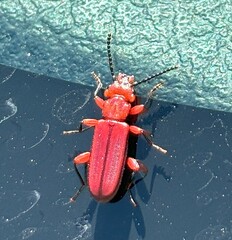

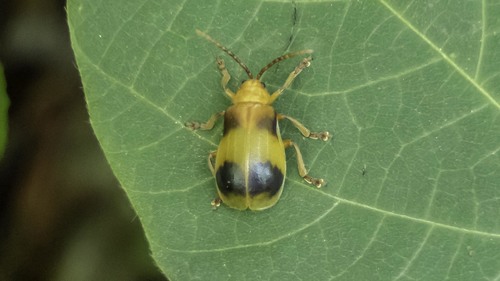

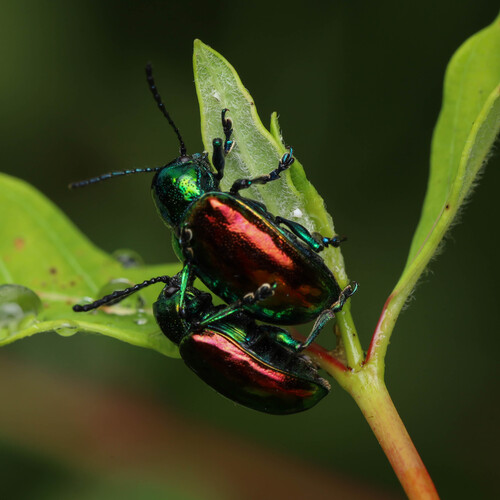
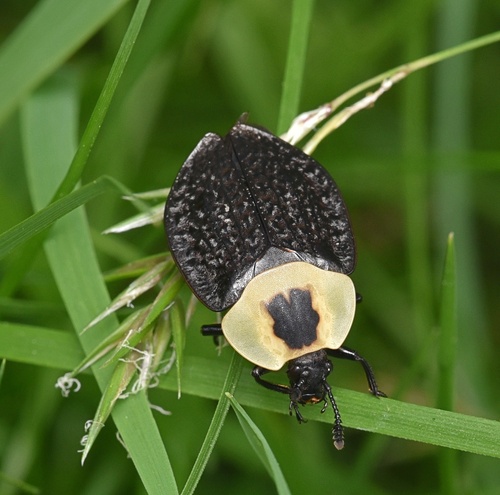
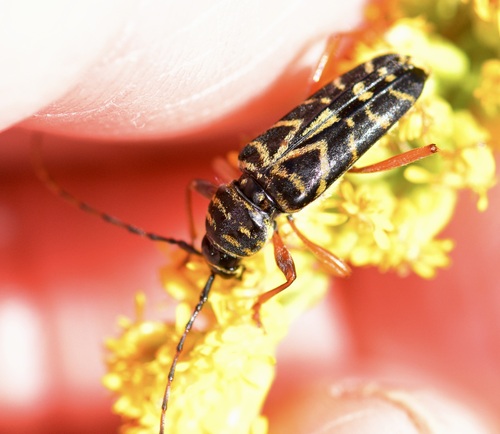
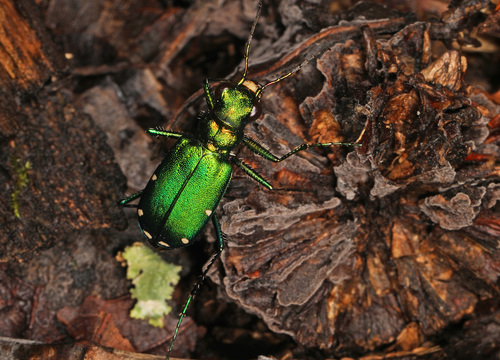
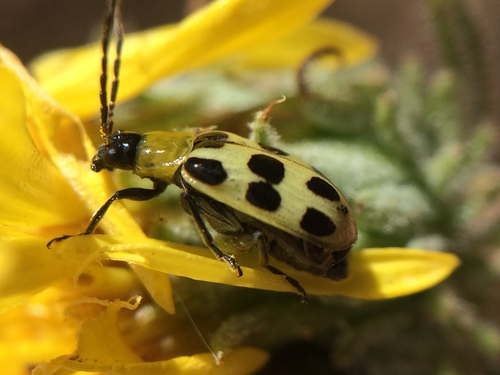
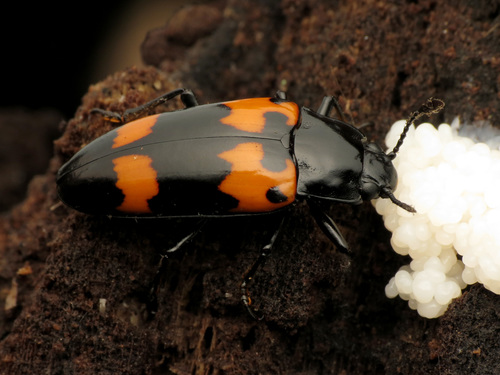
Red Flat Bark Beetle

Red Flat Bark Beetle

Cucujus clavipes

Daily sighting probability <5% · Rare
at Shenandoah National Park

In 3 days ~10% in a week ~30%

5 Verified sightings at Shenandoah National Park From 2019 to 2026
41 In all 6 parks
February Best month
☀️ Diurnal When it's spotted

About the Red Flat Bark Beetle

Cucujus clavipes is known as the flat bark beetle. It is found throughout North America. These are generally found near tree line under bark of dead poplar and ash trees. C. clavipes are described as phloem-feeding and often predators of other small insects, such as wood-boring beetles, and mites. These are usually seen during spring-summer seasons. Having a cold habitat, these beetles must go through several physiological mechanisms to survive; they are recognised for their ability to change their overwintering mechanisms.

C. clavipes can be found in North America [1] over a broad latitudinal range from North Carolina (latitude ~35°N) to the Brooks Range in Alaska (latitude, ~67°30 N) and has also been reported in Alberta [2] and in Ontario, Canada. C. clavipes has two subspecies, C. clavipes clavipes, which resides in the Eastern portion of the North America and C. clavipes puniceus in the West. These are poikilothermic organisms.

The beetles are between 10 and 14 mm in length,. Their body tends to be strongly dorsoventrally flattened and their sides parallel. Their abdomen has 5 visible ventral segments. These have strongly forked median... Wikipedia →

Global Distribution

Parks Where Found

# Park Country Daily sighting probability
1 Sequoia and Kings Canyon National Parks 🇺🇸 United States
~10%
2 Elk Island National Park 🇨🇦 Canada
~10%
3 Point Pelee National Park 🇨🇦 Canada
~10%
4 Olympic National Park 🇺🇸 United States
<5%
5 Great Bear Rainforest 🇨🇦 Canada
<5%
6 Shenandoah National Park 🇺🇸 United States
<5%

Cities Where Found

# City Country Daily sighting probability
1 Minneapolis [Saint Paul] 🇺🇸 United States
<5%
2 Edmonton 🇨🇦 Canada
<5%
3 Vancouver 🇨🇦 Canada
<5%
4 Washington 🇺🇸 United States
<5%
5 Calgary 🇨🇦 Canada
<5%
6 Philadelphia 🇺🇸 United States
<5%
7 Toronto 🇨🇦 Canada
<5%
8 Montreal 🇨🇦 Canada
<5%
9 Chicago 🇺🇸 United States
<5%
10 New York City 🇺🇸 United States
<5%

Before you go

What are the chances of seeing a Red Flat Bark Beetle in Shenandoah National Park?

Rare

Under 5% of wildlife watchers report a Red Flat Bark Beetle sighting in Shenandoah National Park on a given day, based on 5 verified sightings from GBIF citizen-science data from 2019 to 2026. It is the 630th most-seen of the 723 insects we can rate there. Over three days the chance rises to about 10%, and over a week to about 30%, if each day is a fresh chance.

When is the best time to see a Red Flat Bark Beetle in Shenandoah National Park?

February

In that month about 20% of wildlife watchers report a Red Flat Bark Beetle in Shenandoah National Park on a given day, against under 5% in March, May–September and November–January, the lowest months.

What time of day is best to see a Red Flat Bark Beetle?

Between 2 and 5 pm

Across all the parks we cover, that three-hour window holds the most Red Flat Bark Beetle sightings with a recorded time, and nearly all of them come between 6 am and 6 pm: it is a daytime animal.

Which relatives of the Red Flat Bark Beetle live in Shenandoah National Park?

Same order: Coleoptera

The closest relatives of the Red Flat Bark Beetle that you can see in Shenandoah National Park (order Coleoptera, Beetles) are Asian Lady Beetle (about 30%), Larger Elm Leaf Beetle (about 30%) and Seven-Spotted Lady Beetle (about 20%), with each one's daily chance of a sighting.

Where does the Red Flat Bark Beetle sighting chance come from?

GBIF citizen-science records

It is estimated from how often the Red Flat Bark Beetle is recorded against all the insects logged in Shenandoah National Park (5 verified sightings from 2019 to 2026), calibrated against known sighting rates. Figures are rounded to the nearest 10% because citizen-science data supports honest approximations, not decimals, and months with records from fewer than five people show "—". How it works.

← Back to Shenandoah National Park