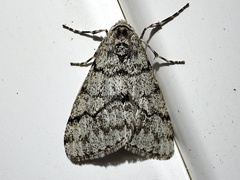
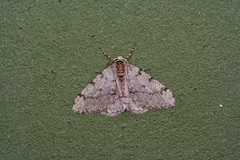
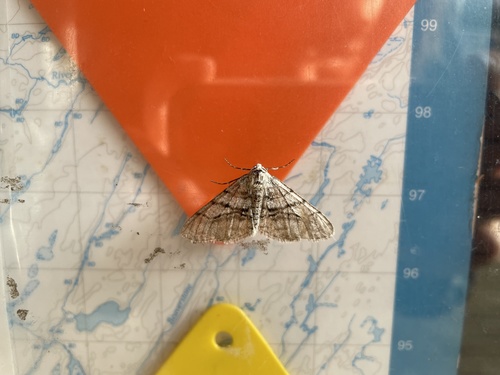
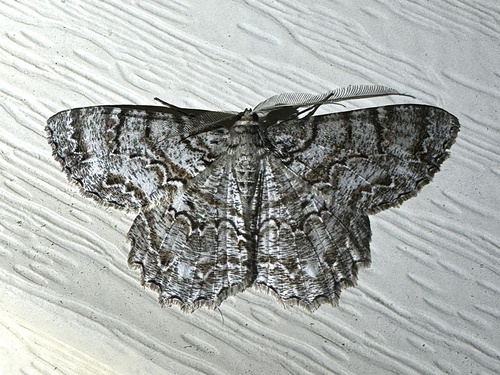
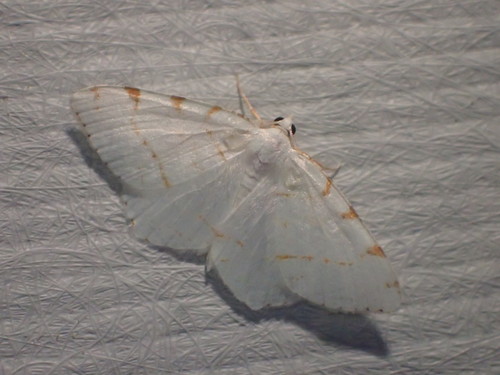
Small Phigalia Moth

Small Phigalia Moth

Phigalia strigataria

Daily sighting probability ~10% · With luck
at Shenandoah National Park

In 3 days ~10% in a week ~30%

14 Verified sightings at Shenandoah National Park From 2019 to 2026
14 In 1 park
February Best month
☀️🌙 Day & Night When it's spotted

About the Small Phigalia Moth

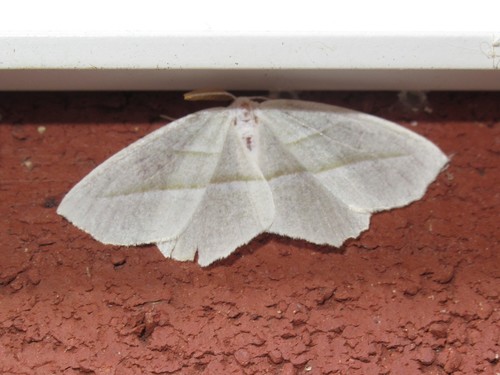
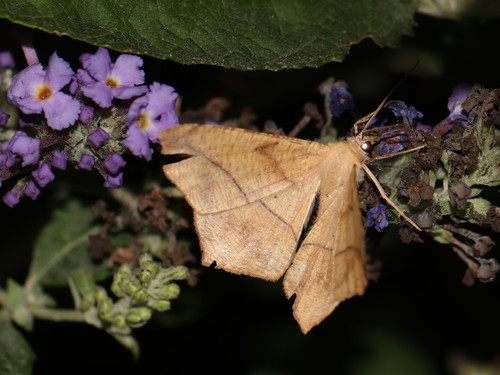
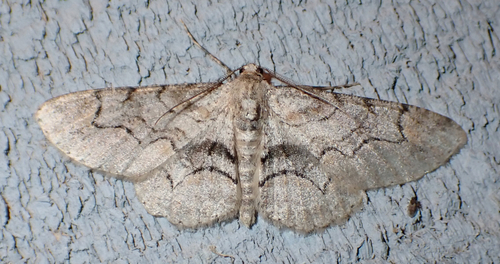
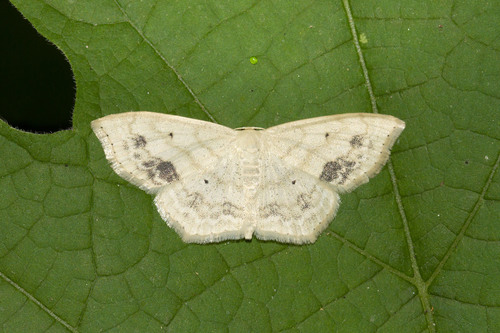
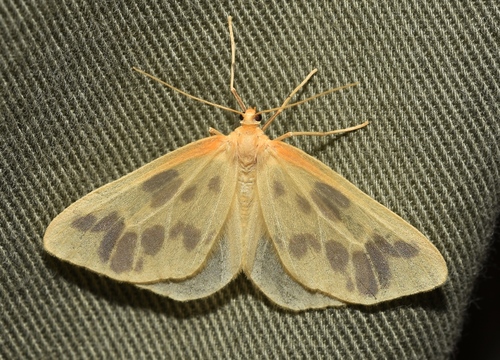
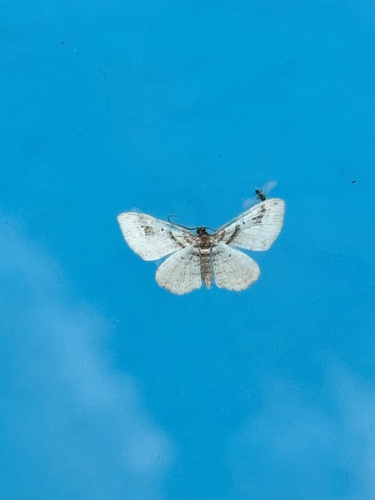
Apocheima strigataria, the small phigalia moth, is a moth of the family Geometridae. The species was first described by Charles Sedgwick Minot in 1869. It is found in North America, where it has been recorded from North Dakota to Texas and further east. The habitat consists of woodlands and forests.

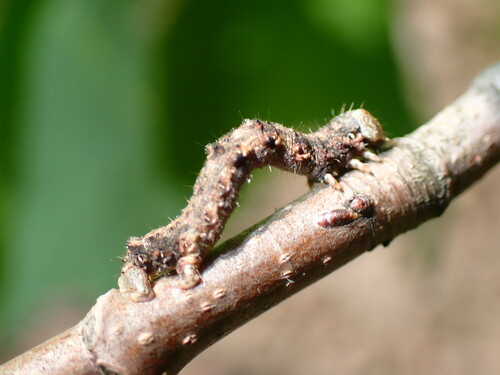
The length of the forewings is 14–18 mm for males. Females are flightless with reduced wings. Adults are on wing from January onwards in the south. In the north, adults are on wing from March to May. The larvae feed on Juglans nigra, Carya ovata, Carya tomentosa, Carya glabra, Betula lenta, Corylus americana, Quercus alba, Quercus prinus, Quercus stellata, Quercus rubra, Quercus coccinea, Quercus velutina, Ulmus rubra, Celtis occidentalis, Hamamelis virginiana, Crataegus, Amelanchier canadensis, Amelanchier grandiflora, Malus sylvestris, Malus coronaria, Rubus, Prunus serotina, Cercis canadensis, Acer negundo, Acer saccharum, Acer rubrum, Acer pensylvaticum, Tilia americana, Parthenocissus quinquefolia, Nyssa sylvatica, Cornus florida and Vaccinium angustifolium. Wikipedia →
Global Distribution

Parks Where Found

# Park Country Daily sighting probability
1 Shenandoah National Park 🇺🇸 United States
~10%

More parks will be added in future updates.

Cities Where Found

# City Country Daily sighting probability
1 Austin 🇺🇸 United States
~10%
2 Dallas 🇺🇸 United States
<5%
3 Boston 🇺🇸 United States
<5%
4 San Antonio 🇺🇸 United States
<5%
5 Washington 🇺🇸 United States
<5%
6 Minneapolis [Saint Paul] 🇺🇸 United States
<5%
7 New York City 🇺🇸 United States
<5%
8 Toronto 🇨🇦 Canada
<5%
9 Chicago 🇺🇸 United States
<5%

Before you go

What are the chances of seeing a Small Phigalia Moth in Shenandoah National Park?

With luck

About 10% of wildlife watchers report a Small Phigalia Moth sighting in Shenandoah National Park on a given day, based on 14 verified sightings from GBIF citizen-science data from 2019 to 2026. It is the 447th most-seen of the 723 insects we can rate there. Over three days the chance rises to about 10%, and over a week to about 30%, if each day is a fresh chance.

When is the best time to see a Small Phigalia Moth in Shenandoah National Park?

February

In that month about 40% of wildlife watchers report a Small Phigalia Moth in Shenandoah National Park on a given day, against under 5% in April to January, the lowest months.

What time of day is best to see a Small Phigalia Moth?

Between noon and 3 pm

Across all the parks we cover, that three-hour window holds the most Small Phigalia Moth sightings with a recorded time, and about 6 in 10 of them come between 6 am and 6 pm: it is seen both by day and at night.

Where else can you see a Small Phigalia Moth?

Only Shenandoah National Park, in our data

Shenandoah National Park is the only park on Wallace's Line with enough records to rate Small Phigalia Moth sightings: about 10% of wildlife watchers there report one on a given day.

Where does the Small Phigalia Moth sighting chance come from?

GBIF citizen-science records

It is estimated from how often the Small Phigalia Moth is recorded against all the insects logged in Shenandoah National Park (14 verified sightings from 2019 to 2026), calibrated against known sighting rates. Figures are rounded to the nearest 10% because citizen-science data supports honest approximations, not decimals, and months with records from fewer than five people show "—". How it works.

← Back to Shenandoah National Park