Mexican Parrot Snake

Mexican Parrot Snake

Leptophis mexicanus

Silhouette: Alex Slavenko · PhyloPic

LCLeast ConcernNTVUENCR
Daily sighting probability ~20% · Possible
at Sian Ka'an Biosphere Reserve

In 3 days ~50% in a week ~80%

12 Verified sightings at Sian Ka'an Biosphere Reserve From 2019 to 2026
62 In all 5 parks
September Best month
☀️ Diurnal When it's spotted

About the Mexican Parrot Snake

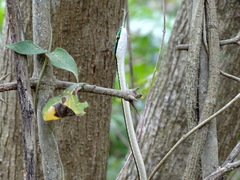
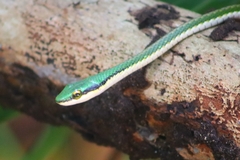
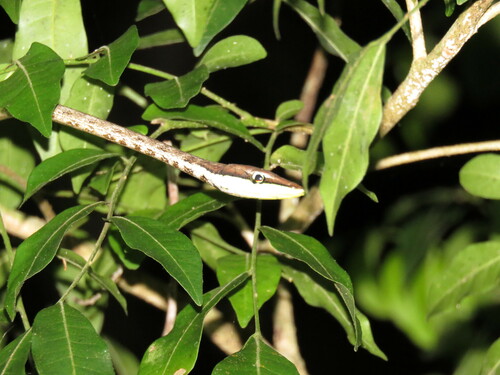
Leptophis mexicanus, commonly known as the Mexican parrot snake, is a species of medium-sized slender snake in the family Colubridae. The species is endemic to the Americas. L. mexicanus can be found in southern Mexico and Central America, in Guatemala, Belize, Honduras, El Salvador, Nicaragua, and Costa Rica.

Duméril A-M-C, Bibron G, Dumeril A[-H-A] (1854). Erpétologie générale ou histoire naturelle complète des reptiles, Tome septième. Première partie. Comprenant l'histoire des serpents non venimeux. Paris: Roret. xvi + 780 pp. (Leptophis mexicanus, new species, pp. 536–537). (in French).

Henderson RW (1976). "A New Insular Subspecies of the Colubrid Snake Leptophis mexicanus (Reptilia, Serpentes, Colubridae) from Belize". J. Herpetology 10 (4): 329–331. (Leptophis mexicanus hoeversi, new subspecies). Liner, Ernest A. (2007). "A Checklist of the Amphibians and Reptiles of... Wikipedia →

Sounds

Recording0:46

Mexico · 2025

© Luis Guillermo · iNaturalist · CC BY-NC 4.0

Global Distribution

Parks Where Found

# Park Country Daily sighting probability
1 Palo Verde National Park 🇨🇷 Costa Rica
~20%
2 Sian Ka'an Biosphere Reserve 🇲🇽 Mexico
~20%
3 Ría Lagartos Biosphere Reserve 🇲🇽 Mexico
~20%
4 Calakmul Biosphere Reserve 🇲🇽 Mexico
~10%
5 Cumbres de Monterrey National Park 🇲🇽 Mexico
~10%

Zoos & Centres Where Found

# Zoo / Centre Country
1 Paignton Zoo 🇬🇧 United Kingdom In captivity
2 Croco Cun Zoo 🇲🇽 Mexico In captivity
3 Zoológico Miguél Álvarez del Toro 🇲🇽 Mexico In captivity

Before you go

What are the chances of seeing a Mexican Parrot Snake in Sian Ka'an Biosphere Reserve?

Possible

About 20% of wildlife watchers report a Mexican Parrot Snake sighting in Sian Ka'an Biosphere Reserve on a given day, based on 12 verified sightings from GBIF citizen-science data from 2019 to 2026. It is the 12th most-seen of the 23 reptiles we can rate there. Over three days the chance rises to about 50%, and over a week to about 80%, if each day is a fresh chance.

When is the best time to see a Mexican Parrot Snake in Sian Ka'an Biosphere Reserve?

February, April and September–October

In those months about 30% of wildlife watchers report a Mexican Parrot Snake in Sian Ka'an Biosphere Reserve on a given day, against under 5% in May–June and November–January, the lowest months.

What time of day is best to see a Mexican Parrot Snake?

Between 11 am and 2 pm

Across all the parks we cover, that three-hour window holds the most Mexican Parrot Snake sightings with a recorded time, and about 9 in 10 of them come between 6 am and 6 pm: it is a daytime animal.

Is Sian Ka'an Biosphere Reserve the best place to see a Mexican Parrot Snake?

Among the best

Of the 5 parks where we can rate Mexican Parrot Snake sightings, Sian Ka'an Biosphere Reserve ranks 2nd at about 20%, level with the leaders once rounded. The best odds are in Palo Verde National Park (Costa Rica, about 20%).

Which relatives of the Mexican Parrot Snake live in Sian Ka'an Biosphere Reserve?

Same family: Colubridae

The closest relatives of the Mexican Parrot Snake that you can see in Sian Ka'an Biosphere Reserve (family Colubridae, Colubrid Snakes) are Gulf Coast Vine Snake (about 10%), Chicken Snake (about 10%) and Dryad Snake (about 10%), with each one's daily chance of a sighting.

Where does the Mexican Parrot Snake sighting chance come from?

GBIF citizen-science records

It is estimated from how often the Mexican Parrot Snake is recorded against all the reptiles logged in Sian Ka'an Biosphere Reserve (12 verified sightings from 2019 to 2026), calibrated against known sighting rates. Figures are rounded to the nearest 10% because citizen-science data supports honest approximations, not decimals, and months with records from fewer than five people show "—". How it works.

← Back to Sian Ka'an Biosphere Reserve